

Gas String Trimmer Maintenance for Landowners: Extend Your Tool’s Life

Keeping Your Gas String Trimmer in Top Shape: An Expert’s Guide for Landowners
As a landowner, you know your gas string trimmer is an indispensable tool for keeping your property tidy, tackling overgrown areas, and giving your landscape that polished finish. Unlike your trusty chainsaw that handles the heavy felling, your trimmer is often the workhorse for daily tasks. But just like any valuable piece of outdoor power equipment, consistent maintenance is key to its longevity, optimal performance, and safe operation.
Table Of Content
- Keeping Your Gas String Trimmer in Top Shape: An Expert’s Guide for Landowners
- Why Regular Trimmer Maintenance is Non-Negotiable
- Daily & Pre-Use Checks: Quick Inspections for Peak Performance
- Routine Maintenance Tasks: Weekly or Monthly Deep Dives
- 1. Air Filter Cleaning & Replacement
- 2. Spark Plug Inspection & Replacement
- 3. Fuel Filter Check & Replacement
- 4. Gear Head Lubrication
- 5. Shaft Lubrication (if applicable)
- 6. General Cleaning
- Seasonal & Annual Maintenance: Preparing for Storage
- Final Thoughts on Trimmer Care
Think of your string trimmer as an investment. A little proactive care goes a long way in preventing costly repairs and frustrating breakdowns right when you need it most. As your trusted chainsaw and power equipment specialist, I’m here to walk you through the practical steps to keep your gas string trimmer running like new for years to come.
Why Regular Trimmer Maintenance is Non-Negotiable
Neglecting maintenance can lead to:
- Reduced power and cutting efficiency.
- Difficulty starting or frequent stalling.
- Increased fuel consumption.
- Premature wear and tear on components.
- Potential safety hazards.
- Expensive repair bills or, worse, needing a premature replacement.
Let’s dive into the actionable steps you can take.
Daily & Pre-Use Checks: Quick Inspections for Peak Performance
Before you even think about starting your trimmer, make these quick checks part of your routine:
- Inspect Trimmer Line: Ensure it’s not tangled, broken, or too short. Replace or advance as needed. Different line types (e.g., round, star, twisted) have varying durability and cutting efficiency.
- Check for Loose Parts: Vibrate, inspect the cutting head, shaft, and handle for any loose bolts, screws, or attachments. Tighten anything that feels wobbly.
- Examine Cutting Head: Clear any wrapped grass or debris from the head. Excessive buildup can impede line feed and strain the engine.
- Fuel Level and Condition: Always use fresh, properly mixed two-stroke fuel (if applicable) for your gas trimmer. Stale fuel is a common culprit for starting issues.
- Air Filter: Give it a quick visual check. If it’s caked with dust or debris, it’s time for a more thorough cleaning or replacement.
Routine Maintenance Tasks: Weekly or Monthly Deep Dives
1. Air Filter Cleaning & Replacement
Your air filter is the engine’s lung, preventing dirt and debris from entering the carburetor and combustion chamber. A clogged filter starves the engine of air, leading to poor performance.
- How To: Remove the air filter cover. If it’s a foam filter, wash it in warm, soapy water, rinse thoroughly, let it dry completely, then lightly oil it with specialized air filter oil or a few drops of clean engine oil. Squeeze out excess. If it’s a paper filter, tap out loose dirt or replace it if heavily soiled.
- Frequency: Check weekly, clean monthly, replace annually or as needed based on use and conditions.
2. Spark Plug Inspection & Replacement
The spark plug ignites the fuel-air mixture. A fouled or worn spark plug can cause hard starting, misfires, and reduced power.
- How To: Disconnect the spark plug boot. Use a spark plug wrench to remove the plug. Check the electrode for deposits (black, oily, or white powdery). Clean off light carbon deposits with a wire brush. Check the gap using a feeler gauge (consult your owner’s manual for the correct gap, typically around 0.025 inches or 0.6-0.7 mm). Replace if the electrode is heavily worn or damaged.
- Frequency: Inspect monthly, replace annually.
3. Fuel Filter Check & Replacement
The fuel filter keeps impurities out of your carburetor, ensuring a steady flow of clean fuel.
- How To: Locate the fuel tank cap. Carefully pull the fuel line out of the tank with a hook (the filter is usually at the end of the line inside the tank). Inspect for discoloration or debris. Replace if it appears clogged or dirty.
- Frequency: Inspect annually, replace every 1-2 years or if starting issues persist despite other checks.
4. Gear Head Lubrication
Many gas trimmers have a gear head at the cutting end that transfers power to the trimmer line. This needs lubrication.
- How To: Locate the grease port on the gear head (often marked with a cap or plug). Use a grease gun with lithium-based grease specifically designed for outdoor power equipment gearboxes. Pump in grease until it just starts to come out.
- Frequency: Annually or every 25 hours of operation.
5. Shaft Lubrication (if applicable)
Some trimmers (especially those with detachable shafts or flexible drive shafts) require internal shaft lubrication.
- How To: Refer to your manual. It usually involves removing the drive shaft from the housing, cleaning it, and applying a thin coat of multi-purpose grease before reassembling.
- Frequency: Annually.
6. General Cleaning
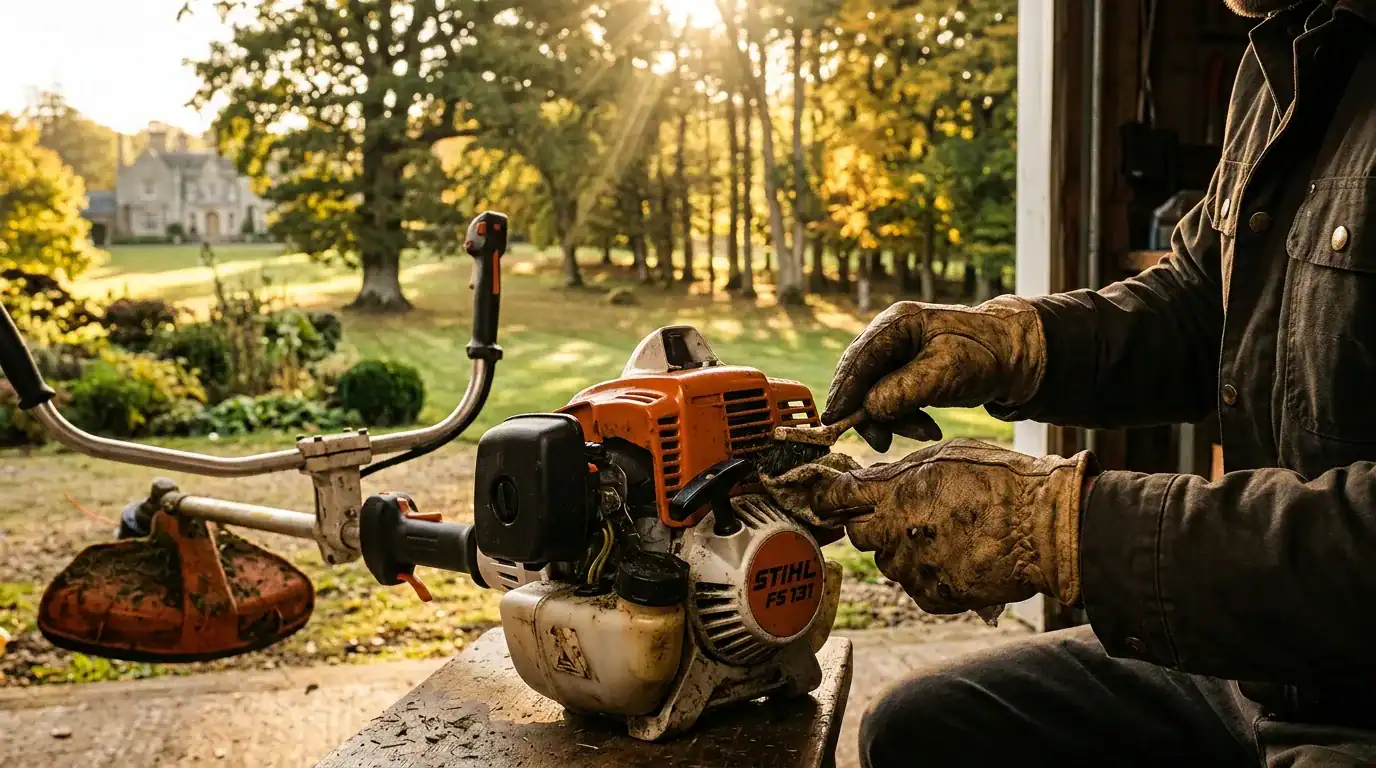
After each use, especially before storage, thoroughly clean your trimmer. Remove grass clippings, dirt, and sap from the engine fins, shroud, and cutting head. This prevents corrosion and ensures proper engine cooling.
Seasonal & Annual Maintenance: Preparing for Storage
Proper end-of-season care is crucial for ensuring your trimmer starts reliably next spring.
- Fuel Management:
- Option A (Recommended): Run the trimmer until it’s completely out of fuel. This prevents fuel from degrading and gumming up the carburetor during storage.
- Option B: If you must store it with fuel, add a high-quality fuel stabilizer to the tank, run the engine for a few minutes to circulate it, then store. This protects against ethanol-related damage.
- Cylinder Lubrication (for long-term storage): Remove the spark plug and pour a teaspoon of clean two-stroke engine oil (or SAE 30 oil) directly into the cylinder. Gently pull the starter rope a few times to distribute the oil, then reinstall the spark plug. This prevents rust on internal engine components.
- Thorough Cleaning: Give it a final, detailed cleaning, as mentioned above.
- Proper Storage: Store your trimmer in a clean, dry, climate-controlled area, away from direct sunlight and extreme temperatures.
Final Thoughts on Trimmer Care
Your gas string trimmer is a powerful asset for maintaining your land. By following these practical maintenance steps, you’re not just extending its life; you’re ensuring it’s always ready to tackle the toughest tasks with efficiency and reliability. For more expert advice on outdoor power equipment, including choosing the right tools and advanced techniques, keep an eye on Best Professional Chainsaw. We’re here to help you get the most out of all your equipment.
Stay safe and keep those edges crisp!