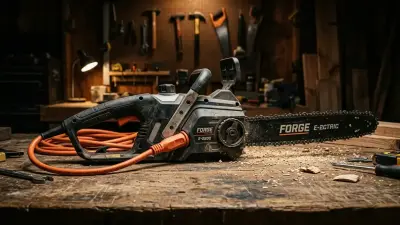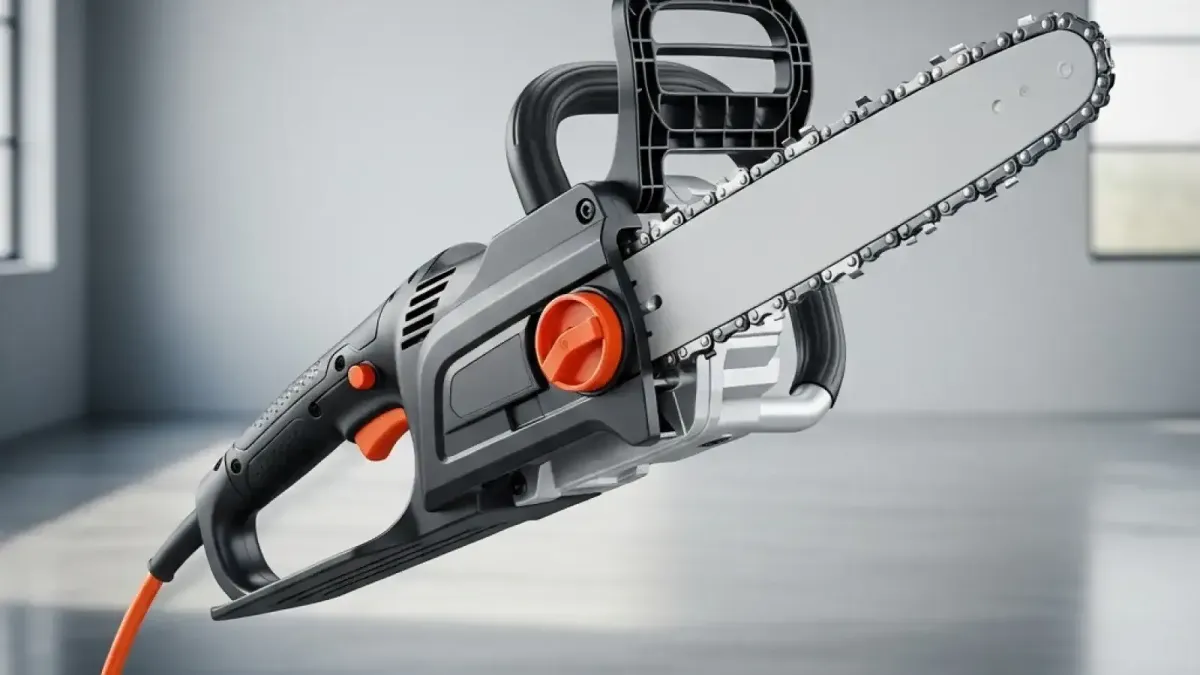
If you have a yard full of mature trees, storm-damaged oak limbs, or a cord of firewood to process every autumn, you do not always need to pull a starter cord or mess with 2-stroke oil mixing. For properties with accessible electrical outlets, a high-amperage corded electric chainsaw provides instant starting, virtually silent idling, and unrelenting torque without the headaches of stale gasoline or degraded lithium-ion battery packs. In 2026, corded saws remain the most cost-effective and reliable cutting solutions for residential property maintenance within a 150-foot radius of a power supply.
Quick answer: For general home clearing and firewood cutting, the Oregon CS1500 is the top overall choice due to its strong 15-amp motor and built-in PowerSharp chain sharpening system. If you require professional-grade build quality and precise oil delivery for frequent heavy yard work, the Makita UC4051A is the ultimate corded tool on the market.
Why Choose a Corded Electric Chainsaw for Residential Work?
Corded electric chainsaws fill a crucial void between underpowered budget tools and heavy, maintenance-intensive gas saws. Powered directly by 120-volt household electricity, a 15-amp electric motor delivers maximum torque instantly the moment you pull the trigger. Unlike gas-powered 2-stroke engines that require a precise 50:1 gas-to-oil mix, air filter cleanings, and carburetor adjustments, a corded saw operates on a simple plug-and-play mechanic. You fill the chain oil reservoir, plug into a heavy-duty extension cord, and begin making cuts immediately.
When compared to cordless battery-operated chainsaws, corded models offer unrestricted runtime. While a 36V or 56V battery platform might fade after 30 to 45 minutes of heavy clearing work on 8-inch maple logs, a corded saw maintains identical continuous cutting RPMs from the first log to the last. Additionally, because you are not purchasing expensive lithium-ion battery packs that degrade over three to five years, corded saws offer a significantly lower total cost of ownership over their working lifespan.
Environmental and physical comfort factors are equally notable. Electric motors produce zero direct carbon emissions, allowing you to cut safely inside a barn, shed, or garage. Furthermore, the absence of a heavy gas tank and engine block keeps the dry weight of most corded saws between 9.5 and 12.5 pounds. Their lower noise footprint—typically registering below 90 dB(A) under load compared to 105+ dB(A) on gas saws—keeps neighborhood relationships intact during early morning cleanup projects.
Top Corded Chainsaws Reviewed: 2026 Standouts
Choosing the right corded saw requires looking beyond sheer horsepower claims to evaluate motor orientation, chain tensioning mechanisms, oil pump reliability, and overall balance during horizontal and vertical bucking cuts. Below are the leading performers in the 15-amp residential category.
Oregon CS1500: The Self-Sharpening Workhorse
The Oregon CS1500 sits at the top of the residential corded market primarily due to its integrated, patented PowerSharp system. When cutting dirty wood, tree roots, or yard debris, a standard saw chain dulls quickly. With the CS1500, pulling a red lever for 3 to 5 seconds while holding the motor at full throttle sharpens the specialized chain directly on the bar, taking the chain from dull to razor-sharp without bench grinders or hand files. Driven by a robust 15-amp electric motor, it turns an 18-inch guide bar swinging a 3/8" Low Profile (LP) pitch chain with a .050" gauge, making it capable of handling trunks up to 16 inches in diameter.
Makita UC4051A: Commercial Build Quality for Homeowners
For users prioritizing tool longevity, mechanical engineering, and ergonomics, the Makita UC4051A is exceptionally well-constructed. Featuring a longitudinal (inline) motor design rather than a side-mounted motor, this saw maintains a narrow profile that makes limbing through dense branches far easier. It features a tool-less chain tensioning lever, a current limiter that prevents motor burnout during sudden binding, and an automatic oiler with a clear view window. Running a 16-inch bar with 3/8" LP chain at .050" gauge, the UC4051A cuts exceptionally smooth with minimal operator fatigue.
WORX WG303.1 / WG304.1: Budget-Friendly Reliability
If budget is a primary constraint but you still require dependable cutting power for seasonal storm cleanup, the WORX series delivers solid utility. Operating a 14.5-amp to 15-amp motor with a 16-inch or 18-inch guide bar, WORX utilizes a patented auto-tensioning dial system that prevents over-tightening while keeping the chain seated properly on the bar rails. It features an integrated chain brake for kickback protection and a built-in oil reservoir, offering exceptional performance per dollar for casual residential users.
Technical Specs Comparison
The following table outlines the key technical metrics of the leading corded electric chainsaws available in 2026 to help you select the exact match for your cutting needs:
| Model | Motor Amperage | Bar Length | Chain Pitch / Gauge | Weight (lbs) | Key Feature |
|---|---|---|---|---|---|
| Oregon CS1500 | 15.0 Amps | 18 Inches | 3/8" LP / .050" | 12.6 lbs | PowerSharp Self-Sharpening System |
| Makita UC4051A | 15.0 Amps | 16 Inches | 3/8" LP / .050" | 12.3 lbs | Inline Motor & Current Limiter |
| WORX WG304.1 | 15.0 Amps | 18 Inches | 3/8" LP / .050" | 11.3 lbs | Patented Auto-Tensioning System |
| Craftsman CMECS600 | 12.0 Amps | 16 Inches | 3/8" LP / .050" | 8.8 lbs | Ultra-Lightweight Frame |
Extension Cords, Sizing, and Safety Standards
The most common failure point on a corded electric chainsaw is not a burned-out motor from wood binding, but voltage drop caused by an undersized extension cord. Electric motors pulling 14 to 15 amps demand substantial electrical current. Running a high-draw power tool on a light 16-gauge or 14-gauge household cord over 50 feet causes thermal heat buildup in the wire, severe voltage drop, reduced motor torque, and premature armature burnout.
To ensure safe performance and preserve your saw's warranty, adhere strictly to American Wire Gauge (AWG) sizing standards based on distance:
- 0 to 50 Feet: Minimum 12-gauge heavy-duty outdoor cord rated for 15 Amps.
- 50 to 100 Feet: Minimum 10-gauge extra-heavy-duty cord.
- Beyond 100 Feet: Not recommended due to cumulative resistance; switch to a portable gas generator or a battery platform.
Pro tip: Always check bar oil flow before making your first cut of the day. Fill the automatic oil reservoir with premium bar and chain oil (not motor oil), point the bar tip toward a clean piece of cardboard, and run the saw at full throttle for 10 seconds. If a fine line of oil flings onto the cardboard, your pump and oil passages are clear. Furthermore, remember that brand-new saw chains stretch rapidly during their first 5 to 10 minutes of operation; always stop and re-tension the chain once it cools slightly to prevent drive-link derailment.
Essential Personal Protective Equipment (PPE) remains mandatory regardless of fuel source. Electric chainsaws feature instantaneous torque and can cause severe lacerations just as fast as gas saws. Always operate your saw equipped with wrap-around chainsaw chaps (certified to ASTM F1897 standards), an ANSI-approved hard hat with a mesh face shield, impact-resistant safety glasses, heavy-duty leather work gloves, and steel-toe or composite-toe work boots with non-slip soles.
Match Your Yard Work to the Right Corded Setup
Select your ideal setup based on your specific property maintenance requirements. If your yard contains dense hardwoods like oak, hickory, or walnut, select a 15-amp motor driving an 18-inch bar like the Oregon CS1500, paired with a 10-gauge extension cord. For medium-duty limbing, storm cleanup, and occasional softwood pruning around standard suburban lots, a 15-amp 16-inch inline model like the Makita UC4051A offers superior control and long-term durability. Order your chosen saw, secure an appropriately rated outdoor cord, gear up with full protective PPE, and verify oil delivery on a test surface before tackling your tree work.
Frequently Asked Questions
Can a corded electric chainsaw cut down large trees?
Yes, a 15-amp corded chainsaw with an 18-inch bar can drop standing trees up to 14–16 inches in diameter. However, your cutting range is constrained by your extension cord distance, and long continuous felling cuts require proper notch and back-cut techniques to prevent binding the guide bar.
Do corded chainsaws need special bar oil?
Yes, Corded Chainsaws require standard bar and chain oil containing tacky additives that prevent the oil from slinging off the bar nose at high RPMs. Do not use motor oil, drain oil, or vegetable oil, as these fluids lack correct viscosity and will clog automatic oiling channels.
Why does my corded chainsaw keep tripping the circuit breaker?
Breakers usually trip because the tool is on a shared 15-amp circuit running other appliances, or because an undersized extension cord (e.g., 14-gauge or 16-gauge over 50 feet) is causing excessive electrical draw. Plug the saw into a dedicated 20-amp GFCI circuit using a 10-gauge or 12-gauge cord.
Is an electric corded chainsaw quieter than a gas chainsaw?
Yes, significantly so. gas chainsaws emit around 105–115 dB(A) continuously, whereas corded electric saws operate around 85–90 dB(A) and make virtually zero sound when the trigger is released between cuts.
Sources
- Oregon Tool Product Specifications & PowerSharp Manuals
- Makita USA Power Equipment Technical Data Sheets
- OSHA Standard 1910.266 - Logging Operations Safety Standards
- ANSI B175.1 Safety Requirements for Gasoline & Electric Chainsaws
| Feature | corded chainsaw | gas chainsaw | Battery Chainsaw |
|---|---|---|---|
| Power | Consistent, moderate | Highest | Moderate, improving |
| Mobility | Limited by cord | Unlimited | Unlimited |
| Noise | Low | High | Very low |
| Maintenance | Minimal | High | Low |
| Best For | Homeowners, light-medium tasks | Professionals, heavy-duty work | Flexible users, small-medium tasks |