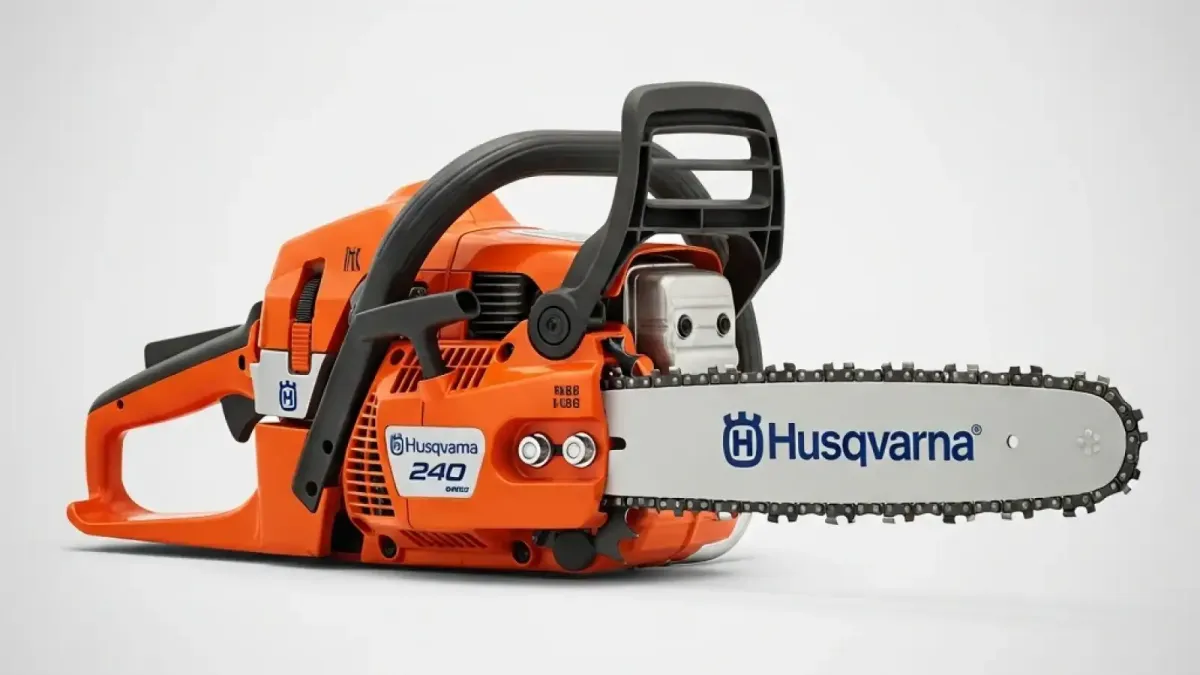
Quick answer: Delivering 2.0 horsepower from a 38.2cc two-stroke engine, the 10.3-pound Husqvarna 240 excels at cutting branches and logs under 12 inches in diameter. Used and certified refurbished models typically range between $90 and $180, offering budget-conscious homeowners an affordable, repairable gas powerhead backed by extensive spare parts support.
Technical Specifications and Real-World Cutting Capabilities
Under the orange housing, the Husqvarna 240 utilizes a 38.2cc two-stroke engine engineered with Husqvarna's X-Torq technology. This system alters the cylinder intake cycle by introducing clean air ahead of the fuel-air charge, scavenging exhaust gases more thoroughly while preventing unburned fuel from escaping out the exhaust port. As a result, fuel consumption drops by approximately 20 percent, and exhaust emissions are reduced by up to 60 percent compared to older conventional two-stroke engines. The power output peaks at 2.0 horsepower (1.5 kW) at an operating speed of 9,000 RPM, which generates plenty of chain velocity for rapid cross-cutting through softwoods like pine or cedar and moderate hardwoods such as maple and birch.
The physical design prioritizes maneuverability for operators who need to work for extended periods without experiencing severe muscular fatigue. The dry powerhead weighs precisely 10.3 pounds (4.7 kg). Once fitted with a standard 16-inch guide bar, a sharp chain, full fuel, and bar oil, the total working weight settles around 12.5 pounds. To mitigate physical stress, Husqvarna integrated its LowVib anti-vibration system, which uses steel spring dampeners to separate the engine handles from the vibrating crankcase. Combined with an Air Injection centrifugal air cleaning system that slings larger dust particles out of the air box before they reach the main filter, the saw maintains smooth engine performance and extended air filter service intervals during heavy cutting sessions.
| Specification Field | Technical Parameter |
|---|---|
| Engine Displacement | 38.2 cc (2.33 cu. in.) |
| Power Output | 2.0 HP (1.5 kW) @ 9,000 RPM |
| Max Engine Speed | 13,000 RPM (Unloaded) |
| Dry Powerhead Weight | 10.3 lbs (4.7 kg) |
| Recommended Bar Lengths | 14 inches to 18 inches (16" Factory Standard) |
| chain pitch & Gauge | 3/8" Low Profile (LP), .050" Gauge |
| Fuel Tank Capacity | 0.63 US Pints (0.30 Liters) |
| Oil Tank Capacity | 0.42 US Pints (0.20 Liters) |
| Fuel-to-Oil Ratio | 50:1 (2% Two-Stroke Synthetic Blend) |
guide bar selection plays a pivotal role in maintaining engine efficiency. The factory powerhead easily handles a 14-inch or 16-inch guide bar matched with a 3/8-inch Low Profile pitch chain and a .050-inch gauge drive link design. While the automatic oil pump can lubricate an 18-inch bar, fitting an 18-inch bar onto a 38cc engine increases drag substantially. When bucking dense oak, hickory, or wet ash, an 18-inch setup forces the operator to back off lever pressure continuously to prevent the engine clutch from slipping and stalling out.
Market Value, Pricing Breakdown, and Buying Used
Since the Husqvarna 240 is no longer in active primary production, buying options are concentrated across online classifieds, local power equipment repair shops, and factory-certified refurbished distributors. When sold new through big-box stores and authorized dealers, the retail price ranged between $200 and $240 depending on whether it came with a hard carrying case or extra cutting chains. Today, unused "new-in-box" models held by collectors or liquidated stock fetch between $210 and $250.
For most practical buyers, the second-hand market provides the best intersection of price and functional utility. Expect to encounter three main price tiers when evaluating available inventory:
- Used (Needs Service): $50 – $80. Units in this tier usually have minor mechanical flaws such as dry-rotted fuel lines, a cracked purge bulb, dirty carburetor jets, or a clogged spark arrestor screen.
- Used (Good Working Order): $90 – $140. Saws in this bracket exhibit healthy cylinder compression, crisp throttle response, working chain brakes, and reliable automatic bar oiling.
- Factory Refurbished / Rebuilt: $150 – $180. Verified by small engine technicians, these units feature fresh gaskets, replaced fuel lines, tuned carburetors, and tested ignition systems.
When inspecting a pre-owned Husqvarna 240 in person, perform a quick mechanical audit before paying. Pull the recoil starter slowly to verify firm piston compression; a floppy, loose pull indicates scored cylinder walls or worn piston rings. Unclip the top air cover to verify that fine wood flour hasn't bypassed the air filter into the throat of the intake manifold. Additionally, pull off the clutch side cover to check the clutch drum and drive sprocket for deep grooving caused by running dull chains under heavy pressure.
Essential Replacement Parts, Common Quirks, and Maintenance
Pro tip: The most frequent complaint with the Husqvarna 240 involves hard starting after the saw has been run hard and turned off for 5 to 10 minutes. Heat soak causes fuel inside the small carburetor to vaporize, causing an air lock. To restart a warm 240, never pull the choke all the way out; simply pull the choke lever out and push it straight back in to set the fast-idle latch, purge the primer bulb 3 to 4 times, engage the chain brake, and pull the starter cord. It will fire right up without flooding the cylinder.
Maintaining a Husqvarna 240 requires strict adherence to clean fuel practices and basic seasonal inspection. The two-stroke engine requires a precise 50:1 gas-to-oil mixture, which equals 2.6 fluid ounces of high-quality JASO-FD rated two-stroke oil per gallon of 89+ octane ethanol-free gasoline. Ethanol blends higher than 10 percent degrade the thin internal rubber diaphragms in the Zama carburetor and cause flexible fuel lines to crack and collapse within 18 to 24 months.
When repairs become necessary, the popularity of the 240 platform guarantees immediate access to both genuine OEM and aftermarket replacement parts. Key components and service intervals include:
- Air Filter Cleaning & Replacement: Clean every 5 working hours using warm soapy water; replace annually (OEM Part # 545061801).
- Spark Plug Inspection: Inspect gap (.020 inch / 0.5 mm) every 25 operating hours using a Champion RZ7N or NGK CMR7H plug.
- Fuel Line & Purge Bulb Overhaul: Inspect annually for soft spots or hardening. Complete fuel line kits (2mm ID x 3.5mm OD) cost under $15.
- Carburetor Tuning: Adjusting the High (H) and Low (L) mixture screws requires a specialty 21-tooth splined carburetor adjustment tool. Setting the Low needle to roughly 1.5 turns out from light seat provides a solid baseline for smooth idling.
- Chain Drive Sprocket: Replace the .325 or 3/8" LP spur sprocket drum after every two chain replacements to prevent uneven drive link wear.
Field Performance Review and Head-to-Head Comparisons
In actual cutting tests, the Husqvarna 240 delivers respectable speed when trimming tree limbs, clearing trail windfalls, and bucking logs under 10 inches in diameter. The balance between the front handle and rear trigger grip feels intuitive, allowing operators to make horizontal limbing cuts and vertical bucking cuts with minimal wrist fatigue. However, because it relies on a 38.2cc engine displacement, pushing the guide bar firmly into full-length hardwood logs will bog down the chain. Operating this saw effectively requires letting the cutter teeth take their natural bite while holding high engine RPMs throughout the pass.
Comparing the Husqvarna 240 against its historical market competitors highlights its specific strengths and weaknesses across the entry-level segment:
- vs. Stihl MS 170 / MS 180: The Stihl MS 170 offers a lighter powerhead (9.3 lbs vs. 10.3 lbs) with a slightly smaller 30.1cc engine. However, the Husqvarna 240 delivers slightly more low-end torque for pulling a 16-inch bar through thicker wood, and its spring-based anti-vibration system isolates handle movement better than basic rubber mounts.
- vs. Husqvarna 120 Mark II: The direct successor to the 240 retains the same 38.2cc displacement and 2.0 hp rating. The primary upgrades in the 120 Mark II involve an updated carburetor choke/stop control mechanism and improved internal thermal insulation to reduce heat-soak restart issues.
- vs. Echo CS-310: The Echo CS-310 is widely praised for its effortless starting system and light weight, but the Husqvarna 240 provides superior engine power (2.0 hp vs 1.4 hp), making the 240 a better choice for small firewood bucking jobs.
Property owners looking for a simple tool to maintain fence lines, clean up seasonal storm damage, or process a cord or two of campfire wood each autumn will find the Husqvarna 240 an capable option. If you keep the cutting chain sharp, run fresh ethanol-free fuel mixed at 50:1, and clean the air intake box regularly, this 38cc machine will deliver years of dependable cutting performance.
Frequently Asked Questions
What chain size does the Husqvarna 240 use?
The standard factory setup uses a 16-inch guide bar paired with a 3/8-inch Low Profile (LP) pitch chain, featuring a .050-inch gauge and 56 drive links. Always double-check the stamping on your guide bar tail before purchasing a replacement chain.
What is the correct oil mix ratio for a Husqvarna 240 chainsaw?
The Husqvarna 240 uses a strict 50:1 fuel-to-oil ratio. This is achieved by mixing 2.6 fluid ounces of high-quality two-stroke engine oil per 1 gallon of unleaded gasoline (minimum 89 octane, ethanol-free recommended).
Why does my Husqvarna 240 start, run for a few seconds, and then stall?
This symptom typically points to stiff carburetor metering diaphragms, a partially clogged fuel filter, or incorrect low-speed (L) carburetor jet adjustment. Inspecting fuel lines for hairline cracks and installing a low-cost carburetor rebuild kit usually resolves the problem.
Can I install an 18-inch bar on the Husqvarna 240?
Yes, the oiling system and powerhead mounting pattern accept an 18-inch bar, but it is generally not recommended for hard wood cutting. The 38.2cc engine performs much better with a 14-inch or 16-inch bar, which maintains higher chain speed under load.
Sources
- Husqvarna Technical Specifications & User Manuals
- ANSI B175.1 Gasoline Powered Chainsaws - Safety Requirements
- OSHA 1910.266 Logging Operations & Power Tool Safety