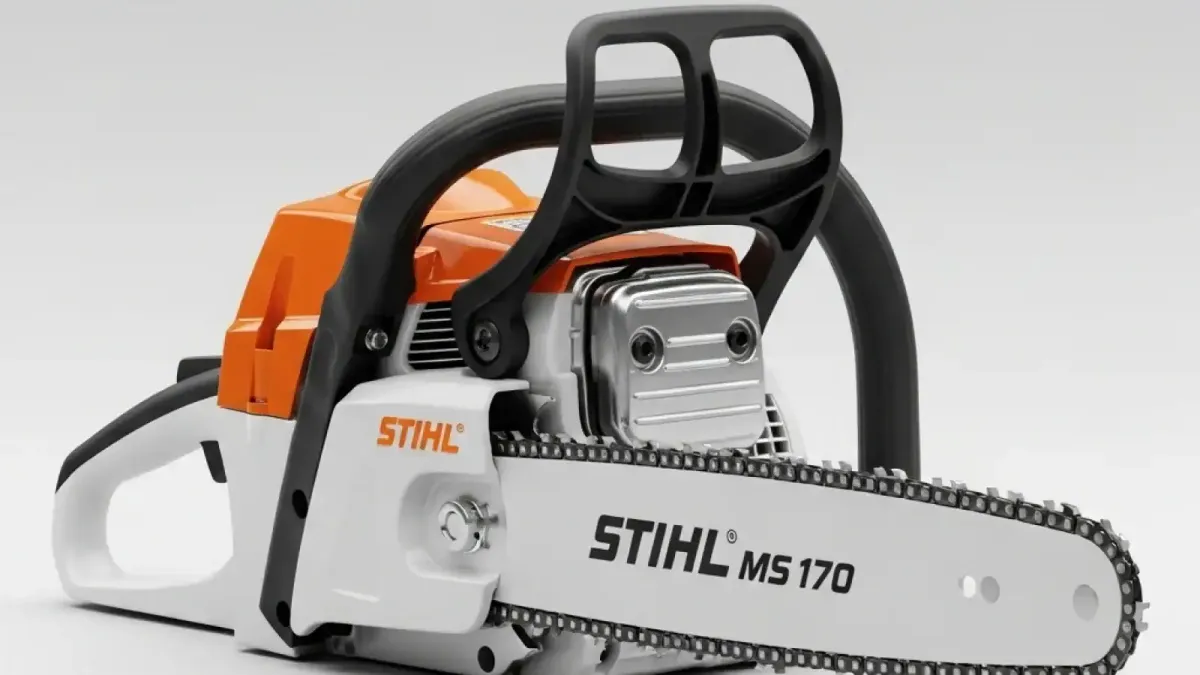
Quick answer: The STIHL MS 170 is a compact, 30.1 cc gas-powered chainsaw producing 1.7 horsepower, designed specifically for homeowners managing routine yard maintenance, light pruning, and small firewood processing. Weighing just 8.6 pounds (powerhead only), it combines an accessible price point with STIHL's dependable build quality, making it the industry benchmark for lightweight, light-duty chainsaws.
Engine Performance and Engineering Specifications
At the core of the MS 170 is a 30.1 cc two-stroke engine generating 1.3 kW (1.7 bhp) of power. While these numbers might seem modest compared to standard farm and ranch saws, the power-to-weight ratio is exceptionally well-tuned for its intended tasks. The powerhead weighs only 8.6 lbs (3.9 kg), allowing users to operate the tool for extended periods without experiencing severe arm and shoulder fatigue. The engine utilizes STIHL's IntelliCarb compensating carburetor, which automatically adjusts the air/fuel ratio when the air filter begins to clog, maintaining steady engine RPMs throughout the work session.
Operating a two-stroke engine like the MS 170 requires a strict 50:1 fuel-to-oil mixture, which translates to 2.6 fluid ounces of high-quality two-stroke engine oil per gallon of 89-octane or higher unleaded gasoline. Using fresh fuel mixed with ethanol treatment or premixed fuel like STIHL MotoMix helps prevent common fuel system degradation, carb diaphragm hardening, and starting difficulties caused by phase separation in modern ethanol-blended gasoline.
For operator safety and ease of control, the MS 170 features the Master Control Lever, which combines the choke, throttle lock, and stop switch into a single, intuitive lever. It also incorporates a four-point anti-vibration system that strategically isolates the engine handle assembly via rubber buffers, reducing operator fatigue and guarding against long-term vibration-induced hand strain.
| Specification Parameter | Technical Data (STIHL MS 170) |
|---|---|
| Engine Displacement | 30.1 cc (1.84 cu. in.) |
| Engine Power Output | 1.3 kW / 1.7 bhp |
| Powerhead Weight | 8.6 lbs (3.9 kg) |
| Standard Guide Bar Length | 16 inches (accepts 12" to 16") |
| Chain Pitch & Gauge | 3/8" Low Profile (Picco), .043" gauge |
| Fuel Tank Capacity | 8.5 fl. oz. (250 cc) |
| Chain Oil Capacity | 4.9 fl. oz. (145 cc) |
| Fuel Mix Ratio | 50:1 (Gasoline to 2-stroke oil) |
Bar, Chain, and Cutting System Setup
The standard cutting package on the MS 170 typically consists of a 16-inch Rollomatic E guide bar paired with a 3/8" Low Profile (often called Picco Micro 3 or PM3) chain with a .043" gauge. This narrow kerf design reduces resistance in the cut, enabling the 30.1 cc engine to maintain high chain speed without bogging down in hardwood branches or damp softwoods. The low-profile teeth also minimize kickback energy, increasing control for intermediate and novice users.
Proper chain maintenance is vital to maintaining the cutting efficiency of this model. The 3/8" LP .043" chain requires a 5/32" (4.0 mm) round file held at a 30-degree top-plate filing angle for sharpening. Because the teeth are relatively small, taking two or three light strokes per cutter every two tankfuls of gas will keep the chain cutting smoothly, avoiding the severe engine strain caused by forcing a dull chain through wood.
Pro tip: On a brand new MS 170, always check and adjust chain tension after your first 5 to 10 minutes of operation. New chains stretch noticeably when warm. If left loose, the chain can easily derail off a 16-inch bar, damaging the drive links, the guide bar rails, or the aluminum chain catcher beneath the sprocket cover.
Chain lubrication is handled by STIHL's Ematic bar lubrication system, which reduces oil consumption by up to 50% compared to conventional oiling systems. The system channels oil directly to the chain drive links and bar rails where friction is greatest. Always ensure the oil reservoir is filled with dedicated, tacky bar and chain oil every time you refill the fuel tank, ensuring the drive links never run dry.
Real-World Applications, Technique, and PPE
In practical testing, the MS 170 excels at limbing fallen trees, cutting down small saplings under eight inches in diameter, and bucking dry firewood up to ten inches thick. While it can technically cut through logs equal to its 16-inch bar length, forcing the saw into large-diameter hardwoods like oak, hickory, or hard maple will tax the clutch and thermal capacity of the powerhead. Keeping engine revs at wide-open throttle before entering the cut yields the cleanest, safest result.
Safe operation requires proper Personal Protective Equipment (PPE) regardless of the chainsaw's size. Even a compact 30.1 cc powerhead generates chain speeds exceeding 40 feet per second. Prior to pulling the starter cord, equip yourself with key safety gear:
- Chainsaw Chaps: Apron-style chaps featuring multi-layer ballistic nylon or Kevlar fibers designed to entangle the drive sprocket instantly upon contact.
- Head and Face Protection: An ANSI-approved hard hat with an integrated mesh face shield and ear muffs rated for at least 25 dB noise reduction.
- Gloves and Footwear: Heavy-duty leather work gloves with non-slip grips, and heavy leather steel-toe or composite-toe boots over the ankle.
- Eye Protection: ANSI Z87.1 rated safety glasses worn underneath face shields to protect against fine flying sawdust.
| Specification | Detail |
|---|---|
| Engine Power | 1.3 kW (1.7 bhp) |
| Displacement | 30.1 cc |
| Weight (without bar/chain) | 4.1 kg (9 lbs) |
| Bar Length | 16 inches |
| Chain Pitch | 3/8 inch |
| Fuel Capacity | 250 ml |
| Oil Capacity | 145 ml |
Maintenance Schedule and Troubleshooting
Routine preventive maintenance keeps the MS 170 running reliably season after season. The basic air filtration setup consists of a high-density felt filter element. After every three hours of active cutting, remove the top engine shroud, tap the filter clean against a hard palm, or blow it off gentle compressed air from the inside out. Never wash felt filters in soap and water or fuel, as this degrades the micro-fibers and lets fine wood dust into the engine cylinder.
Spark plug service should occur after roughly 100 operating hours or at the start of every cutting season. Replace the stock NGK CMR6H (or equivalent) plug, ensuring the electrode gap is set precisely to 0.020 inches (0.5 mm). If the engine stalls during idling, use a small carburetor adjustment screwdriver to lightly tune the Idle Speed Screw (labeled 'LA' on the shroud) clockwise to raise idle RPMs until the engine runs smoothly without engaging the centrifugal clutch.
When preparing the saw for winter or long-term storage exceeding 30 days, completely drain the fuel tank into an approved container. Start the engine and run it at idle until it starves and dies to purge all remaining gasoline from the carburetor metering chamber and internal fuel lines. Clean the cooling fins on the cylinder block, grease the nose sprocket on the guide bar, and store the tool in a dry, safe location away from open flames.
Direct Comparison: STIHL MS 170 vs. MS 180 C-BE
When evaluating entry-level homeowner options, buyers frequently compare the standard MS 170 against its step-up sibling, the MS 180 C-BE. Understanding their functional differences helps ensure you select the appropriate tool for your physical preferences and workload requirements.
The MS 180 C-BE features a slightly larger 31.9 cc displacement, yielding 2.0 horsepower compared to the 1.7 horsepower output of the MS 170. More importantly, the 'C-BE' designation denotes two convenient features: ErgoStart (E), an spring-assisted easy-pull starting system that drastically cuts pulling force, and the Quick Chain Adjuster (B), which allows toolless chain tensioning via a side-mounted thumbwheel rather than using a standard screwrench (combination wrench).
However, those added convenience features increase the overall weight of the MS 180 C-BE to 9.3 lbs, compared to the 8.6 lbs of the base MS 170. If you value simple mechanical design, light weight, and lower purchase costs, the MS 170 remains the optimal choice. If pulling starter cords causes physical discomfort or you prefer tool-free bar adjustments, paying extra for the MS 180 C-BE is a practical alternative.
Recommendation
If you need a reliable, lightweight power tool for routine property maintenance, clearing fallen branches, and light firewood prep, purchase the STIHL MS 170 equipped with a 16-inch bar and a 3/8" Low Profile Picco chain. Pair it with fresh 50:1 mixed fuel, a pair of quality protective chaps, and keep a 5/32" file on hand to ensure high performance every time you clear your yard.
Frequently Asked Questions
What size chain does a STIHL MS 170 use?
The STIHL MS 170 standard setup uses a 3/8" Low Profile (Picco) pitch chain with a .043" gauge. When fitted with the standard 16-inch guide bar, the chain typically requires 55 drive links (3/8" LP .043 55DL).
Can I put an 18-inch bar on a STIHL MS 170?
While an 18-inch bar can physically bolt onto the powerhead pattern, it is not recommended. The 30.1 cc engine output (1.7 hp) struggles to maintain proper chain speeds with an 18-inch bar embedded in wood, leading to frequent stalling, high clutch wear, and engine overheating.
What oil ratio should I use for the MS 170?
The STIHL MS 170 requires a 50:1 gas-to-oil ratio when using high-quality two-stroke engine oil. This equals 2.6 US fluid ounces of 2-stroke oil per 1 gallon of 89-octane or higher gasoline.
Why does my MS 170 die when I give it gas?
This issue is most frequently caused by stale ethanol fuel that has clogged the delicate internal jets of the carburetor, a heavily fouled felt air filter, or a spark arrestor screen in the muffler choked with carbon buildup. Cleaning or replacing the air filter and spark arrestor screen is the easiest initial fix.
Sources
- STIHL USA Official Product Specifications & Technical Data Sheets
- ANSI B175.1 Safety Requirements for Gasoline-Powered Chain Saws
- OSHA 1910.266 Logging Operations Personal Protective Equipment Guidelines