
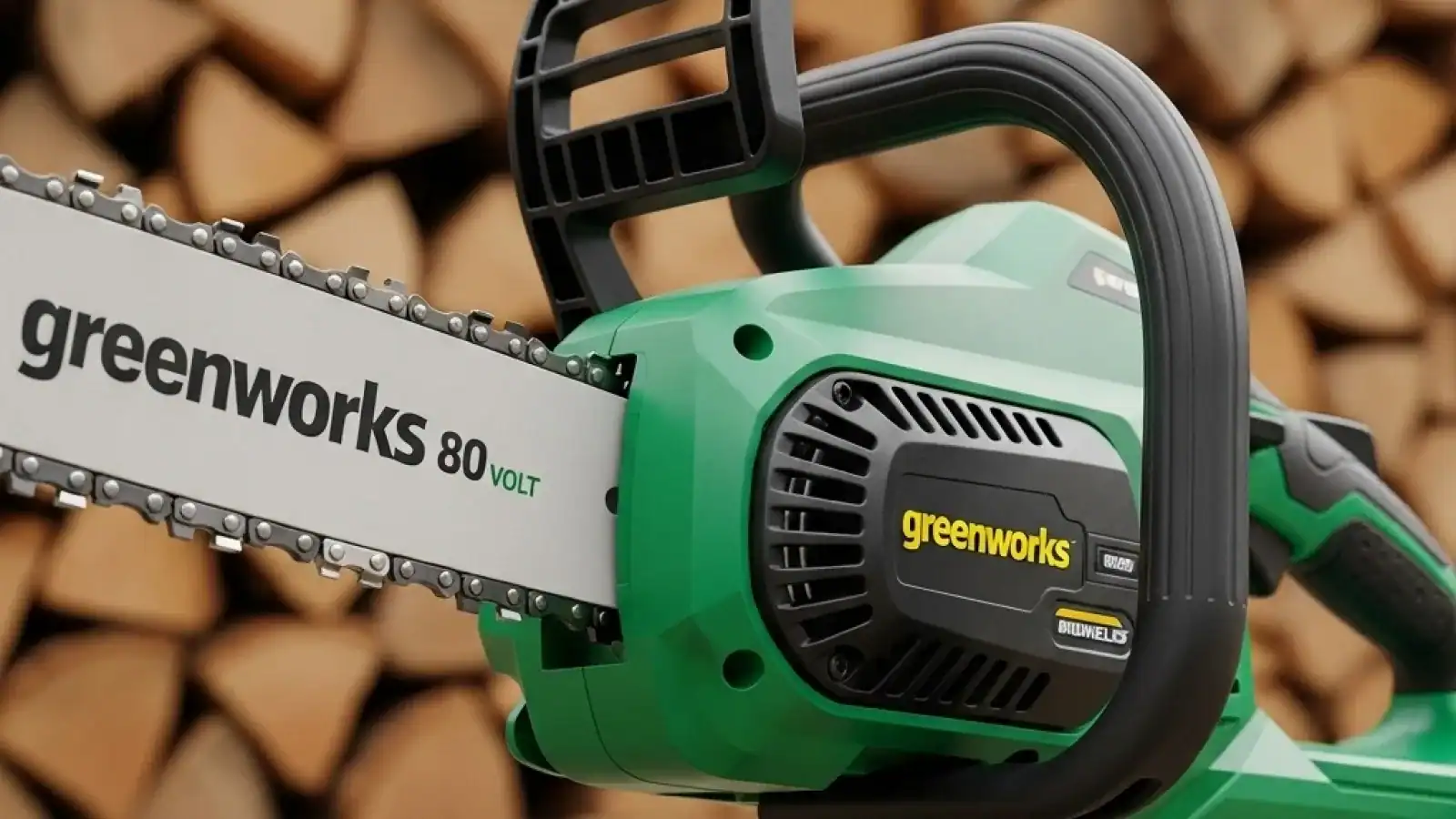

The Cordless Revolution: Is the Greenworks 80V Chainsaw Your Next Go-To Tool?
For years, the rumble and fumes of gas-powered chainsaws were synonymous with serious wood cutting. But a quiet revolution has been underway, driven by advancements in battery technology. Among the strongest contenders in this cordless space is the Greenworks 80 Volt chainsaw, a model that promises gas-like power without the traditional hassles. But does it truly live up to the hype? Is it a worthwhile investment for you, whether you’re a homeowner tackling yard work or a landowner maintaining your property?
Table Of Content
- The Cordless Revolution: Is the Greenworks 80V Chainsaw Your Next Go-To Tool?
- Deep Dive: Greenworks 80V Chainsaw – The Compelling Advantages (Pros)
- Impressive Power and Performance
- Unmatched Convenience and Ease of Use
- Safety Features and Environmental Benefits
- The 80V Battery Ecosystem and Maintenance Perks
- The Practical Side: Understanding the Limitations and Addressing Concerns (Cons)
- Battery Run Time and Heavy-Duty Endurance
- Initial Cost and Battery Investment
- Weight Distribution and Cold Weather Performance
- Addressing the “Discontinued” Rumor
- Greenworks 80V Ecosystem & Maintenance for Longevity
- Leveraging the 80V Platform
- Essential Maintenance Practices for Your 80V Chainsaw
- Making Your Decision: Who is the Greenworks 80V Chainsaw For?
- The Ideal User Profile
- Comparing Greenworks Chainsaws: 40V vs. 80V vs. 82V
As someone who’s spent countless hours with chainsaws – from tiny electric trimmers to formidable professional gas saws – I’ve seen firsthand how battery technology has evolved. The Greenworks 80V system has certainly caught my attention, offering a compelling blend of convenience and capability. This isn’t just a toy; it’s a serious piece of equipment. However, like any tool, it has its strengths and weaknesses. Let’s cut through the marketing jargon and get down to what really matters: its real-world performance, its limitations, and whether it’s the right fit for your specific needs.
We’ll explore the distinct advantages that make the 80V platform so appealing, but also confront the realities of its battery life, power ceiling, and initial investment. We’ll also address common questions, like the persistent rumors about its discontinuation, and how it stacks up against its 40V and 82V siblings. By the end, you’ll have a clear picture of whether the Greenworks 80V chainsaw earns its spot in your shed or on your truck.
Deep Dive: Greenworks 80V Chainsaw – The Compelling Advantages (Pros)
Let’s start by exploring what makes the Greenworks 80 Volt chainsaw such an attractive option for many users. From its power delivery to its user-friendly design, there’s a lot to appreciate.
Impressive Power and Performance
One of the most significant selling points of the Greenworks 80V chainsaw is its surprising power. Equipped with a high-efficiency brushless motor, models like the GCS80420 or GCS80450 can generate torque levels often compared to a 40cc gas chainsaw. What does this mean in practical terms? It means you can confidently tackle tasks that were once exclusively the domain of gas saws. I’ve personally used these saws for felling small-to-medium trees (up to 16-18 inches in diameter), bucking firewood logs, and extensive storm cleanup, and they perform admirably. The instant torque delivery means the chain spins up to full speed almost immediately, making quick work of cuts.
Most Greenworks 80V chainsaws come with an 18-inch guide bar, which is an excellent all-around length for homeowners and landowners. It provides enough reach for larger limbs and small trees while remaining maneuverable for limbing and clearing brush. For instance, making multiple cuts through a 12-inch oak log for firewood is well within its capabilities, allowing for efficient processing without bogging down, provided the chain is sharp.
Unmatched Convenience and Ease of Use
This is where battery-powered chainsaws truly shine. Imagine: no more wrestling with a pull cord, no carburetor to adjust, and no messy gas and oil mixing. The Greenworks 80V chainsaw features a simple push-button start, bringing the saw to life instantly. This is a game-changer, especially when working on a ladder or in awkward positions where repeated pull-starts would be a nuisance, if not dangerous.
Beyond starting, the user experience is dramatically improved. There are no exhaust fumes to breathe in, making it much more pleasant for prolonged use, especially in enclosed or poorly ventilated areas. The noise level is significantly reduced compared to gas models – you primarily hear the chain cutting wood, not a roaring engine. This not only makes for a more peaceful work environment but also means you’re less likely to disturb neighbors early in the morning or late in the evening. Reduced vibration also contributes to less user fatigue, allowing you to work longer with greater comfort.
Safety Features and Environmental Benefits
Modern chainsaws, whether gas or battery, prioritize safety, and the Greenworks 80V line is no exception. It includes essential features like an inertia-activated chain brake, which stops the chain almost instantly in the event of kickback, greatly reducing the risk of injury. A robust handguard further protects the operator. Additionally, these saws typically come with low-kickback chains and guide bars, designed to minimize the upward and backward thrust that can occur if the nose of the bar strikes an object. The automatic oiler ensures the bar and chain are constantly lubricated, which is crucial for smooth cutting, reduced wear, and preventing overheating.
From an environmental standpoint, the benefits are clear. Zero emissions mean no harmful pollutants are released into the atmosphere, making it a greener choice for your yard work. The quieter operation is also a form of environmental benefit, reducing noise pollution in your community. For those who prioritize a cleaner, quieter outdoor experience, the 80V platform is a compelling option.
The 80V Battery Ecosystem and Maintenance Perks
The Greenworks 80V battery is a robust lithium-ion unit, typically available in 2Ah, 4Ah, and 5Ah capacities. The ‘Ah’ stands for Amp-hour, which is a measure of the battery’s capacity – essentially, how much “fuel” it holds. A 5Ah battery will generally offer a longer run time than a 2Ah battery for the same task. While run time varies wildly based on wood density, diameter, and cutting technique, users can expect anywhere from 60-150 cuts on medium-sized logs with a 4Ah battery, making it sufficient for most homeowner tasks. Fast chargers can typically replenish a 4Ah battery in about 30-60 minutes, minimizing downtime if you have a spare battery.
Crucially, the 80V battery is interchangeable across the entire Greenworks 80V tool lineup. This means the same battery that powers your chainsaw can also power your lawnmower, string trimmer, leaf blower, and other yard tools. This interchangeability saves you money on buying multiple batteries and simplifies your charging station. Furthermore, the maintenance for a battery chainsaw is significantly simpler than for a gas model. There’s no carburetor to clean, no spark plug to replace, no air filter to maintain, and no fuel system to winterize. Routine maintenance focuses on keeping the chain sharp, maintaining proper chain tension, flipping the guide bar regularly, and ensuring the automatic oiler is functioning and filled with quality bar and chain oil. This simplicity translates to more time cutting and less time tinkering.
The Practical Side: Understanding the Limitations and Addressing Concerns (Cons)
While the Greenworks 80V chainsaw offers numerous advantages, it’s essential to approach its capabilities with a realistic perspective. No tool is perfect for every situation, and understanding its limitations is key to making an informed decision.
Battery Run Time and Heavy-Duty Endurance
Despite impressive advancements, battery chainsaws still can’t match the sustained, continuous run time of a gas chainsaw with a full tank. For intermittent cutting, limbing, or bucking a few logs, the 80V performs beautifully. However, if you’re planning a full day of felling large trees or processing cords of firewood non-stop, you’ll likely hit a wall. A single 4Ah or 5Ah battery, while powerful, will deplete faster under heavy, continuous loads than a tank of gas. This often necessitates owning multiple batteries, which adds significantly to the overall cost, or planning your work around charging cycles. My experience shows that for intensive tasks, having at least two batteries is almost a necessity to maintain productivity.
Moreover, while it offers “gas-like” power, it’s generally comparable to a mid-range homeowner gas saw (around 40-50cc). It may not have the raw, brute force of a larger, professional-grade gas saw (60cc+) designed for felling very large diameter hardwood or sustained forestry work. For tackling exceptionally dense wood or logs over 20 inches in diameter regularly, a dedicated professional gas saw might still be the more appropriate choice.
Initial Cost and Battery Investment
The upfront cost of a Greenworks 80V chainsaw, especially when bundled with a battery and charger, can be higher than an entry-level or even mid-range gas chainsaw. The batteries themselves are the most expensive component of the system. While the long-term savings on fuel and reduced maintenance can offset this, it’s a significant initial outlay to consider. Furthermore, batteries have a finite lifespan, typically rated for hundreds of charge cycles. While durable, they will eventually degrade, and replacing them represents another cost down the line. Proper battery care (avoiding extreme temperatures, not storing fully depleted or fully charged for long periods) can extend their life, but it’s an inevitable factor in the total cost of ownership.
Weight Distribution and Cold Weather Performance
While battery chainsaws often feel lighter without the battery, the addition of a substantial 80V battery pack significantly adds to the overall weight. This weight is typically concentrated at the rear of the saw, which can alter the balance compared to a gas saw where the engine is more centrally located. For some users, this rear-heavy feel might take some getting used to, especially during prolonged use or when making precise cuts. It’s not necessarily heavier overall than a comparable gas saw, but the balance is different.
Another point to consider is battery performance in extreme temperatures. Lithium-ion batteries are less efficient in very cold conditions, which can lead to reduced power output and shorter run times. While Greenworks batteries are designed for outdoor use, operating them in sub-freezing temperatures for extended periods can impact performance and potentially shorten battery life. It’s always best to keep batteries warm before use in cold weather and to charge them at ambient temperatures.
Addressing the “Discontinued” Rumor
The question “Is the Greenworks 80V chainsaw discontinued?” is one I hear frequently. It’s a valid concern when investing in a battery platform. Here’s the clarification: while specific models, like the original GCS80420, might be phased out or updated with newer iterations (e.g., the GCS80450 or other variations), the Greenworks 80V *platform* itself is very much alive and supported. Greenworks continually innovates and releases new tools and improved versions within its 80V line. So, while you might not find a specific generation of a tool, the batteries, chargers, and core components are still compatible and widely available. Parts for common wear items (chains, bars, oiler caps) remain easy to source. Rest assured, Greenworks continues to invest heavily in its 80V ecosystem, making it a safe long-term investment.
Greenworks 80V Ecosystem & Maintenance for Longevity
Beyond the immediate pros and cons, understanding the broader context of the Greenworks 80V platform and how to properly care for your chainsaw can significantly enhance its value and lifespan.
Leveraging the 80V Platform
One of the true hidden benefits of the Greenworks 80V chainsaw is its place within a larger ecosystem of outdoor power equipment. If you already own or plan to purchase other 80V tools – such as a leaf blower, string trimmer, hedge trimmer, or lawnmower – the value proposition of the chainsaw dramatically increases. A shared battery system means you only need a few batteries and chargers to power your entire fleet of yard tools, rather than having separate power sources for each. This not only saves money but also reduces clutter and simplifies your charging routine. It’s a smart way to get maximum utility out of your battery investment.
Essential Maintenance Practices for Your 80V Chainsaw
While battery chainsaws require less engine-specific maintenance than gas models, regular care is still paramount for safety, performance, and longevity. Think of it like this: a sharp chain cuts efficiently and safely, a dull chain is dangerous and frustrating. Here’s what you need to focus on:
- Chain Sharpening: This is arguably the most critical maintenance task. A sharp chain makes clean, efficient cuts and reduces strain on the motor and battery. Invest in a good round file guide (the Greenworks 18-inch bar typically uses a 3/16-inch file for a .050-inch gauge chain) or a quality electric sharpener. Sharpen your chain frequently, ideally after every few hours of cutting, or whenever you notice it tearing wood instead of slicing.
- Chain Tensioning: Always check chain tension before each use. A properly tensioned chain should be snug against the guide bar, but you should still be able to pull it around the bar freely with a gloved hand. Too loose, and it can derail; too tight, and it causes excessive wear and strain. Consult your Greenworks 80 volt chainsaw manual (often model GCS80420 or GCS80450) for exact specifications.
- Guide Bar Maintenance: Flip your guide bar regularly (e.g., every 8-10 hours of use) to ensure even wear. Clean the guide bar groove with a specialized tool or a thin flathead screwdriver to remove sawdust and debris that can impede chain movement and oil flow. Check for burrs on the rails and file them smooth if necessary.
- Oiling System: Ensure the automatic oiler is always working and the oil reservoir is filled with quality bar and chain oil. Never run the saw dry. Periodically clean the oil port on the bar and the oil outlet on the saw body to prevent clogs.
- Battery Care: To maximize battery lifespan, avoid storing them in extreme heat or cold. Store them at approximately 50-70% charge for long periods. Always use the Greenworks-approved charger.
- General Cleaning: After each use, blow off sawdust and debris from the motor housing, chain brake mechanism, and battery contacts. A clean saw runs cooler and lasts longer.
The Greenworks 80 volt chainsaw manual provides detailed, model-specific instructions for assembly, operation, maintenance, and troubleshooting. It’s an invaluable resource, and if you’ve misplaced your physical copy, a Greenworks 80 volt chainsaw manual PDF is often available for download online from the Greenworks website or sites like ManualsLib.
Making Your Decision: Who is the Greenworks 80V Chainsaw For?
So, after weighing the strengths and weaknesses, who exactly stands to benefit most from a Greenworks 80V chainsaw? My personal take, having used these tools extensively, is that it’s a fantastic fit for a specific demographic, but not necessarily everyone.
The Ideal User Profile
The Greenworks 80V chainsaw is an excellent choice for:
- Homeowners with Moderate Cutting Needs: If you regularly clear brush, limb fallen branches, cut firewood from smaller logs (up to 16-18 inches), or handle storm cleanup a few times a year, this saw will be a revelation. Its convenience and power make these tasks far less intimidating.
- DIY Enthusiasts and Landowners: For those managing a small plot of land, clearing trails, or building outdoor projects, the 80V offers ample power without the complexities of a gas engine.
- Users Prioritizing Convenience and Low Maintenance: If you dread pull-starting, mixing fuel, or dealing with carburetor issues, the instant-on, low-maintenance nature of the 80V will be a huge relief.
- Environmentally Conscious Individuals: The zero emissions and quieter operation are significant advantages for those who want to minimize their environmental impact and reduce noise pollution.
- Existing Greenworks 80V System Owners: If you already have other 80V tools, acquiring the chainsaw makes perfect sense, leveraging your existing battery investment.
Comparing Greenworks Chainsaws: 40V vs. 80V vs. 82V
It’s helpful to understand where the 80V fits into the broader Greenworks lineup:
- Greenworks 40V Chainsaw: This is Greenworks’ entry-level battery platform, designed for lighter duty tasks. Think small limbing, pruning, and occasional cutting of branches up to 8-10 inches. It’s ideal for very casual users or those with smaller yards. Typically comes with 12-16 inch bars.
- Greenworks 80 Volt Chainsaw: This is the sweet spot for many homeowners and prosumers. It balances significant power (comparable to mid-range gas saws) with excellent convenience. It’s versatile enough for most common property maintenance tasks, offering an 18-inch bar and robust performance.
- Greenworks 82V Chainsaw: This is Greenworks’ commercial-grade platform, often found under the “Greenworks Commercial” branding. The 82V tools are built for heavy-duty, daily professional use, offering maximum durability, power, and often larger bar lengths (18-20+ inches). While highly capable, they usually come with a higher price tag and might be overkill for the average homeowner.
My take? For the average homeowner or small landowner looking for serious cutting power without the headaches of gas, the Greenworks 80 Volt chainsaw hits the bullseye. It’s an investment, yes, but one that pays dividends in convenience, reduced effort, and a cleaner, quieter working experience. While it won’t replace a professional’s heavy-duty gas saw for logging operations, for everything else, it’s a remarkably capable and satisfying tool to wield.