


There’s immense satisfaction in heating your home with wood you’ve processed yourself. It’s not just about saving money; it’s about connecting with nature, staying active, and ensuring you have a reliable fuel source. However, processing firewood with a chainsaw requires a blend of skill, the right equipment, and an unwavering commitment to safety. As your trusted chainsaw professional, I’m here to guide you through maximizing efficiency and safety in your DIY firewood processing endeavors.
Table Of Content
- 1. Selecting the Right Chainsaw for the Job
- 2. Safety First, Always!
- Essential Personal Protective Equipment (PPE)
- Safe Operating Practices
- 3. Efficient Firewood Processing Techniques
- Preparing Your Logs for Bucking
- Bucking (Cross-Cutting) Techniques
- Splitting Your Firewood
- 4. Keeping Your Chainsaw in Top Shape
- Conclusion
1. Selecting the Right Chainsaw for the Job
For most homeowners processing firewood, a versatile chainsaw is key. You’ll want a balance of power, maneuverability, and ease of use.
- Gas Chainsaws: Offer the most power and run time, ideal for larger logs and extended cutting sessions. Look for models in the 40-50cc range. A 16-inch to 20-inch bar is typically sufficient for bucking logs up to 16 inches in diameter, which covers most homeowner firewood needs. Excellent examples include the Stihl MS 250 or the Husqvarna 450 Rancher.
- Battery-Powered Chainsaws: Increasingly popular for their convenience, lower noise, and zero emissions. They are great for lighter duty, smaller logs, and situations where you don’t want to deal with gas and oil. Modern 40V to 80V systems can handle surprising tasks. Models like the Ego Power+ CS1804 or DeWalt DCCS670X1 are powerful contenders.
- Electric (Corded) Chainsaws: Best for very light duty, close to an outlet. Limited by cord length but offer consistent power. Not ideal for extensive firewood processing deep in your yard.
Regardless of your choice, ensure it’s equipped with a low-kickback chain and a chain brake for added safety.
2. Safety First, Always!
No amount of efficiency is worth a trip to the emergency room. Prioritize safety above all else.
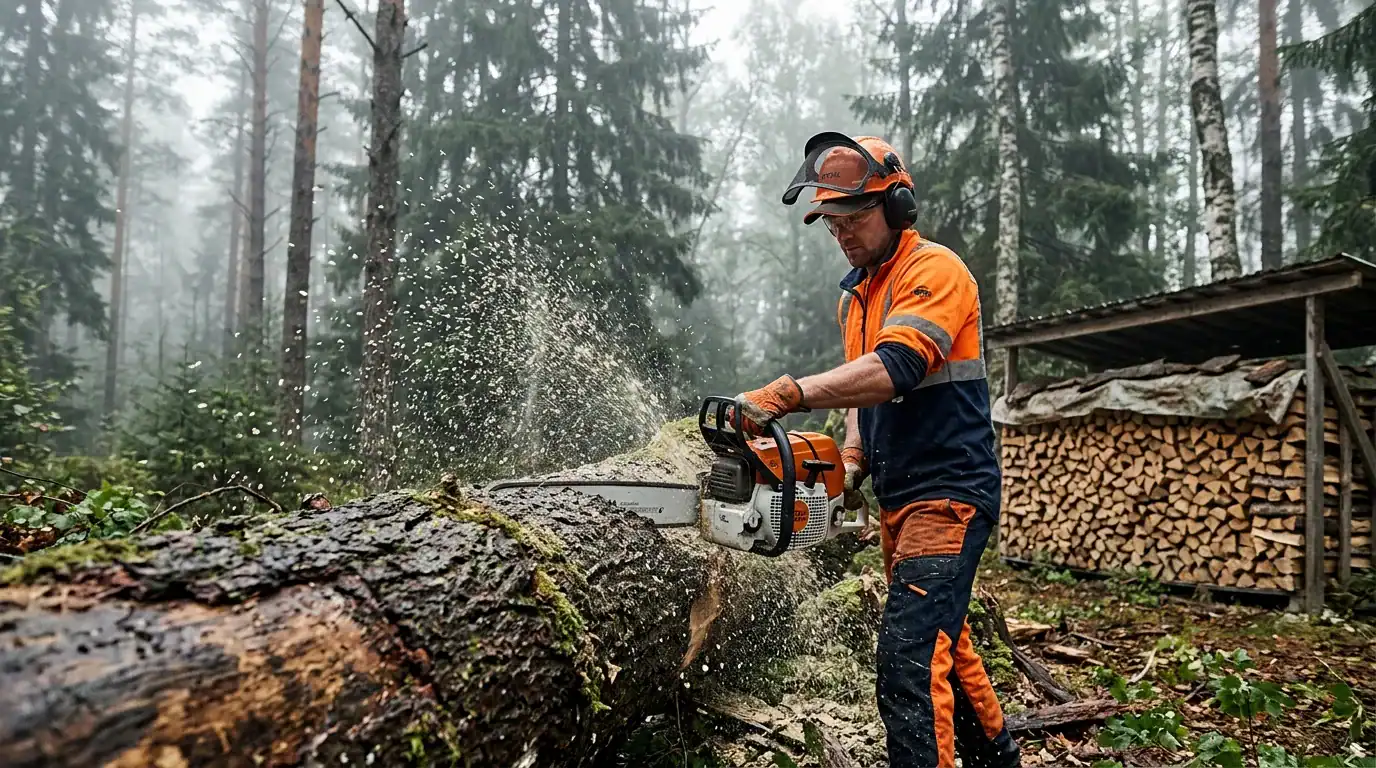
Essential Personal Protective Equipment (PPE):
- Chainsaw Safety Chaps or Pants: Crucial for protecting your legs from accidental chain contact.
- Helmet System: Incorporating hearing protection, eye protection (mesh or clear visor), and head protection.
- Heavy-Duty Work Gloves: For grip and protection.
- Steel-Toed Boots: Or at least sturdy, ankle-high work boots.
Safe Operating Practices:
- Clear Work Area: Remove trip hazards, brush, and debris around your cutting zone. Ensure you have clear footing.
- Proper Stance and Grip: Maintain a balanced stance with your feet shoulder-width apart. Grip the chainsaw firmly with both hands, thumbs wrapped around the handles. Never operate a chainsaw with one hand.
- Kickback Awareness: The most dangerous part of the chain is the upper quadrant of the bar tip. Avoid contact with this “kickback zone.” Always be aware of potential binding points in the wood.
- Elevate Your Work: Never cut logs directly on the ground. Use saw horses or sturdy blocking to elevate logs, making cuts safer and preventing your chain from hitting dirt (which dulls it instantly).
- Plan Your Cuts: Before starting, assess the log. Look for branches, tension, and potential pinch points.
3. Efficient Firewood Processing Techniques
Efficiency isn’t just about cutting fast; it’s about smart workflow and minimizing wasted effort.
Preparing Your Logs for Bucking:
- Stage Your Wood: If possible, bring all your logs to one processing area. This reduces travel time and setup.
- Consistent Lengths: Decide on your ideal firewood length (usually 16-20 inches to fit most stoves). Use a measuring stick, paint marks, or even a pre-marked chainsaw bar to maintain consistent lengths.
Bucking (Cross-Cutting) Techniques:
The key to safe bucking is understanding wood tension.
- Logs Supported at Both Ends (Tension on Top): Make a partial cut (about 1/3 of the way) from the bottom (underbuck). Then, finish the cut from the top (overbuck). This prevents pinching and allows the log to settle safely.
- Logs Supported in the Middle (Tension on Bottom): Make a partial cut (about 1/3 of the way) from the top (overbuck). Then, finish the cut from the bottom (underbuck).
- Logs on the Ground: If you must cut on the ground, roll the log after cutting about two-thirds of the way through, then finish the cut from the other side. Never cut directly into the dirt.
Always let the saw do the work. Don’t force it. A sharp chain and proper technique are far more effective than brute force.
Splitting Your Firewood:
- Manual Splitting: A splitting maul is effective for smaller, straight-grained wood. Aim for the outer edge of the log, or target existing cracks.
- Log Splitters: For larger quantities or tougher, knotty wood, a hydraulic log splitter (electric, gas, or even tractor-mounted) is a game-changer. These significantly reduce physical effort and increase output.
4. Keeping Your Chainsaw in Top Shape
A well-maintained chainsaw is a safe and efficient chainsaw. Regular maintenance extends its life and ensures optimal performance.
- Chain Sharpening: A dull chain is inefficient and dangerous. Sharpen your chain frequently – after every few hours of cutting, or whenever you see fine dust instead of chips, or the saw pulls to one side. A round file and filing guide appropriate for your chain’s pitch and depth gauge are essential.
- Chain Tension: Check chain tension regularly. It should be snug against the bar but still pull freely by hand.
- Bar Maintenance: Clean the guide bar groove, flip the bar periodically to ensure even wear, and check for burrs. Lubricate the sprocket nose if applicable.
- Air Filter: Clean or replace the air filter regularly to maintain engine performance.
- Spark Plug: Inspect and clean the spark plug annually. Replace if worn.
- Fuel and Oil: Use fresh, properly mixed fuel (for 2-stroke gas saws) and quality bar and chain oil.
Conclusion
Processing your own firewood is a rewarding endeavor that can provide significant benefits. By investing in the right equipment, prioritizing safety with proper PPE and techniques, and maintaining your tools diligently, you’ll be able to efficiently and safely stock your woodpile for years to come. Remember, practice makes perfect, and always respect the power of your chainsaw. Happy cutting!