


As a seasoned arborist and outdoor power equipment specialist, I’ve spent countless hours in the field, tackling everything from routine yard maintenance to complex tree removals. One tool that consistently proves its worth, especially when dealing with those hard-to-reach branches, is the pole saw. I’ve seen firsthand the dangers of trying to prune high limbs from an unstable ladder – a situation no homeowner or even professional should ever face if there’s a safer alternative.
Table Of Content
- Understanding Pole Saws: Your Reach to Safer Pruning
- What Exactly is a Pole Saw?
- The Different Power Players: Choosing Your Engine
- Key Factors for Choosing Your Perfect Pole Saw
- Reach and Extension Capability
- Bar Length and Cutting Capacity
- Power Source: Matching the Tool to the Task
- Weight, Balance, and Ergonomics
- Maintenance & Durability Considerations
- Essential Safety Features
- Top Pole Saws of 2025: Expert Recommendations
- Best Overall Performer: Greenworks 40V 8-Inch Cordless Pole Saw (Model 20302)
- Best Cordless Freedom & Power System: EGO Power+ PSA1000 Pole Saw Attachment with Power Head
- Best for Heavy-Duty Professional Work: Husqvarna 525PT5S Pole Saw
- Best Value for Light Pruning: Sun Joe SWJ800E Electric Pole Saw
- A Pro’s Pick for Versatility: STIHL HT 105 Pole Pruner
- Safe & Effective Pole Saw Operation: Tips from a Pro
- Pre-Operation Checklist
- Mastering the Cut: Techniques for Success
- Post-Operation Care & Maintenance
- When to Call a Professional
A quality pole saw isn’t just about convenience; it’s about safety and efficiency. It allows you to maintain your property’s trees and shrubs from the ground, keeping your feet firmly planted and your balance secure. But with so many options out there – gas-powered beasts, nimble electric models, and versatile battery units – how do you choose the right one for your specific needs? That’s exactly what we’re here to demystify.
In this comprehensive guide, we’ll dive deep into the world of pole saws. We’ll explore their different types, the critical factors to consider before buying, and highlight some of the top performers for 2025. My goal is to equip you with the knowledge to select a tool that not only gets the job done but does so safely and reliably for years to come.
Understanding Pole Saws: Your Reach to Safer Pruning
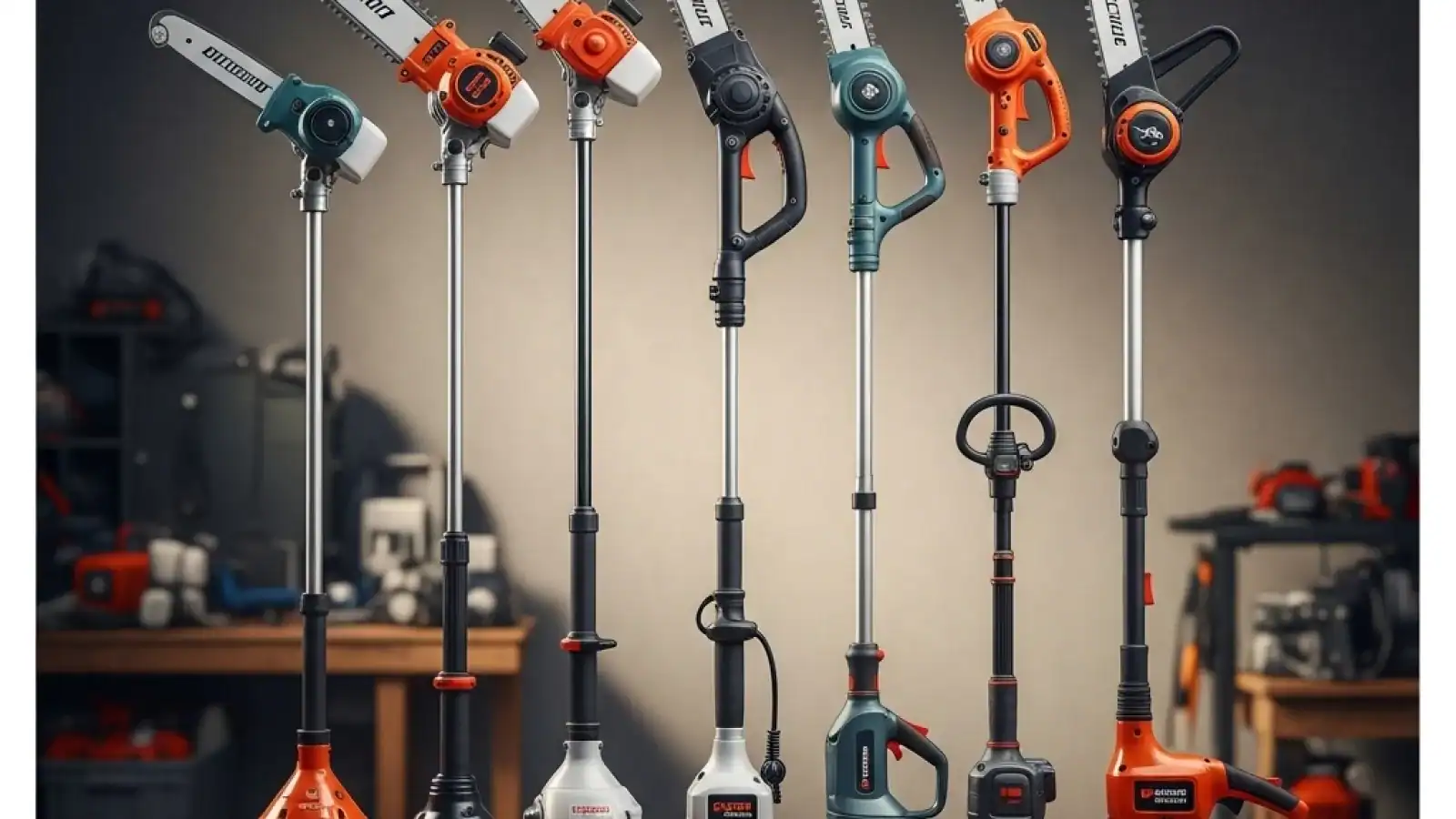
Before we dive into specific models, let’s establish a clear understanding of what a pole saw is and why it’s such an invaluable addition to your outdoor toolkit. Think of it as a specialized chainsaw head mounted on an extendable pole, designed to bring the cutting power to the branches, not the other way around. This ingenious design eliminates the precarious balancing act often associated with pruning high limbs from a ladder, significantly reducing the risk of falls and injuries.
What Exactly is a Pole Saw?
At its core, a pole saw is an elongated cutting tool that combines a compact chainsaw head with a long, often telescopic, pole. This allows you to reach branches typically 8 to 15 feet high, or even more with certain professional models, while keeping both your feet on solid ground. The saw head itself features a small guide bar and chain, similar to a traditional chainsaw, but scaled down for lighter work and easier maneuverability at the end of a long pole. It’s truly a game-changer for maintaining tree health and aesthetic appeal without the inherent risks of climbing.
The Different Power Players: Choosing Your Engine
Just like their full-sized chainsaw cousins, pole saws come in various power configurations, each suited to different tasks and user preferences. Understanding these differences is the first step in making an informed decision about which type will best serve your needs.
- Manual Pole Saws: These are the simplest, most lightweight, and often the most budget-friendly option. They consist of a pruning saw blade (not a chain saw) attached to an extendable pole. Ideal for very light pruning of small, thin branches (up to 2-3 inches in diameter), they require no fuel or electricity, making them perfect for quiet, occasional use in small yards where precision and minimal disturbance are key.
- Electric Pole Saws (Corded): Offering a significant step up in power from manual models, corded electric pole saws are powered by an electrical outlet. They are typically lighter than gas models, quieter, produce no emissions, and require less maintenance (no fuel mixing or spark plug changes). Their main limitation is the need for an extension cord, which can restrict mobility and reach, making them best suited for smaller to medium-sized yards with easy access to power. Most models feature motors ranging from 6 to 10 Amps, capable of cutting branches up to 8-10 inches thick.
- Battery-Powered Pole Saws (Cordless): These models combine the convenience of electric power with the freedom of cordless operation. Powered by rechargeable lithium-ion batteries (common voltages include 20V, 40V, 56V, or 80V), they offer impressive cutting power, quiet operation, and zero emissions. Battery technology has advanced rapidly, providing longer runtimes and quicker charging. They are an excellent choice for medium to large yards where mobility is crucial, and the branches aren’t excessively thick. The higher the voltage, generally the more power and longer runtime you can expect, allowing them to tackle limbs up to 8-12 inches in diameter.
- Gas-Powered Pole Saws: For the toughest jobs and professional applications, gas-powered pole saws are the undisputed champions of power and endurance. Equipped with 2-stroke engines (typically ranging from 20cc to 35cc), they offer unparalleled cutting performance, making quick work of larger, denser branches (up to 10-14 inches or more) without being tethered by a cord or limited by battery life. However, they are heavier, noisier, require fuel mixing, produce emissions, and demand more maintenance. They are the go-to for landowners with extensive properties, commercial landscapers, and anyone facing regular, heavy-duty pruning tasks.
Key Factors for Choosing Your Perfect Pole Saw
Selecting the right pole saw involves more than just picking a power source. It’s about matching the tool’s capabilities to your specific pruning challenges and ensuring it feels comfortable and safe to operate. Consider these crucial factors before making your investment.
Reach and Extension Capability
The primary reason you’re buying a pole saw is to reach high branches, so its maximum extension is paramount. Most homeowner-grade pole saws offer an effective reach of 8 to 15 feet, which includes the length of the pole plus your own height and arm extension. Professional models can extend even further, sometimes up to 20 feet. Look for models with telescopic poles that allow for adjustable length, giving you versatility for various branch heights without being overly long and unwieldy for shorter tasks. Remember, a longer pole also means more weight and less control at the very end, so choose a reach that truly aligns with your typical pruning needs.
Bar Length and Cutting Capacity
The guide bar length on a pole saw determines the maximum diameter of the branch it can cut in a single pass. Common bar lengths for pole saws range from 6 to 12 inches. For light pruning of small saplings and branches up to 4-6 inches in diameter, a 6-8 inch bar is usually sufficient and offers better maneuverability. If you’re regularly tackling thicker limbs, say 8-10 inches, you’ll want a 10-12 inch bar. Keep in mind that for optimal cutting, you generally want a bar length at least 2 inches longer than the branch diameter you intend to cut. Most pole saws come equipped with low-profile, anti-kickback chains designed for safety, which is especially important when operating a saw at arm’s length.
Power Source: Matching the Tool to the Task
Revisiting the power source, this decision should be guided by the size of your property, the thickness and type of branches you’ll be cutting, and how frequently you’ll use the tool. For small urban yards with occasional light pruning of decorative trees, a corded electric or even a manual saw might be perfectly adequate. If you have a larger property with several mature trees and need to prune frequently, a battery-powered unit offers excellent freedom and power for most tasks. For extensive acreage, very large, dense limbs, or commercial work, a gas-powered pole saw is the undeniable choice for its raw power and continuous operation. Don’t underestimate the convenience of cordless if you value mobility, even if it means investing in extra batteries.
Weight, Balance, and Ergonomics
Operating a pole saw, especially at full extension, can be physically demanding. The weight and balance of the tool significantly impact user fatigue and control. Lighter models (typically electric or battery) are easier to maneuver for extended periods. Gas models, while powerful, are inherently heavier. Look for features like shoulder straps or harnesses, anti-vibration handles, and comfortable grips that distribute the weight and reduce strain. A well-balanced pole saw will feel less top-heavy, making it easier to control the cutting head precisely and safely, especially when reaching for those awkward angles.
Maintenance & Durability Considerations
Like any outdoor power equipment, a pole saw requires regular maintenance to perform optimally and last longer. Consider models with features that simplify this process. An automatic chain oiler is a must-have, ensuring the bar and chain are continuously lubricated during operation, which reduces friction, heat, and wear. Tool-less chain tensioning systems are also a huge convenience, allowing for quick adjustments in the field without needing extra tools. Beyond convenience, assess the overall build quality – durable materials and robust construction indicate a tool built to withstand the rigors of outdoor work. Investing in a well-built saw often means fewer headaches and repair costs down the line.
Essential Safety Features
Safety should always be your top priority when operating any chainsaw-related tool. Ensure your chosen pole saw includes critical safety features. A chain brake (though less common on small pole saws, crucial on those with larger bars) can stop the chain quickly in case of kickback. A hand guard protects your leading hand from debris and the chain. A branch hook can be incredibly useful for pulling down severed limbs safely. Furthermore, a secure and easily accessible on/off switch prevents accidental starts. Always read the safety manual thoroughly and wear appropriate personal protective equipment (PPE) every time you use the saw.
Top Pole Saws of 2025: Expert Recommendations
After years of testing and using various models, I’ve compiled a list of pole saws that stand out for their performance, reliability, and value. These picks represent the best of what 2025 has to offer for different user needs and budgets.
Best Overall Performer: Greenworks 40V 8-Inch Cordless Pole Saw (Model 20302)
While the original Greenworks 20672 was a solid corded option, for overall versatility and performance for the average homeowner, I’m recommending the Greenworks 40V 8-Inch Cordless Pole Saw (Model 20302) for 2025. This model offers an exceptional balance of power, runtime, and the freedom of cordless operation, making it ideal for a wide range of residential pruning tasks.
- Power & Performance: Powered by a robust 40V lithium-ion battery, it provides ample power to drive its 8-inch bar and chain, capable of slicing through branches up to 6-8 inches thick with surprising ease. The brushless motor (on some configurations) enhances efficiency and extends tool life.
- Reach & Ergonomics: The pole extends up to 8 feet, offering an effective reach of around 11-12 feet for most users. It’s relatively lightweight and well-balanced, reducing fatigue during extended use. An automatic oiler ensures consistent chain lubrication.
- Pros: Cordless convenience, quiet operation, zero emissions, respectable power for its class, compatible with other Greenworks 40V tools, tool-less chain tensioning.
- Cons: Battery runtime can vary based on cutting intensity, not suitable for very heavy-duty, professional tasks or extremely thick branches.
- Why I Recommend It: For the vast majority of homeowners needing to tackle regular tree and shrub maintenance, this Greenworks model hits the sweet spot. It’s powerful enough for most tasks without the hassle of a cord or the maintenance of a gas engine, making it an excellent all-around choice.
Best Cordless Freedom & Power System: EGO Power+ PSA1000 Pole Saw Attachment with Power Head
The EGO Power+ PSA1000 isn’t just a pole saw; it’s part of a robust, interchangeable multi-tool system that delivers impressive gas-like power without the associated fuss. If you already own EGO 56V batteries or are looking to invest in a versatile outdoor power ecosystem, this is an outstanding choice.
- Power & Performance: Utilizing EGO’s industry-leading 56V ARC Lithium battery technology, this pole saw attachment drives a 10-inch bar and chain with exceptional cutting speed and torque. It effortlessly handles branches up to 8-10 inches, making it a serious contender for heavier homeowner tasks.
- Reach & Ergonomics: The pole extends up to 8 feet, providing a good working reach. Its carbon fiber shaft is both lightweight and incredibly durable. While the total system can be a bit heavier than smaller electric models, the balance is excellent for a tool of its power.
- Pros: Outstanding power, long battery life, rapid charging, part of a versatile multi-head system (can attach string trimmers, edgers, etc.), quiet, zero emissions.
- Cons: Higher initial investment if you don’t own EGO batteries, the power head and battery can add noticeable weight compared to simpler models.
- Why I Recommend It: For those who demand serious cordless performance and the ability to expand their toolkit with other attachments, the EGO Power+ system is unparalleled. It truly offers gas-level performance with the convenience of battery power.
Best for Heavy-Duty Professional Work: Husqvarna 525PT5S Pole Saw
When the job demands unwavering power, durability, and extended reach for demanding professional applications, the Husqvarna 525PT5S rises to the challenge. This commercial-grade gas pole saw is built for the long haul and thickest limbs.
- Power & Performance: Featuring a robust 25.4cc X-Torq 2-stroke engine, the 525PT5S delivers incredible torque and cutting speed, easily tackling branches well over 10-12 inches. The X-Torq engine design also boasts lower fuel consumption and reduced exhaust emissions compared to older gas models.
- Reach & Ergonomics: With an impressive reach up to 14 feet (and up to 20 feet with optional extension poles), this saw is designed for serious height. Its professional-grade design includes excellent anti-vibration features and a comfortable grip, crucial for minimizing operator fatigue during prolonged use.
- Pros: Unmatched power and cutting performance, professional-grade durability, extended reach, excellent for continuous heavy-duty use, reliable Husqvarna engineering.
- Cons: Heavier and noisier than electric/battery models, requires fuel mixing and more intensive maintenance, higher upfront cost.
- Why I Recommend It: This is the workhorse for arborists, landscapers, and serious landowners who regularly face challenging pruning tasks. If you need a pole saw that won’t flinch at large, dense branches and can run all day, the 525PT5S is a top-tier investment.
Best Value for Light Pruning: Sun Joe SWJ800E Electric Pole Saw
For homeowners who primarily deal with light, occasional pruning and need a reliable, budget-friendly option, the Sun Joe SWJ800E is an excellent choice. It’s simple, straightforward, and gets the job done without breaking the bank.
- Power & Performance: Equipped with a 6.5 Amp motor and an 8-inch bar, this corded electric pole saw is designed for cutting smaller branches, typically up to 6 inches in diameter. It’s perfect for tidying up ornamental trees and shrubs.
- Reach & Ergonomics: The pole extends to approximately 8.7 feet, offering a decent reach for most common household pruning needs. It’s notably lightweight, making it easy to maneuver and control for extended periods without excessive arm strain.
- Pros: Very affordable, lightweight, easy to assemble and use, minimal maintenance, quiet operation, no emissions.
- Cons: Corded operation limits mobility, less powerful than battery or gas models, not suitable for thicker branches or heavy-duty use.
- Why I Recommend It: If your pruning tasks are generally light and within reach of an extension cord, the Sun Joe SWJ800E offers fantastic value. It’s a great entry-level pole saw that provides safe, effective cutting for typical residential yard work.
A Pro’s Pick for Versatility: STIHL HT 105 Pole Pruner
For professionals and discerning homeowners who demand the ultimate in versatility, reach, and power, the STIHL HT 105 Pole Pruner is a benchmark. It’s a premium gas-powered tool engineered for demanding tree care.
- Power & Performance: Driven by a powerful 31.4cc STIHL engine, the HT 105 boasts exceptional torque and cutting speed. It can be fitted with a 10-inch or 12-inch guide bar, making it capable of handling very thick branches with ease, often up to 10-12 inches in a single pass. The robust engine ensures consistent performance even in challenging conditions.
- Reach & Ergonomics: This model offers an impressive fixed-length pole that reaches up to 10.5 feet, with an effective working reach that can extend over 15 feet. While heavier than battery units, STIHL’s anti-vibration system and ergonomic design, often paired with a harness, make it manageable for professional use, minimizing operator fatigue.
- Pros: Superior power and durability, legendary STIHL reliability, excellent reach, robust construction for professional use, ideal for continuous, heavy-duty work.
- Cons: High initial cost, heavier and requires more maintenance than electric options, requires fuel mix, produces emissions.
- Why I Recommend It: The STIHL HT 105 is an investment in professional-grade quality. It’s designed for serious tree care and will provide years of reliable service for those who demand the best in terms of power, reach, and longevity. It’s a tool that pays for itself in efficiency and dependability.
Safe & Effective Pole Saw Operation: Tips from a Pro
Owning a powerful tool like a pole saw is only half the battle; knowing how to use it safely and effectively is paramount. As someone who’s spent decades around chainsaws, I can’t stress enough the importance of proper technique and safety protocols. Your well-being and the longevity of your equipment depend on it.
Pre-Operation Checklist
Before you even think about starting your pole saw, take a few moments for a thorough pre-operation check. This simple routine can prevent accidents and ensure optimal performance. First, always wear appropriate Personal Protective Equipment (PPE): a hard hat, safety glasses or a face shield, hearing protection, heavy-duty gloves, and sturdy work boots are non-negotiable. Inspect your saw for any damage, loose parts, or dull chains. Ensure the chain is properly tensioned and the bar is adequately oiled (check the oil reservoir). Clear your work area of any obstacles, bystanders, or pets. Critically, always check for overhead power lines – if branches are near them, stop immediately and call a professional arborist or your utility company. It’s not worth the risk.
Mastering the Cut: Techniques for Success
Proper cutting technique minimizes kickback, ensures clean cuts, and protects both you and the tree. For larger limbs, always employ the “three-cut method” to prevent the branch from tearing bark down the trunk. Start with an undercut about 1/3 of the way through the branch, several inches away from the trunk. This prevents the limb from peeling bark. Next, make a top cut a few inches further out from the undercut, going completely through the branch. Finally, make your finishing cut close to the trunk, ensuring it’s flush with the branch collar, but not cutting into it. For smaller branches, a single smooth pass is often sufficient. Always maintain a stable stance, keeping the pole saw balanced and under control, and avoid overreaching. Let the saw do the work; don’t force it.
Post-Operation Care & Maintenance
After each use, take the time to clean your pole saw. Remove sawdust and debris from the bar, chain, and engine housing. Check the chain for sharpness; a dull chain is inefficient and dangerous. Sharpen it with a round file (typically 5/32″ or 3/16″ depending on your chain’s pitch) or have it professionally sharpened. Always ensure the chain oil reservoir is refilled for the next use. For gas models, empty the fuel tank or add a fuel stabilizer if storing for an extended period. Proper storage in a dry, clean place will protect your investment and ensure it’s ready for your next pruning session.
When to Call a Professional
While a pole saw is an excellent tool for many tasks, there are definitely situations where it’s best to step back and call a certified arborist. If a branch is too large for your saw’s capacity, is diseased or unstable, or is located precariously close to power lines, buildings, or other structures, the risk is simply too high. Professionals have the specialized equipment, training, and insurance to handle these complex and dangerous situations safely. Don’t let pride get in the way of safety – knowing your limits is a sign of true expertise.
Ultimately, choosing the best pole saw for 2025 comes down to a clear understanding of your specific needs, the nature of your property, and your commitment to safety. Whether you opt for the quiet efficiency of a battery-powered unit, the consistent power of a corded electric, or the raw might of a gas engine, the right pole saw will transform your tree maintenance routine, making it safer, more efficient, and far more enjoyable. Invest wisely, operate safely, and you’ll enjoy a beautifully manicured landscape for years to come.