Disclosure: As an Amazon Associate, we earn from qualifying purchases.
The best homeowner chainsaw for most suburban yards is a 56V or 60V cordless battery model like the EGO Power+ CS1800 / CS2005 or the STIHL MSA 70 C-B. These 16-inch to 18-inch brushless electric saws deliver cutting speed matching 40cc gas engines while operating under 85 decibels, starting at the push of a button with zero engine maintenance. For landowners processing cord after cord of hardwood or tackling heavy storm debris, lightweight gas models like the 30.1cc STIHL MS 170 or 40.2cc Husqvarna 440 offer unlimited runtime and rugged reliability. Choosing between battery and gas comes down to your cutting volume, proximity to neighbors, and comfort with engine maintenance.
Gas vs. Battery Chainsaws: Which Suits Your Yard?
Modern battery technology has reshaped outdoor power equipment. Brushless electric motors deliver high torque without the noise, exhaust fumes, or fuel-mixing hassles of traditional two-stroke gas engines. However, gas chainsaws remain indispensable for continuous, heavy-duty forestry work where battery swapping becomes impractical.
Cordless Battery Chainsaws (36V–60V)
Cordless battery chainsaws are the ideal choice for residential suburban environments. Running between 78 dB and 85 dB at full throttle, these tools cut noise levels dramatically compared to gas saws operating above 105 dB. This quiet performance makes them the best chainsaw for light sleepers and neighborhood peace. They are also exceptionally popular among shift workers—making them the best chainsaw for nurses, the best chainsaw for healthcare workers, and the best chainsaw for baristas who need to chop firewood or clean up storm fallen limbs during irregular off-duty hours without disturbing sleeping families or neighbors.
- Pros: Instant push-button starting, zero direct emissions, minimal maintenance (no carburetor or spark plugs), low vibration, quiet running.
- Cons: Higher upfront cost with batteries included; runtime limited to 30–60 minutes of active trigger time per charge.
- Top Models: EGO Power+ CS1800 (18-inch), STIHL MSA 70 C-B (12-inch), DeWalt FlexVolt DCCS670 (16-inch).
Gas-Powered Chainsaws (30cc–50cc)
Small-to-midsize gas chainsaws remain the gold standard for property owners with several acres, dense woodlots, or high firewood demands. They provide steady, unyielding power through thick trunks without fading as a battery depletes.
Stihl MS 170 Chainsaw Displacement in cm3: 30 cm³, 1200 W, 30 cm Guide

- Pros: Unlimited runtime (refuel on the spot), lower initial purchase price for raw cutting power, wider bar selection.
- Cons: High noise output (requiring double ear protection), pull-start mechanics, requires 50:1 gas/oil mixing, regular air filter and spark plug servicing.
- Top Models: STIHL MS 170 / MS 180, Husqvarna 120 Mark II / 440, Echo CS-310.
Homeowner Chainsaw Specification Comparison
To help you evaluate your choices, here is how the top-rated homeowner chainsaws compare across power sources, guide bar lengths, and primary user applications:
| Model | Power Source / Engine | Guide Bar Length | Weight (Powerhead) | Best Application |
|---|---|---|---|---|
| EGO Power+ CS1800 | 56V Lithium-Ion Battery | 18 inches | 9.7 lbs | All-around suburban cutting & storm cleanup |
| STIHL MSA 70 C-B | 36V AK System Battery | 12 inches | 6.4 lbs | Light pruning, limbing & quiet backyard care |
| DeWalt DCCS670T1 | 60V FlexVolt Battery | 16 inches | 12.2 lbs | Heavy DIY cutting & trade utility work |
| STIHL MS 170 | 30.1cc 2-Stroke Gas | 16 inches | 8.6 lbs | Budget firewood cutting & small tree felling |
| Husqvarna 440 | 40.9cc X-Torq Gas | 18 inches | 9.7 lbs | Landowner tree maintenance & log processing |
Selecting the Best Chainsaw Chain for Your Tool
Matching your saw to the best chainsaw chain ensures clean cuts, minimal kickback risk, and maximum motor efficiency. Standard homeowner chains fall into three primary categories based on tooth geometry and pitch:
1. Low-Kickback Semi-Chisel Chains
Most homeowner chainsaws come standard with low-kickback, semi-chisel safety chains (such as Oregon 91PX or STIHL Picco Micro 3). Featuring rounded corner cutters, semi-chisel chains stay sharp longer when cutting dirty or softwood, and their ramped depth gauges reduce the severity of sudden kickback movements. They are forgiving for novice operators and ideal for routine limb removal.
EGO POWER+ Chain Saw, 16” Battery Powered Chainsaw, Electric Cordless, Includes 56V 4.0Ah Battery and Charger – CS1613

2. Full-Chisel Chains
Featuring square-cornered teeth, full-chisel chains bite aggressively into clean hardwood like oak, hickory, or maple. While they cut up to 20% faster than semi-chisel chains, they dull rapidly upon contact with dirt or soil and carry a higher risk of kickback, making them better suited for experienced woodcutters.
3. Chain Pitch and Gauge Basics
When buying a replacement chain, verify three critical measurements stamped on your guide bar:
- Pitch: The distance between any three consecutive rivets divided by two. Most homeowner saws use 3/8-inch Low Profile (3/8" LP) or .325-inch pitch.
- Gauge: The thickness of the drive links that slide into the bar groove. Common sizes include .043", .050", and .058".
- Drive Link Count (DL): The exact number of individual teeth riding along the inside of the bar.
Critical Safety Features Every Homeowner Needs
A chainsaw is one of the most effective power tools in your shed, but it requires strict safety awareness. Ensure any saw you buy includes these essential features:
- Chain Brake: A front handguard that manually or inertia-activates to stop the spinning chain in milliseconds during a kickback event. Never operate a saw without a working chain brake.
- Chain Catcher: A metal or durable plastic pin under the sprocket that catches a thrown or broken chain before it strikes the operator's hands.
- Tool-Less Chain Tensioning: Featured on models like the STIHL Quick Chain Tensioning (C-B) system or EGO's dial system, this allows quick field adjustments without carrying a scrench tool.
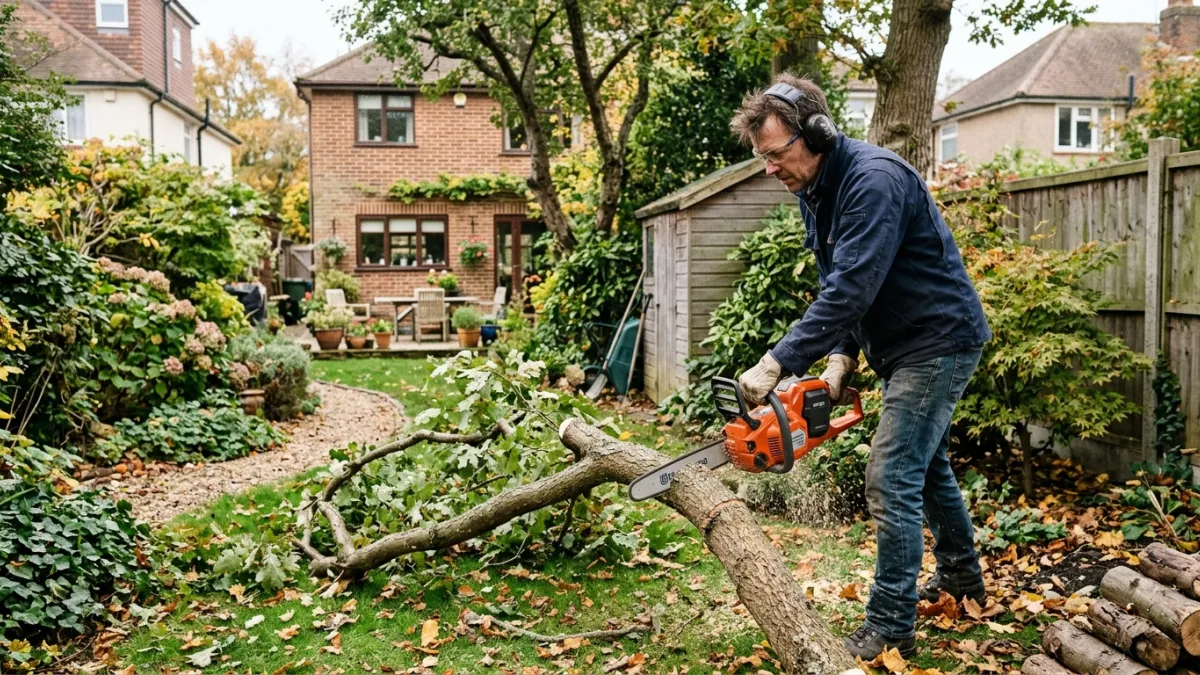
- Personal Protective Equipment (PPE): Always wear cut-resistant chainsaw chaps (ASTM F1897 rated), safety glasses with side shields, hearing protection, heavy leather gloves, and steel-toe boots before pulling the cord or inserting a battery.
RYOBI 40V HP Brushless 12 in. Top Handle Battery Chainsaw with 4.0 Battery and Charger, RY40590

Maintenance Schedule for Peak Performance
Whether you choose gas or electric, regular maintenance extends your chainsaw's life and protects the motor from burnout:
Before Every Use
- Check bar oil level and top off with dedicated bar & chain lubricant (never use motor oil).
- Inspect chain tension: the chain should sit snug against the bottom rail but pull freely around the bar by hand (with gloves on).
- Test the chain brake function.
After Every 5 Fuel Tanks or Battery Charges
- Clean the bar groove using a groove cleaner tool or small flathead screwdriver to remove packed sawdust.
- Inspect and sharpen cutter teeth with a matching round file and file guide.
- Clean or blow out air intake vents on battery housing or gas engine shrouds.