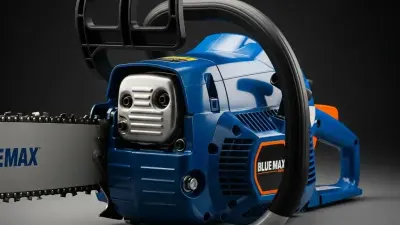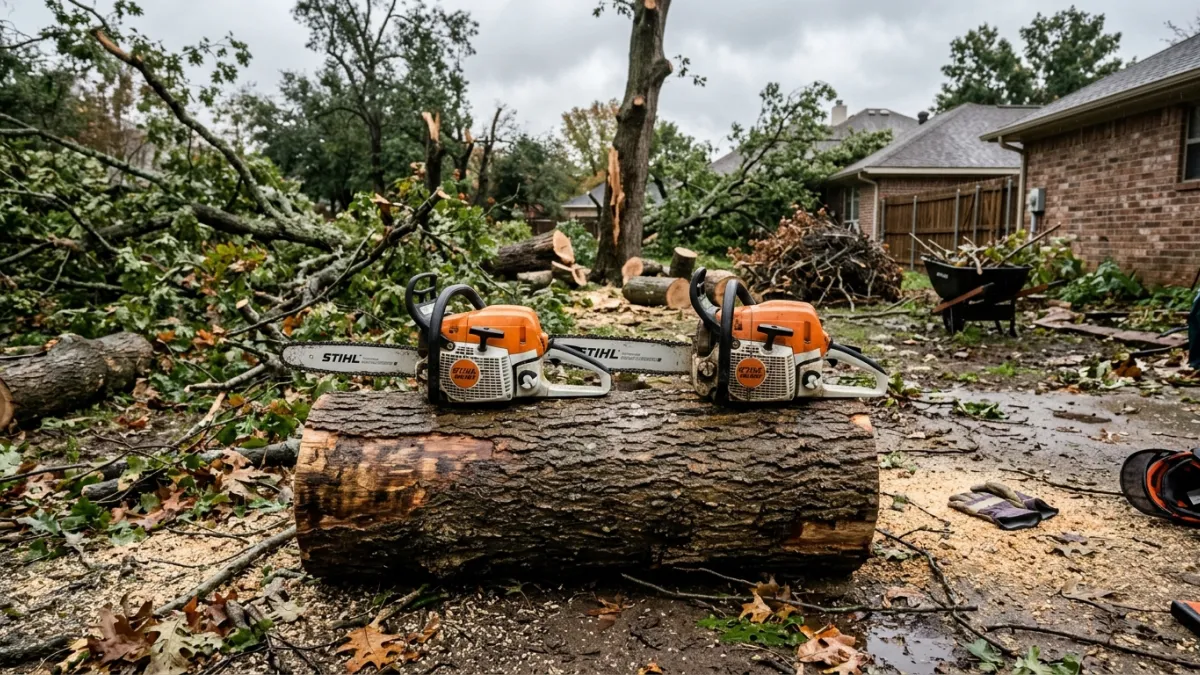
Quick answer: A 50cc chainsaw offering 3.2 to 3.5 horsepower is optimal for medium storm cleanup, bucking logs up to 16 inches in diameter, and working long hours without heavy fatigue. For large fallen hardwoods exceeding 18 to 20 inches in diameter, a 60cc engine delivering 4.5 to 4.8 horsepower provides the necessary torque to pull longer guide bars and slice through dense timber efficiently.
Engine Displacement and Power Output Technical Breakdown
Engine displacement directly determines a chainsaw's torque output, heat dissipation capacity, and maximum bar length. Chainsaws in the 50cc class, such as the STIHL MS 271 (50.2cc, 3.5 hp / 2.6 kW) or the Husqvarna 450 Rancher (50.2cc, 3.2 hp), are engineered to strike a balance between manageable weight and effective power output. These engines typically operate at powerhead weights around 11.2 to 12.3 lbs (5.1 to 5.6 kg) excluding fuel and cutting equipment. They excel in general property maintenance, firewood cutting, and limb cleanup where portability is critical.
Moving up to the 60cc class brings a substantial jump in torque and raw cutting capability. Professional and land-owner models like the Husqvarna 562 XP Mark II (59.8cc, 4.7 hp / 3.5 kW) and the STIHL MS 362 (59.0cc, 4.6 hp / 3.4 kW) pull heavier chains through hardwood logs without bogging down under load. The extra displacement allows these powerheads—weighing between 12.3 and 13.0 lbs—to comfortably drive 20-inch to 24-inch guide bars. While the added weight demands more physical stamina during all-day operation, the speed at which a 60cc saw completes heavy bucking cuts significantly reduces total trigger time.
Pro tip: After running a brand-new chain on a storm cleanup job, always re-check your chain tension after the first tank of 50:1 pre-mix fuel. New chains stretch rapidly during their initial break-in period under heavy loads, and running a loose chain on storm debris invites throw-offs or severe bar groove wear.
Evaluating Cutting Capacity and Guide Bar Options
Matching your guide bar length to your engine capacity is critical for maintaining high chain speed and preventing engine overheating. A 50cc chainsaw runs most efficiently with an 18-inch guide bar, though it can run a 16-inch bar for maximum cut speed or a 20-inch bar for occasional larger cuts. Running a .325" pitch chain with a .050" gauge on a 50cc saw allows for a narrower kerf, meaning the saw removes less wood per revolution and maintains high RPMs through medium-sized limbs.
In contrast, 60cc chainsaws easily handle 3/8" pitch pitch chains mounted on 20-inch to 24-inch guide bars. The larger 3/8" chain features bigger cutters and thicker drive links (typically .050" or .058" gauge), which withstand the abrasive dirt, grit, and mud often embedded in storm-toppled trees. If you frequently cut trunks that match or exceed the full length of your bar, the 60cc powerhead provides the necessary oil pump volume and engine torque to pull oil and chain through deep cuts smoothly.
| Specification / Feature | 50cc Class Chainsaw | 60cc Class Chainsaw |
|---|---|---|
| Engine Displacement Range | 50.0 cc – 50.2 cc | 59.0 cc – 59.8 cc |
| Horsepower Range | 3.2 hp – 3.5 hp | 4.5 hp – 4.8 hp |
| Powerhead Weight (Dry) | 11.2 lbs – 12.3 lbs | 12.3 lbs – 13.0 lbs |
| Recommended Bar Lengths | 16" – 20" (18" ideal) | 18" – 24" (20"-22" ideal) |
| Standard Chain Setup | .325" Pitch / .050" Gauge | 3/8" Pitch / .050" or .058" Gauge |
| Optimal Log Diameter | Up to 16 inches | 18 to 24+ inches |
| Fuel Ratio (2-Stroke) | 50:1 (Gasoline to Synthetic Oil) | 50:1 (Gasoline to Synthetic Oil) |
Storm Cleanup Hazards: Tension, Compression, and Safety Practices
Clearing trees knocked down by high winds or heavy ice presents unique hazards compared to normal tree felling. Fallen timber is frequently held under massive tension or compression due to overlapping branches, root balls, or pressure from adjacent structures. Attempting to cut a limb under tension without reading the wood grain properly can cause the saw bar to pinch instantaneously, leading to dangerous kickback or broken cutting equipment.
When working on storm debris, always evaluate the direction of force on a log before starting your cut. Perform a small relief cut (roughly one-third of the log's diameter) on the compression side first, followed by a finishing cut from the tension side. Personal Protective Equipment (PPE) is non-negotiable during storm response operations. Operators must wear cut-retardant chainsaw chaps, heavy-duty leather boots, non-slip work gloves, and a helmet system fitted with hearing protection and a mesh face screen to guard against flying wood chips and snapping branches.
- Inspect the Work Area: Check overhead for hung-up branches ("widowmakers") and downed utility lines before starting any saw.
- Maintain Firm Footing: Wet soil, loose leaves, and stacked brush create severe trip hazards; establish a clear retreat path.
- Start Cuts at Full Throttle: Engage the wood at wide-open throttle to prevent binding and allow the engine's centrifugal clutch to fully engage.
- Monitor Chain Lubrication: Keep your bar oil reservoir topped off every time you refuel with 50:1 mixed gas to keep the bar nose sprocket running cool.
Maintenance Intervals and Operational Efficiency
Storm cleanup work subjects equipment to harsh environments, accelerating mechanical wear. Air filters quickly become clogged with fine sawdust and debris. Modern 50cc and 60cc chainsaws feature centrifugal air cleaning systems (such as Husqvarna's Air Injection or STIHL's pre-separation filtration) that filter out larger particles before they reach the main filter element. Cleaning the air filter in warm soapy water and inspecting the spark plug gap (typically set to 0.020 inches / 0.5 mm) every 10 operational hours ensures clean combustion and smooth idling.
Proper fuel management is equally crucial. Always use fresh 89+ octane gasoline mixed at a precise 50:1 ratio with high-quality 2-stroke synthetic oil, or opt for pre-mixed ethanol-free fuel. Ethanol-blended fuel left sitting in a carburetor absorbs atmospheric moisture, causing lean running conditions, vapor lock, and severe piston scoring under heavy cut loads.
Choosing the Best Saw for Your Property
For most suburban homeowners, small acreage owners, and casual DIY users, a 50cc chainsaw running an 18-inch bar is the sweet spot. It provides ample power for clearing moderate limb blowdowns and bucking up to 16-inch trunk sections while remaining light enough to operate safely over multi-hour work sessions. If your property primarily consists of medium softwoods or mixed hardwoods under 18 inches in diameter, the 50cc class delivers maximum efficiency per dollar spent.
However, if your land features mature hardwoods like oak, maple, or hickory, or if you regularly face heavy storm damage requiring 20-inch to 24-inch bars, step up to a 60cc engine. The elevated torque reserves of a 60cc powerhead cut job times dramatically when processing massive trunk sections, reducing thermal stress on both the powerhead and the operator.
Frequently Asked Questions
Can a 50cc chainsaw pull a 20-inch guide bar during heavy storm cleanup?
Yes, a 50cc chainsaw can run a 20-inch guide bar, but it is at the upper limit of its capacity. In dense hardwoods, a 50cc saw with a 20-inch bar will require a lighter touch to avoid bogging the engine down. For continuous cutting with a 20-inch or longer bar, a 60cc chainsaw is strongly recommended.
What is the main difference in cutting speed between 50cc and 60cc saws?
A 60cc chainsaw produces roughly 30% to 40% more horsepower and significantly higher torque than a 50cc model. This extra power allows the 60cc saw to pull a larger 3/8" pitch chain through thick timber without dropping chain speed under heavy bar pressure.
Why is ethanol-free fuel recommended for storm cleanup chainsaws?
Storm cleanup equipment often sits idle for months between weather events. Gasoline containing ethanol absorbs moisture over time, leading to phase separation, clogged carburetor jets, and starting failures during emergencies. Ethanol-free fuel mixed with synthetic 2-stroke oil stays stable for up to two years.
Sources
- STIHL Official Technical Data & Product Specifications
- Husqvarna Chainsaw Technical Specifications & User Manuals
- OSHA 1910.266 Logging Operations & Chainsaw Safety Standards
- ANSI B175.1 Gasoline-Powered Chain Saws Safety Requirements
Looking for the Right Gear?
Check out our verified Top Professional Chainsaws & Safety Gear Essentials on Amazon.
As an Amazon Associate, we earn from qualifying purchases.