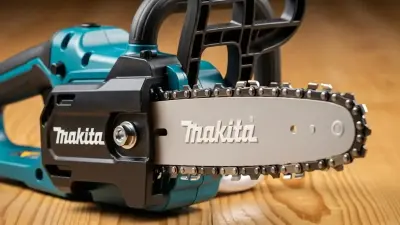
Quick answer: Makita cordless Top Handle Chainsaws deliver instantaneous torque, low vibration, and gas-equivalent cutting power (ranging from 25cc to 40cc equivalents) without two-stroke maintenance or pull-starts in the tree canopy. Built specifically for certified arborists and experienced aerial cutters, models like the 18V LXT XCU08 and 40V Max XGT GCU03 excel at limbing, crown reduction, and precise canopy work when maneuverability is essential.
Understanding Top Handle Design and Professional Use Cases
The primary distinction between a traditional rear-handle chainsaw and a Top Handle Chainsaw lies in ergonomics and weight distribution. On a top handle saw, the throttle control and primary grip sit directly over the center of gravity, right above the motor housing. This configuration creates a highly compact footprint that allows a climber to maneuver the saw easily through tight branch crotches, operate within rope rigging setups, and secure the tool to a harness D-ring without excessive snagging.
However, this tight center of gravity alters kickback physics significantly compared to standard saws. Rear-handle saws provide a wider distance between hands, giving the operator leverage to push back against rotational kickback forces generated at the bar tip. Because a top handle saw places the hands much closer together, maintaining a firm two-handed grip whenever possible is vital. These tools are strictly engineered for working at height, in lift buckets, or inside dense crowns where a full-sized rear handle is impractical.
Pro tip: Top handle battery saws deliver instant, 100% torque the exact millisecond you pull the trigger. On a gas saw, you feel the clutch engage before full power hits, giving you a tiny reaction window. With Makita cordless saws, always establish your solid two-handed stance and verify tip clearance before touch-starting the chain against a limb to prevent unexpected rotational kickback.
Makita 18V LXT Dual-Battery vs. 40V Max XGT Platforms
Makita structures its cordless outdoor power equipment across two main battery ecosystems: the 18V LXT (utilizing two 18V batteries in series to produce 36V) and the newer, high-output 40V Max XGT platform. Choosing between these platforms depends on whether you prioritize compatibility with an existing tool collection or maximum cutting speed and raw mechanical torque under heavy load.
The 18V LXT Dual-Battery setup (such as the 36V XCU08) runs two standard 18V LXT packs side by side. This system delivers output roughly equivalent to a 30cc to 35cc gas engine, spinning chains at speeds up to 3,940 FPM (feet per minute). It shines in medium-duty arborist work, deadwood removal, and limbs under 8 inches in diameter. The main advantage is seamless battery interchangeability if you already own Makita 18V power tools.
The 40V Max XGT platform utilizes a single, high-capacity 40V battery built with impact-resistant casings and digital communication microchips between the tool, battery, and charger. Models like the XGT GCU03 deliver power output matching a 40cc professional gas saw, pushing chain speeds over 5,000 FPM. This raw power allows the saw to maintain high chain RPM without bogging down during full-bar cuts in dense hardwoods like oak, maple, or hickory.
Technical Specifications Comparison
Selecting the right saw requires evaluating power output, chain speed, guide bar compatibility, and overall working weight. The following table highlights key technical parameters across Makita's professional top handle range compared to standard gas reference points.
| Model / Spec | Makita XCU08 (18V x2 / 36V) | Makita GCU03 (40V Max XGT) | Typical 35cc Gas Top Handle |
|---|---|---|---|
| Gas Equivalent | 30cc - 35cc | 38cc - 40cc | 35cc |
| Max Chain Speed | 3,940 FPM (20 m/s) | 5,000 FPM (25.4 m/s) | 4,500 FPM (23 m/s) |
| Recommended Bar Lengths | 12" - 14" | 12" - 16" | 12" - 16" |
| Chain Pitch & Gauge | 3/8" Low Profile, .043" or .050" | .325" Pitch or 3/8" LP, .043" | 3/8" Low Profile, .050" |
| Powerhead Weight (Dry) | 7.3 lbs (approx. 9.8 lbs w/ batteries) | 7.5 lbs (approx. 10.1 lbs w/ battery) | 7.5 lbs to 8.2 lbs (plus fuel/oil) |
| Operating Noise (Operator Ear) | Approx. 89 dB(A) | Approx. 91 dB(A) | 102 - 106 dB(A) |
Key Hardware Features and Maintenance Essentials
Makita incorporates several hardware features engineered specifically to handle harsh jobsite conditions. Their Outer Rotor Brushless Motor direct-drive system places the rotor on the outside of the stator, delivering direct drive to the drive sprocket without internal reducing gears. This design reduces mechanical friction points, eliminates carbon brush replacements, and maximizes battery efficiency.
To keep a cordless top handle saw running reliably, routine maintenance must focus on bar care, oiling mechanics, and electronic connection hygiene. Battery saws generate heat differently than gas units; heat builds rapidly in the guide bar and chain due to instantaneous high torque. Inspecting the bar groove and keeping auto-oiler channels free of packed wood dust is vital for preventing bar tip sprocket failure.
- Chain Tensioning and Bar Nut Retention: Makita utilizes captive bar nuts that remain attached to the side cover, preventing lost hardware in forest leaf litter or brush. Always check chain tension frequently, as narrow-kerf chains (.043" gauge) expand quickly as friction warms the metal bar.
- Automatic Lubrication Tuning: The bottom-mounted adjustable oil pump allows users to fine-tune bar oil flow based on wood density and oil viscosity. Use high-quality winter or summer weight bar and chain oil rather than used engine oil to protect the internal electrical pump solenoids.
- Battery Terminal Care: Periodically spray compressed air into the battery receiver contacts to clear fine dust. Moist sawdust trapped across 40V contacts can cause high-resistance tracking and thermal cut-outs during continuous cutting.
- Personal Protective Equipment (PPE): Battery chainsaws require full safety gear. Ensure your chainsaw chaps are rated for electric/battery saws, as the constant high torque of brushless motors can cut through standard cut-retardant fibers faster than 2-stroke engines. Always wear an ANSI-approved helmet with a face screen and safety glasses.
Choosing the Right Makita Cordless Saw for Your Needs
If you are already invested in the Makita 18V LXT system and need a lightweight, reliable saw for seasonal tree trimming, orchard maintenance, or light rigging work, an 18V x2 (36V) model equipped with a 12-inch or 14-inch bar running 3/8" low profile chain is an economical, highly capable setup. Professional arborists doing daily canopy work, block removals, or thick hardwood pruning will benefit significantly from stepping up to the 40V Max XGT system. Equipping an XGT top handle saw with a 14-inch or 16-inch bar gives you maximum cut speed, superior weather resistance, and performance that fully replaces traditional 40cc gas equivalents on every climbing job.
Frequently Asked Questions
Are top handle chainsaws safe for home DIY use on the ground?
Top handle chainsaws are explicitly designed for aerial use by trained arborists. Because your hands sit close together, you have significantly less physical leverage to control sudden kickback compared to a standard rear-handle saw. Ground operators, homeowners, and firewood cutters should always select a traditional rear-handle chainsaw for safety.
How long do batteries last when cutting with a Makita top handle saw?
Runtime depends on wood density, chain sharpness, and operator technique. On a dual 18V 5.0Ah setup or a single 40V 4.0Ah pack, operators generally expect between 100 to 180 cuts in 4-inch soft wood per charge. In practical arborist work where the saw is run in bursts rather than continuously, two battery sets are usually enough to last a full work shift with a fast charger on site.
Can I run a standard 3/8" full-profile chain on my Makita cordless saw?
Most Makita cordless top handle saws are engineered to run thin-kerf, low-profile chains (such as 3/8" LP or .325" Mini-Pitch in .043" or .050" gauge). Switching to a full-profile chain increases cutting resistance, which dramatically reduces battery runtime and can cause premature thermal overload in the brushless motor.
Sources
- Makita USA Official Power Tool & Outdoor Equipment Specifications
- ANSI B175.1 Safety Requirements for Gasoline and Electric Powered Chainsaws
- OSHA 1910.266 Logging and Tree Trimming Safety Standards