Disclosure: As an Amazon Associate, we earn from qualifying purchases.
Operating high off the ground in a tree canopy or bucket truck requires a vastly different tool design than cutting firewood on the ground. top handle chainsaws place the rear control handle directly on top of the powerhead, shifting the center of gravity forward and making the saw incredibly compact and easy to control with one hand when positioning in tight branch crotches. Choosing the wrong climbing saw can lead to rapid arm fatigue, inaccurate cuts, or serious safety hazards during intricate canopy work.Quick answer: The Echo CS-2511T leads for pure weight savings at just 5.2 pounds dry, while the Stihl MS 201 TC-M remains the ultimate gas power standard for heavy limbs. For battery enthusiasts, the Husqvarna T542i XP introduces a revolutionary centrifugal clutch feel, and the Milwaukee M18 FUEL Top Handle provides unmatched cordless torque for users already invested in battery platforms.
Understanding Top Handle Chainsaws and Essential Safety Realities
Top handle chainsaws are specialized cutting instruments engineered for certified arborists, experienced tree surgeons, and trained landowners managing aloft pruning. Unlike standard rear-handle chainsaws where your hands sit far apart for maximum leverage and anti-kickback control, top handle units group the controls closely over the engine casing. This tight profile allows the saw to maneuver effortlessly through dense crowns, limb crotches, and suspended rope setups. However, this balance trade-off reduces control against rotational kickback compared to conventional saws, making proper technique non-negotiable.
Industry standards, including OSHA 1910.266 and ANSI B175.1 guidelines, explicitly state that top handle saws are intended primarily for off-ground tree care operations. Operating a top handle saw at ground level with two hands on the close-coupled handles significantly decreases your leverage, bringing your body closer to the guide bar path. Arborists always maintain a firm two-handed grip whenever a cut is initiated, utilizing designated harness lanyard attachment loops and keeping the chain brake engaged between cuts.
Whether you choose a two-stroke petrol engine running a precise 50:1 fuel-to-oil mix or a modern 36-volt lithium battery platform, understanding chain pitch and gauge is vital. Most top handle saws utilize narrow kerf 3/8-inch Low Profile (LP) or 1/4-inch pitch chains with .043" or .050" gauges to minimize resistance, limit kickback forces, and maximize battery runtimes or engine torque delivery. High-visibility protective chaps, a climbing helmet equipped with a mesh visor, and ear protection remain mandatory personal protective equipment (PPE) regardless of project scale.
Top 4 Top Handle Chainsaws in 2026: In-Depth Reviews
1. Echo CS-2511T: The Featherweight Gas Benchmark
The Echo CS-2511T has revolutionized lightweight canopy work. Weighing an astonishing 5.2 pounds (powerhead dry weight), it stands as the lightest gas-powered top handle chainsaw available globally. Driven by a commercial-grade 25.0 cc two-stroke engine delivering roughly 1.5 horsepower, this saw punches well above its physical weight class. It accelerates rapidly, enabling arborists to trim lateral branches and conduct fine pruning without experiencing upper-body exhaustion during six-hour climbing sessions.
Echo designed the CS-2511T with top-tier ergonomic features. The textured top handle provides exceptional tactile feedback even when wearing heavy leather work gloves, while the side-access chain tensioner simplifies on-rope adjustments. It accommodates 12-inch or 14-inch guide bars running .043" or .050" narrow kerf chain, keeping drag low and cutting speed crisp. A palm-rest feature aids control when making delicate undercut bites, and the swing-out lanyard ring stows neatly out of the way when unclipped.
Maintenance on the CS-2511T is straightforward for both professionals and knowledgeable landowners. The tool-less air filter cover allows rapid trail-side cleaning, while the clutch-driven oil pump stops oil delivery at idle, preventing messy gear bag leaks. For users seeking minimal weight while climbing without sacrificing the unlimited runtime of a gas tank, the CS-2511T remains nearly unbeatable.
2. Stihl MS 201 TC-M: The Heavy-Duty Professional Powerhouse
Featherweight Precision in the Canopy: Pro Top-Handle Power

When heavy limb removals, crown reductions, and dense hardwoods are on the docket, the Stihl MS 201 TC-M is the tool arborists rely on most. Powered by a robust 35.2 cc engine outputting 2.41 horsepower (1.8 kW), this saw delivers unmatched cutting torque among compact gas chainsaws. Stihl’s M-Tronic (M) fully electronic engine management system automatically regulates ignition timing and fuel metering under all operating conditions, eliminating manual carburetor screws and ensuring crisp acceleration right out of the scabbard.
At approximately 8.3 pounds dry powerhead weight, the MS 201 TC-M is heavier than the Echo, but it repays that weight with raw cutting speed. It handles guide bars from 12 up to 16 inches, making quick work of 10-inch to 14-inch oak or maple limbs. The micro-processor controlled ignition adapts to altitude, temperature, and fuel quality changes in real-time, allowing you to focus on rope positioning rather than cold-start choke settings.
The chassis features captive bar nuts that cannot drop to the forest floor during field chain swaps, an essential convenience when suspended 40 feet in the air. Built with high-grade magnesium components, robust anti-vibration rubber buffers, and an efficient Master Control Lever, the MS 201 TC-M represents the gold standard for daily commercial use where power speed cannot be compromised.
3. Husqvarna T542i XP: Battery Innovation with a Centrifugal Clutch
Husqvarna set a new benchmark in battery-powered aerial tools with the T542i XP. Operating on Husqvarna’s 36V BLi lithium-ion ecosystem, the T542i XP solves a major complaint arborists have long held regarding battery chainsaws: soft, instant-on direct drive torque that can bog when jamming into a pinch. Husqvarna incorporated an actual mechanical centrifugal clutch into this cordless saw, allowing the motor to spin up momentum before engaging the drive sprocket. This provides a smooth, gas-like throttle feel, aggressive bucking bite, and rapid response.
With a high chain speed reaching up to 24 m/s (depending on bar configuration), the T542i XP cuts swiftly through green hardwoods and resinous softwoods alike. The machine accepts 12-inch to 14-inch SP21G or SP33G X-Cut chains, delivering ultra-clean cuts with reduced splintering. An intuitive digital interface on the handle allows instant battery status checks, while the IPX4 weather-resistance rating ensures reliable performance during rainy seasonal work.
Weighing around 5.5 pounds without a battery (approx. 8.2 lbs equipped with a BLi200X battery), the balance in hand is exceptionally neutral. The absence of pull cords, exhaust fumes, and idling engine noise dramatically improves communication between ground crews and canopy climbers, making it one of the most technologically advanced top handle saws on the market.
4. Milwaukee M18 FUEL Top Handle Chainsaw: High-Torque Cordless Utility
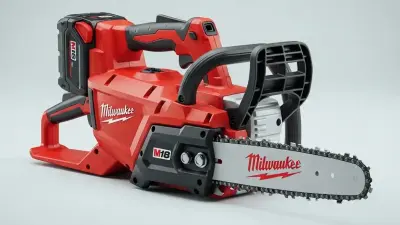
The Milwaukee M18 FUEL Top Handle Chainsaw (2826 Series) brings commercial-grade cordless cutting power to tradespeople, utility crews, and landowners already built into the M18 battery battery ecosystem. Powered by a POWERSTATE brushless motor and managed by REDLINK PLUS intelligence, this saw delivers performance equivalent to a 35cc gas engine while maintaining zero emission operation. It hits full throttle in under one second with a chain speed up to 15 m/s, yielding relentless torque without thermal shutoff under load.
Designed for severe duty, the saw features all-metal bucking spikes, an active side-chain tensioner, and captive bar nuts. Paired with an M18 REDLITHIUM FORGE or HIGH OUTPUT battery, it delivers up to 150 cuts per charge in 4x4 dimensional timber, making it ideal for full-day pruning operations or storm clearance work. The ergonomic angled bail handle provides comfortable grip angles when making horizontal or flush undercut passes.
Weighing approximately 8.0 to 10.3 pounds depending on battery size, the Milwaukee sits solidly in the hand. An onboard scrench holder, translucent oil reservoir, and robust lanyard tether loop ensure the tool fits smoothly into standard arborist climbing rigs without modification. It is a outstanding choice for those wanting heavy battery power without adopting a secondary battery charger network.
Technical Specifications & Model Comparison
Comparing key parameters side-by-side helps identify which saw aligns best with your existing tool setup, physical preference, and target limb diameters. The table below breaks down the technical profiles of our top four choices:
Canopy Safety: Heavy-Duty Arborist Work Harness

| Model | Power Source / Spec | Dry Weight (Powerhead) | Bar Length Options | Chain Pitch & Gauge | Best Application |
|---|---|---|---|---|---|
| Echo CS-2511T | 25.0 cc Gas (2-Stroke) | 5.2 lbs (2.4 kg) | 12" - 14" | 3/8" LP or 1/4" (.050") | Lightweight climbing & fine pruning |
| Stihl MS 201 TC-M | 35.2 cc Gas (2.41 hp) | 8.3 lbs (3.75 kg) | 12" - 16" | 3/8" PS / Picco (.050") | Heavy limb removals & daily commercial use |
| Husqvarna T542i XP | 36V Li-ion (Centrifugal Clutch) | 5.5 lbs (w/o battery) | 12" - 14" | .325" Mini or 3/8" LP (.043") | Quiet, gas-feel battery tree work |
| Milwaukee M18 FUEL | 18V (M18 REDLITHIUM System) | 7.3 lbs (w/o battery) | 12" - 14" | 3/8" LP (.043" or .050") | High-torque battery utility & landowner tasks |
Crucial Considerations When Choosing a Top Handle Chainsaw
Gas vs. Battery Power in Aerial Environments
The choice between two-stroke gas engines and lithium battery power heads comes down to job duration and noise tolerance. Gas saws like the Echo CS-2511T and Stihl MS 201 TC-M provide continuous refuel-and-go productivity, making them ideal for deep forestry work or storm emergency responses where electrical outlets are distant. Gas engines require consistent fuel maintenance, including using 89+ octane ethanol-free gasoline mixed at 50:1 with high-grade synthetic 2-stroke oil to prevent carburetor scoring and premature piston wear.
Conversely, battery top handle models eliminate pull starts while perched in harness ascenders, run completely quiet between cuts, and drastically reduce vibration fatigue. Modern 36V and 18V brushless motors produce instant torque, enabling rapid single-cut operations without idling fuel waste or pull-cord struggles aloft. However, professional operations require investment in multiple high-capacity batteries and field chargers.
Weight, Balance, and Chain Setup
In top handle chainsaws, every single ounce matters. When reaching out past your center of gravity to prune a branch, a 2-pound weight difference feels multiplied tenfold by the end of the day. Saws with powerhead weights under 6 pounds allow effortless maneuvering, whereas 8-to-10 pound setups demand superior upper-body stamina. Balance is equally critical; a top handle saw should sit flat or slightly nose-down when suspended from its lanyard attachment ring.
Pro tip: Brand new chains stretch rapidly during their first 15 minutes of cutting due to pin seating friction. When breaking in a new chain on a top handle saw, tension it snug to the bar bottom, make three light cuts, engage the chain brake, and recheck tension immediately. Running a loose chain on a top handle saw aloft greatly increases the risk of a throw, which can severely damage the clutch cover or injure climbing lines.
Maintenance Protocols for Peak Reliability
Top handle chainsaws operate in harsh, high-vibration conditions and require systematic maintenance to ensure long service life. Follow these core service routines:
- Daily Inspection: Clean debris from bar oil passages, check chain brake engagement, inspect sprocket nose bearings, and verify lanyard clip integrity.
- Chain Sharpening: Maintain correct cutter angles (typically 30 degrees) using a matched round file (e.g., 5/32" for 3/8" LP chains) and file depth gauges down to .025" for smooth cutting action.
- Air & Fuel System (Gas Models): Clean fleece air filters with warm soapy water weekly; check spark plugs every 25 hours, maintaining a gap between 0.020" and 0.025".
- Bar Care: Dress guide bar rails with a flat file every 5-10 operating hours to remove metal burrs and flip the bar regularly to promote even wear.
Selecting the Ideal Top Handle Chainsaw for Your Needs
Never Drop Your Saw: Elastic Arborist Tool Lanyard

If your primary goal is minimizing weight and strain while working high in trees, the Echo CS-2511T is the absolute top pick due to its featherweight frame and responsive 25cc engine. Professional tree service crews needing maximum torque for heavy limb felling will find the Stihl MS 201 TC-M unrivaled in power delivery. For arborists seeking high-end cordless innovation with realistic throttle feel, the Husqvarna T542i XP is second to none. Finally, landowners or utility contractors already using Milwaukee M18 tools will gain immense value, cutting speed, and convenience from the Milwaukee M18 FUEL Top Handle Chainsaw. Select the model matching your physical demands, power preference, and platform compatibility to ensure safe, precise cutting year after year.
Frequently Asked Questions
Can a beginner or homeowner use a top handle chainsaw on the ground?
While top handle chainsaws can physically cut on the ground, they are strongly discouraged for non-professionals working at ground level. The close proximity of the handles reduces leverage, making kickback events significantly harder to control compared to standard rear-handle chainsaws. Rear-handle saws provide proper hand separation for far safer operation during firewood cutting and general yard cleanup.
What bar oil should I use in my top handle saw?
Always use a dedicated, high-tack bar and chain oil designed to adhere to fast-spinning drive links without slinging off at high speed. In cold winter conditions, switch to a lighter summer/winter blend or winter grade bar oil to maintain proper flow to the guide bar groove.
What fuel ratio does a gas top handle chainsaw require?
Gas top handle chainsaws run on a 50:1 gas-to-oil mixture, which equals 2.6 fluid ounces of 2-stroke air-cooled engine oil per gallon of 89+ octane ethanol-free gasoline. Pre-mixed engineered canned fuels (like Echo PowerFuel or Stihl MotoMix) are highly recommended because they extend carburetor diaphragm life and feature long shelf lives.
Are battery top handle saws as fast as gas climbing saws?
Yes, modern high-voltage battery top handle chainsaws like the Husqvarna T542i XP and Milwaukee M18 FUEL achieve chain speeds matching or exceeding many 30cc-35cc gas saws. They offer instant torque acceleration, though heavy continuous cutting will consume battery charge faster.