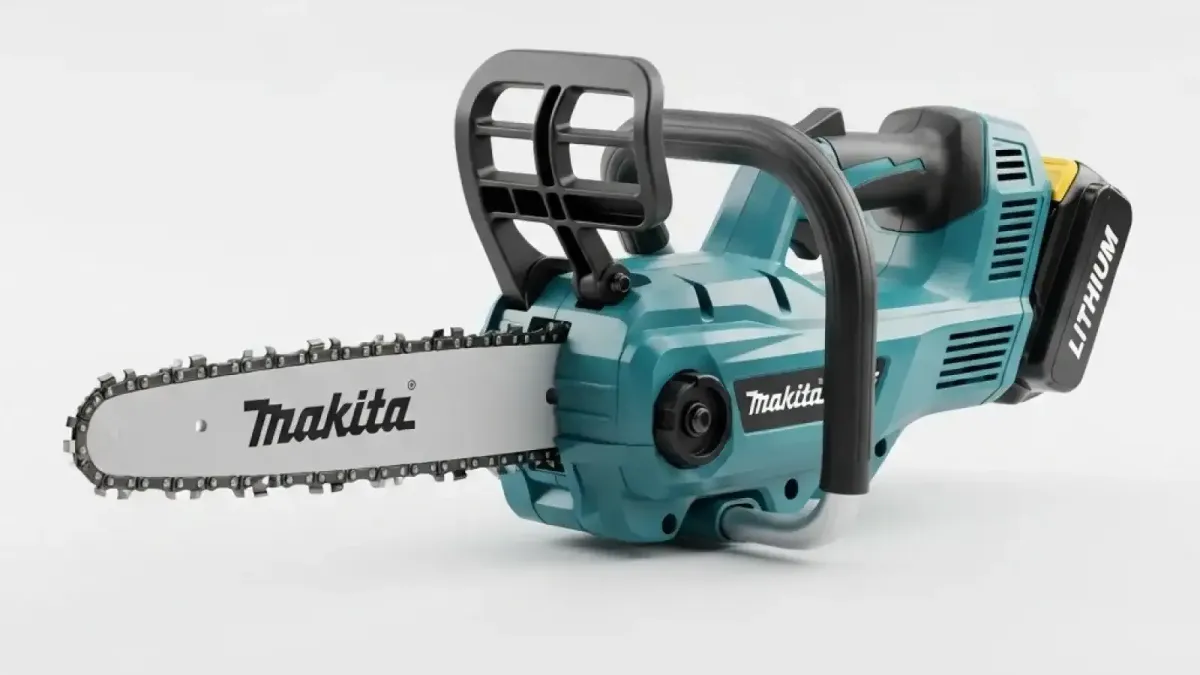
Quick answer: Makita's cordless chainsaw lineup excels across all user tiers, with the 36V (18V X2) LXT platform offering the best value for homeowners and the 40V Max XGT system providing gas-equivalent 40cc-class power for heavy-duty professional cutting. Choose a 14-inch bar for general yard maintenance or step up to a 16-to-18-inch setup for serious felling and bucking.
Understanding Makita's Battery Platforms: 18V, 36V, and 40V Max
Makita structures its cordless outdoor power equipment around three main electronic ecosystems. The entry-level tier utilizes a single 18V LXT battery, best suited for light pruning and detailed limbing. These lightweight units feature 10-inch bars and operate with a standard 3/8" Low Profile (LP) pitch chain with a .043" gauge, making them exceptionally maneuverable for one-handed operation or overhead work on small branches up to 4 inches thick.
The core workhorse for most property owners is the 36V system, powered by two 18V LXT batteries wired in series (18V X2). Operating on dual batteries delivers equivalent power to a 32cc to 35cc 2-stroke gas engine. These tools pull heavy current through Outer Rotor brushless motors, driving 14-inch to 16-inch guide bars at chain speeds exceeding 3,940 feet per minute (FPM). Utilizing standard .050" gauge, 3/8" LP chain, these saws balance clean slicing capability with easily sourced replacement saw chains.
At the top tier sits the 40V Max XGT platform, engineered specifically for high-demand commercial forestry and high-output property maintenance. Unlike the dual-battery setup, XGT uses a single, highly reinforced 40V lithium-ion pack with heavy-duty rail connections built to handle intense vibration and continuous high-amp drain. These saws match 40cc to 42cc gas engines, handling 16-inch and 18-inch bars with ease while maintaining full torque through dense hardwoods like oak and maple.
| Model Category | Typical Price Range (Bare Tool) | Typical Price Range (Kit) |
| Mini (e.g., 18V Chainsaw 10 Inch) | $150 - $250 | $250 - $400 (Single 5.0Ah battery) |
| Mid-Range (e.g., 36V 14 inch) | $250 - $350 | $400 - $550 (Two 5.0Ah batteries) |
| Professional (e.g., 40V 16 inch) | $350 - $450+ | $550 - $700+ (Single 4.0Ah/5.0Ah battery) |
Pro tip: Dual-battery 36V saws require both packs to have equal charge levels for peak efficiency. If you run a fully charged 5.0Ah battery alongside a half-depleted 3.0Ah pack, the system will shut down as soon as the weaker battery hits its low-voltage cutoff, causing annoying thermal cutoffs mid-cut. Always pair batteries of identical capacity and charge state before starting a bucking session.
Bar Lengths, Cutting Performance, and Engineering Features
Choosing the correct bar length depends entirely on the log diameter and the motor capacity driving the drive sprocket. Makita offers clear separation between their primary sizes, ensuring maximum efficiency without bogging down the electric motor under heavy wood loads.
- 10-inch to 12-inch Bars (18V LXT): Ideal for fruit tree pruning, trail clearing, and light limbing; best paired with a narrow kerf .043" chain.
- 14-inch Bars (36V 18V X2): The ultimate balance point for suburban homeowners; slices through logs up to 12 inches in diameter while preserving battery run-time.
- 16-inch Bars (36V & 40V Max): Designed for moderate firewood cutting, clearing fallen trunks, and mid-sized tree felling using .050" gauge chain.
- 18-inch Bars (40V Max XGT): Built for professional trade work, capable of tackling full 16-inch hardwood trunks without stalling out under load.
A stand-out feature across Makita’s mid-to-high tier saws is the variable speed trigger combined with an electronic power boost mode. This setting bypasses normal power limiters for 30 seconds to push extra current to the motor, allowing you to slice through stubborn knots or dense tree crotches without stalling. Additionally, the captivity nuts on the bar cover prevent lost hardware in deep forest underbrush, a simple design upgrade that every experienced sawyer appreciates.
Chain oiling on these units is managed through an adjustable automatic chain lubrication pump, driven directly by the main driveshaft. The transparent reservoir window lets you monitor bar oil levels at a glance. It is crucial to use proper, high-tack bar and chain oil rather than motor oil to prevent sling-off at high chain speeds and to protect both the bar nose sprocket and the chain drive links from premature thermal wear.
Head-to-Head Specification Comparison
To help you evaluate which platform best matches your physical workload and current tool investment, review the direct performance specifications across Makita's three flagship categories below:
| Model Category | Voltage Platform | Gas Displacement Equivalent | Recommended Bar Length | Chain Pitch & Gauge | Weight (With Batteries) |
|---|---|---|---|---|---|
| Light Pruning (DUC254 / XCU06) | 18V LXT | ~20cc - 25cc | 10" - 12" | 3/8" LP / .043" | 7.2 lbs |
| Standard Utility (XCU03 / XCU04) | 36V (18V X2 LXT) | 32cc - 35cc | 14" - 16" | 3/8" LP / .050" | 11.5 lbs |
| Pro Commercial (GCU04 / GCU05) | 40V Max XGT | 40cc - 42cc | 16" - 18" | .325" Pitch / .050" | 13.4 lbs |
When operating any of these saws, standard personal protective equipment (PPE) remains completely mandatory. Although battery saws lack a running exhaust note when idling, they develop instant peak torque the millisecond the trigger is compressed. Always wear ANSI-approved safety glasses, hearing protection, cut-resistant leather gloves, and protective chainsaw chaps rated for electric and gas saws alike.
Real-World Operational Guidance and Maintenance
Maintaining a cordless saw requires a slightly different approach than a traditional gas saw. Because electric motors turn on and off continuously between cuts rather than idling, heat builds up quickly in the saw chain if tension is improperly set. Check your drive link engagement frequently during your first 15 minutes of operation; dynamic friction creates stretch in new chains, leading to potential derailment if left unadjusted.
Cleanliness is another critical factor in battery tool longevity. Wood dust mixed with sticky bar oil creates a dense sludge under the clutch cover. Remove the side plate after every session, clear out accumulated chips near the oil output port, and check that the chain brake mechanism operates freely. Never clean electrical contacts or battery bay housings with water; use compressed air or a soft nylon brush to remove debris.
Proper battery care ensures maximum overall lifespan. Avoid storing lithium-ion packs in freezing temperatures or inside unventilated, high-heat steel toolboxes during mid-summer. Charging hot batteries immediately after a heavy cutting session degrades cell chemistry; let your packs cool down for 15 minutes before slotting them into Makita's dual-fan rapid chargers.
Which Makita Cordless Chainsaw Should You Buy?
If you already own a fleet of Makita 18V power tools for home improvement, purchasing a 36V (18V X2) bare tool with a 14-inch or 16-inch bar gives you the absolute best value for money, providing broad capability for seasonal firewood processing and yard maintenance. However, if you are starting from scratch or running a commercial landscaping crew that cuts daily, bypass the dual-battery setup and step directly into the 40V Max XGT platform with an 18-inch bar to gain gas-matching speed, maximum structural durability, and raw high-torque performance under sustained heavy load.
Frequently Asked Questions
Are Makita cordless chainsaws strong enough to cut down large trees?
Yes, 36V (18V X2) and 40V Max XGT models can easily fell medium-to-large trees up to 14 to 16 inches in trunk diameter. However, for trees larger than 18 inches, a commercial-grade 50cc+ gas saw remains more efficient for sustained deep cuts.
How long does the battery last on a Makita 36V chainsaw?
Using two 5.0Ah LXT batteries, a 36V Makita saw provides roughly 60 to 90 continuous cuts through 4x4 dimensional lumber or around 30 to 45 minutes of intermittent bucking and limbing on 6-inch to 8-inch hardwood logs.
Can I use standard bar oil in a Makita battery chainsaw?
Yes, any quality standard bar and chain oil works in Makita saws. Never run motor oil, used transmission fluid, or vegetable oil, as these lack the tackiness needed to properly lubricate the guide bar groove and sprocket nose at high RPMs.