
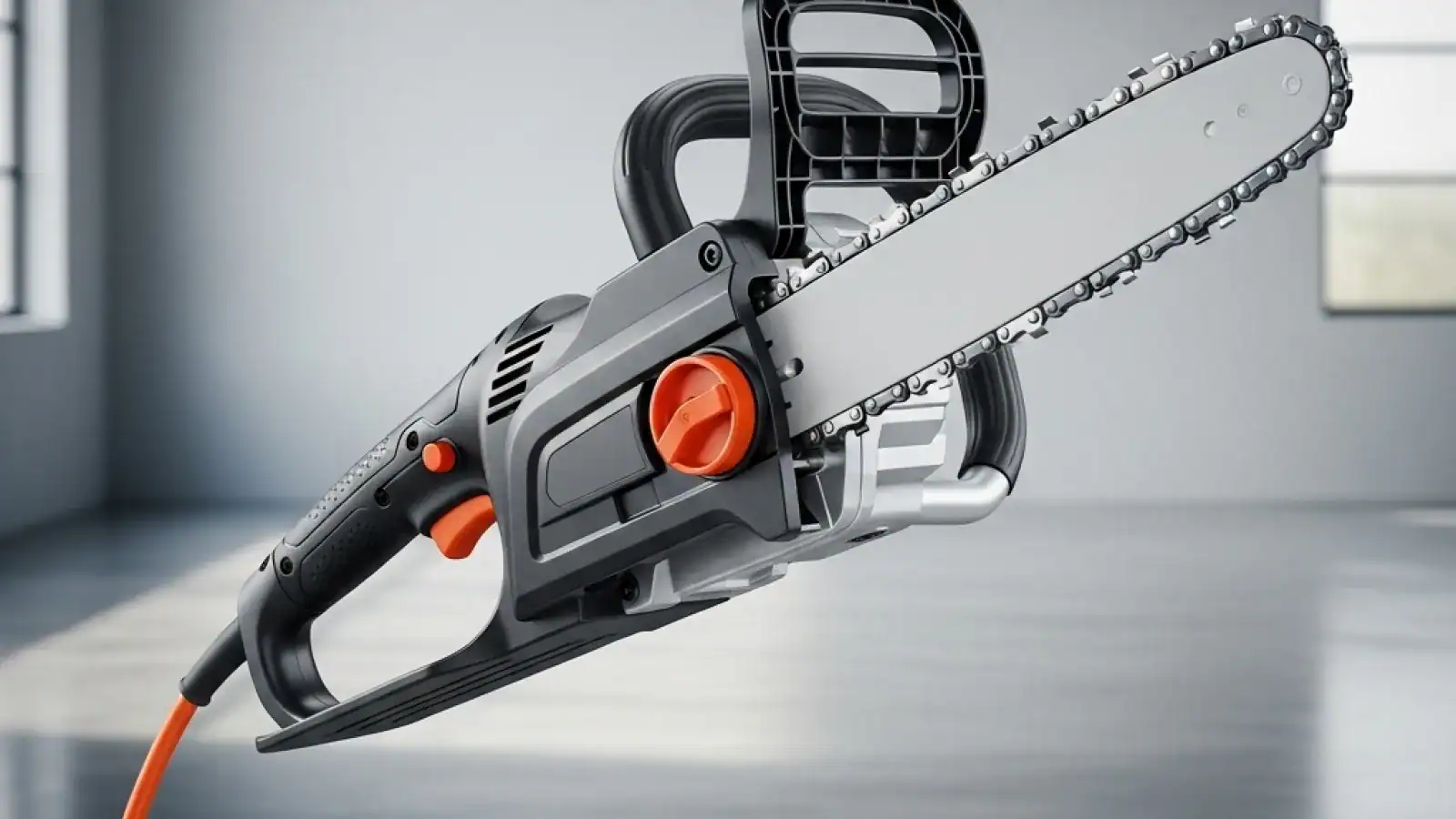

Understanding the Power of the Plug: Why Corded Chainsaws Deserve Your Attention
As a seasoned arborist and outdoor power equipment specialist, I’ve seen countless homeowners and DIY enthusiasts grapple with the choice of the right chainsaw. While gas-powered beasts often grab the headlines for sheer raw power, and battery-electric models boast impressive portability, there’s a quiet workhorse that consistently delivers reliable performance without the fuss: the corded chainsaw. Often overlooked, these electric marvels offer a compelling blend of power, convenience, and low maintenance, making them an ideal choice for a wide array of tasks around your property.
Table Of Content
- Understanding the Power of the Plug: Why Corded Chainsaws Deserve Your Attention
- Key Benefits: Unpacking the Advantages of Corded Saws
- Who is a Corded Chainsaw For?
- Choosing Your Perfect Corded Companion: What to Look For
- Motor Power: Amps and Their Meaning
- Bar Length: Matching the Saw to the Job
- Chain Types and Tensioning: The Heart of the Cut
- Essential Safety Features: Non-Negotiables
- Top Corded Chainsaw Models and Brands
- Mastering the Corded Chainsaw: Safe and Effective Operation
- Pre-Operation Checklist: Before You Plug In
- The Extension Cord Dilemma: Choosing the Right One
- Basic Cutting Techniques for Corded Saws
- Safety First, Always: Practical Tips
- Keeping Your Corded Saw in Top Shape: Maintenance and Longevity
- Chain Care: Sharpening and Oiling
- Bar Maintenance: Flipping and Cleaning
- Motor and Housing Care: Keeping it Clean
- Storage Solutions: Protecting Your Investment
- Corded vs. The Rest: Making an Informed Decision
- Corded vs. Gas: Power, Portability, Maintenance, Noise
- Corded vs. Battery-Electric: Runtime, Weight, Cost, Convenience
- When is a Corded Chainsaw Your Best Bet?
So, what exactly *is* a corded chainsaw? Simply put, it’s an electric chainsaw that draws its power directly from a standard wall outlet via an extension cord. Unlike its gas-guzzling counterparts that demand fuel mixing and engine upkeep, or battery-powered siblings limited by charge cycles, a corded chainsaw provides consistent, uninterrupted power for as long as it’s plugged in. This direct energy supply translates into a steady, predictable cutting force, making it a dependable tool for homeowners, property managers, and even some light commercial users who have access to electricity.
Key Benefits: Unpacking the Advantages of Corded Saws
In my years of working with all types of cutting tools, I’ve come to appreciate the unique advantages corded chainsaws bring to the table. First and foremost is the consistent power delivery. You’ll never experience battery fade or the engine sputtering due to low fuel; as long as you’re plugged in, your chainsaw is running at peak performance. This reliability is a huge plus, especially when you’re in the middle of a big job and don’t want interruptions.
Another significant benefit is their lightweight and ergonomic design. Compared to most gas models, corded chainsaws are considerably lighter, reducing operator fatigue and making them easier to maneuver for extended periods. This makes them perfect for tasks like limbing branches overhead or working in tight spaces. Furthermore, their low maintenance requirements are a dream for anyone tired of carburetors, spark plugs, air filters, and fuel stabilizers. With a corded saw, you primarily focus on keeping the chain sharp and the bar oiled – that’s it!
Beyond convenience, corded chainsaws are also an eco-friendly and budget-conscious choice. They produce zero emissions during operation, which is great for both your lungs and the environment. And when it comes to the initial investment and ongoing costs, corded models are typically the most affordable option, requiring no expensive fuel or replacement batteries. Their quiet operation is another bonus, allowing you to work without disturbing neighbors or needing heavy-duty hearing protection, though ear protection is always recommended for any chainsaw use.
Who is a Corded Chainsaw For?
While a corded chainsaw might not be the tool for felling massive old-growth trees deep in the forest, it’s an absolute champion for a surprising range of tasks. If you’re a homeowner looking to prune branches, cut firewood for your fireplace, clear storm debris, or handle small to medium-sized tree removal in your yard, a corded chainsaw is likely your ideal companion. Landowners with properties that have accessible power outlets will find them invaluable for regular yard maintenance and light construction projects.
DIY enthusiasts tackling woodworking projects or breaking down lumber will also appreciate the steady power and ease of use. Essentially, if your cutting tasks are within reach of an electrical outlet and involve wood up to 16-18 inches in diameter, a corded chainsaw offers an unparalleled balance of performance and practicality. It’s the perfect tool for those who want gas-like cutting capability without the noise, fumes, and complex upkeep.
Choosing Your Perfect Corded Companion: What to Look For
Selecting the right corded chainsaw isn’t just about grabbing the first one you see. Just like any power tool, understanding the key specifications and features will ensure you pick a model that truly meets your needs and stands the test of time. Let’s break down what matters most when you’re in the market for a plug-in powerhouse.
Motor Power: Amps and Their Meaning
The motor power of a corded chainsaw is typically measured in amps (amperes), ranging from around 8 to 15 amps. This number directly correlates to the saw’s cutting capability and how much resistance it can handle without bogging down. For lighter tasks like pruning small branches (up to 6 inches thick), an 8-10 amp model might suffice. However, for more demanding jobs like cutting firewood or felling small trees (up to 12-16 inches thick), I strongly recommend looking for a chainsaw in the 12-15 amp range.
A 15-amp motor, for example, will power through denser wood and larger diameters with significantly less effort and strain on the motor, leading to faster cuts and a longer tool lifespan. Don’t compromise on amperage if you anticipate tackling anything more than the lightest duties; it’s the heart of your saw’s performance.
Bar Length: Matching the Saw to the Job
The guide bar length is another critical factor. Corded chainsaws typically come with bars ranging from 12 to 18 inches. A 12-inch bar is excellent for precise pruning, limbing small branches, and light clean-up tasks. It’s highly maneuverable and often found on lighter, lower-amp models. A 14-inch bar is arguably the sweet spot for most homeowners; it offers a good balance of cutting capacity for firewood and small tree removal while remaining manageable.
For those needing to cut larger logs (up to 16-18 inches in diameter) or fell small-to-medium trees, an 16-inch or even 18-inch bar is preferable. Remember, the general rule of thumb is that the bar should be at least two inches longer than the diameter of the wood you plan to cut most often. Don’t oversize your bar unnecessarily; a longer bar can be harder to control and less efficient for smaller jobs.
Chain Types and Tensioning: The Heart of the Cut
The chain is where the rubber meets the road, or rather, where the teeth meet the wood. Most corded chainsaws come equipped with low-kickback chains, which are designed with safety features to reduce the risk of the saw suddenly kicking back towards the operator. Always ensure your replacement chains are also low-kickback for safety. Common chain sizes for corded saws include 3/8-inch low profile pitch with a .050-inch gauge.
Chain tensioning systems vary. Older or budget models might require a wrench and screwdriver, but many modern corded saws feature tool-free chain tensioning. This is a massive convenience, allowing you to adjust chain tension with a simple knob or lever – a feature I highly recommend. Proper chain tension is vital for safe and efficient cutting, so easy adjustment means you’re more likely to keep it dialed in. Look for models with an automatic oiling system as well, which continuously lubricates the bar and chain, reducing friction and extending the life of your components. A clear oil reservoir window is a bonus, allowing you to easily monitor the oil level.
Essential Safety Features: Non-Negotiables
Safety should always be your top priority. Ensure any corded chainsaw you consider has a robust chain brake, which stops the chain instantly in the event of kickback or if activated manually. A front handguard protects your hand from flying debris and helps prevent it from slipping onto the chain. As mentioned, a low-kickback bar and chain are standard but always worth confirming.
Other important safety and convenience features include an ergonomic handle design for a secure grip and reduced vibration, and a cord retention hook or clip to prevent the extension cord from accidentally disconnecting during operation. Never compromise on these safety features; they are literally life-savers.
Top Corded Chainsaw Models and Brands
While Stihl is renowned for gas saws, for corded electrics, you’ll find excellent options from brands like Black+Decker, Greenworks, Ryobi, and WORX. These manufacturers consistently offer reliable, feature-rich corded chainsaws that cater well to the homeowner and DIY market. For instance, the Black+Decker CS1518 15-Amp 18-inch Corded Chainsaw is a popular choice for its powerful motor and tool-free tensioning. The Greenworks 20312 18-inch 14.5-Amp Corded Chainsaw also stands out for its robust performance and user-friendly features. Always check recent reviews and compare specifications to find the best fit for your specific needs.
Mastering the Corded Chainsaw: Safe and Effective Operation
Once you’ve chosen your corded chainsaw, the next step is to learn how to operate it safely and efficiently. Even though corded saws are generally less intimidating than their gas counterparts, they are still powerful cutting tools that demand respect and proper technique. As an expert, I always emphasize that safety isn’t just a recommendation; it’s a requirement.
Pre-Operation Checklist: Before You Plug In
Before you even think about plugging in, take a moment for a thorough safety check. First, always wear appropriate Personal Protective Equipment (PPE): a sturdy pair of work gloves, eye protection (safety glasses or a face shield), hearing protection (earplugs or earmuffs), and steel-toed boots. A hard hat is also recommended if you’re working with overhead branches. Next, inspect your chainsaw: check the chain tension (should be snug but still able to be pulled around the bar by hand), ensure the chain is sharp, and confirm the bar oil reservoir is full. Finally, inspect your extension cord for any cuts, frays, or damage. A damaged cord is a serious electrical hazard.
The Extension Cord Dilemma: Choosing the Right One
Your extension cord is an integral part of your corded chainsaw’s performance and safety. Using the wrong cord can lead to power loss, motor damage, and fire hazards. Always use a heavy-duty, outdoor-rated extension cord. The crucial factor is the gauge (AWG) – the smaller the gauge number, the thicker the wire, and the more current it can safely carry over a distance. For most 12-15 amp corded chainsaws:
- Up to 50 feet: A 14-gauge (14 AWG) cord is usually sufficient.
- 50 to 100 feet: A 12-gauge (12 AWG) cord is strongly recommended to prevent voltage drop and overheating.
- Over 100 feet: Avoid using extension cords this long if possible. If unavoidable, use a 10-gauge (10 AWG) cord and be extra vigilant about heat.
Never daisy-chain multiple extension cords, and always uncoil the cord completely before use to prevent heat buildup. Secure the cord away from the cutting path to avoid accidentally cutting through it.
Basic Cutting Techniques for Corded Saws
Once you’re geared up and your cord is ready, let’s talk technique. Always maintain a firm, two-handed grip on the chainsaw, with your thumbs wrapped around the handles. Stand with your feet shoulder-width apart, ensuring a stable stance. When cutting, let the saw do the work; don’t force it. Apply steady, moderate pressure.
- Limbing: When removing branches from a felled tree, start from the base of the tree and work your way up, cutting small branches first. Be mindful of branches under tension that can spring back.
- Bucking: This is cutting a felled log into smaller, manageable sections. Always support the log so it doesn’t pinch the bar. For logs on the ground, cut about two-thirds of the way through from the top, then roll the log and finish the cut from the other side. If the log is suspended, cut from the top until the kerf begins to close, then cut from the bottom (undercut) to relieve tension, and finish from the top.
- Felling Small Trees: While corded saws can fell very small trees (usually up to their bar length), it’s crucial to understand proper felling techniques, including escape routes and hinge cuts. For anything beyond small saplings, I advise consulting a professional or using a more powerful gas saw designed for felling.
Safety First, Always: Practical Tips
Beyond the basics, here are some practical tips I always share: Keep your work area clear of debris and obstacles. Be aware of your surroundings, especially people and pets. Never cut above shoulder height, as this reduces control and increases kickback risk. Always be mindful of kickback zones (the upper quadrant of the guide bar tip) and avoid them. If the saw binds or gets stuck, release the trigger immediately and safely free the saw before resuming. And perhaps most importantly, if you feel fatigued or unsure about a cut, take a break or call a professional. There’s no shame in knowing your limits.
Keeping Your Corded Saw in Top Shape: Maintenance and Longevity
One of the greatest appeals of corded chainsaws is their simplicity, but “low maintenance” doesn’t mean “no maintenance.” A few simple, regular tasks will keep your saw running safely, efficiently, and extend its lifespan for many years. Think of it as a small investment of time that pays off big in performance and reliability.
Chain Care: Sharpening and Oiling
A dull chain is not only inefficient but also dangerous, increasing the risk of kickback and putting undue strain on the motor. I recommend sharpening your chain after every hour of cutting, or whenever you notice it’s tearing wood instead of cleanly slicing, or producing sawdust instead of chips. You can sharpen it with a round file (matching the chain’s specific size, usually 5/32″ or 3/16″ for consumer saws) or use an electric sharpener for more precision. Always refer to your saw’s manual for the correct file size and sharpening angles.
Equally important is ensuring your automatic oiling system is working correctly and that the bar oil reservoir is always topped up with good quality bar and chain oil. This specialized oil is tacky and designed to stick to the moving chain, reducing friction and heat. Check the oil level before each use, and refill as needed. A common oversight is forgetting to clean the oil port and bar groove, which can get clogged with sawdust, preventing proper lubrication.
Bar Maintenance: Flipping and Cleaning
The guide bar takes a lot of abuse, especially on the underside where the chain rides. To ensure even wear and extend its life, I advise flipping your guide bar over after every 8-10 hours of use. This distributes the wear more evenly across both edges. Regularly clean the bar groove, where the chain rides, using a flat-bladed tool. Sawdust and grime can accumulate here, impeding chain movement and oil flow. Also, inspect the sprocket nose (if your bar has one) for any damage or wear. Keep an eye out for burrs on the bar rails; these can be filed down with a flat file to keep the chain running smoothly.
Motor and Housing Care: Keeping it Clean
While corded chainsaws don’t have fuel systems, they still need basic cleaning. After each use, disconnect the power and use a brush or compressed air to clear sawdust and debris from the motor housing, cooling vents, and around the chain brake mechanism. This prevents overheating and keeps components moving freely. Periodically, remove the side cover (after disconnecting power, of course) and clean out any sawdust accumulation from around the clutch and sprocket area. Finally, always inspect your power cord for any signs of wear, cuts, or damage before and after each use.
Storage Solutions: Protecting Your Investment
When your cutting tasks are done, proper storage is key to longevity. First, ensure the saw is clean and dry. Store it in a cool, dry place, away from direct sunlight and moisture, which can lead to rust and degrade electrical components. Many chainsaws come with a scabbard or bar cover; always use it to protect the chain and prevent accidental injury. Keeping the saw in its original case or a dedicated storage box can also help protect it from bumps and dust. By following these simple maintenance steps, your corded chainsaw will be ready for action whenever you need it, for years to come.
Corded vs. The Rest: Making an Informed Decision
The chainsaw market offers a diverse range of options, and understanding where corded chainsaws fit into the bigger picture is crucial for making the best choice for your specific needs. Let’s compare them directly to their gas and battery-electric counterparts to highlight their unique position.
Corded vs. Gas: Power, Portability, Maintenance, Noise
Gas chainsaws are the undisputed champions of raw power and portability, especially for professional loggers and those tackling heavy-duty felling and bucking in remote areas. They offer greater bar lengths (up to 36 inches or more) and significantly higher torque. However, this power comes with considerable trade-offs: they are heavier, much louder (requiring robust hearing protection), emit noxious fumes, and demand extensive maintenance (fuel mixing, carburetor adjustments, spark plug changes, air filter cleaning). They also have a steeper learning curve for starting and operation. For the average homeowner, a gas chainsaw is often overkill and frankly, more hassle than it’s worth.
Corded chainsaws, in contrast, offer adequate power for most residential tasks without the noise, fumes, or complex maintenance. They are lighter and easier to start (just plug in and go). While their range is limited by the extension cord, for yard work and property maintenance near an outlet, they are a far more user-friendly and eco-conscious choice. You get reliable power without the headaches associated with small gas engines.
Corded vs. Battery-Electric: Runtime, Weight, Cost, Convenience
Battery-electric chainsaws have rapidly improved in recent years, offering impressive power and true portability without the cord. They are also quiet, low-maintenance, and emission-free, similar to corded models. However, they come with their own set of considerations. The primary limitation is runtime, which is dictated by battery life. For extended cutting sessions, you’ll need multiple expensive batteries or face frequent recharging downtime. Battery saws also tend to be heavier than corded models due to the battery pack, and their initial purchase cost is typically higher due to the battery and charger.
Corded chainsaws, on the other hand, offer unlimited runtime as long as they’re plugged in, making them superior for continuous, long-duration tasks. They are often the lightest and most affordable option among all electric chainsaws. While they lack the go-anywhere freedom of battery models, if your work is consistently within 100 feet of a power outlet, the consistent power, lower cost, and lighter weight of a corded saw make it a compelling choice over a battery-electric model.
When is a Corded Chainsaw Your Best Bet?
In my professional opinion, a corded chainsaw is your best bet when:
- You primarily work within reach of an electrical outlet (e.g., in your yard, garage, or workshop).
- Your tasks involve light to medium-duty cutting, such as pruning, limbing, cutting firewood, or felling small trees up to 18 inches in diameter.
- You value consistent, uninterrupted power over ultimate portability.
- You prefer low maintenance, quiet operation, and zero emissions.
- You are budget-conscious and want a reliable tool without the higher upfront cost of gas or battery models.
- You are a homeowner or DIY enthusiast who wants a powerful cutting tool that’s easy to start, operate, and maintain.
Corded chainsaws strike an excellent balance between affordability, power, and ease of use, making them a smart and practical choice for the vast majority of residential cutting needs. By understanding their strengths and how they compare to other types, you can confidently choose the ultimate guide to your next wood-cutting project.