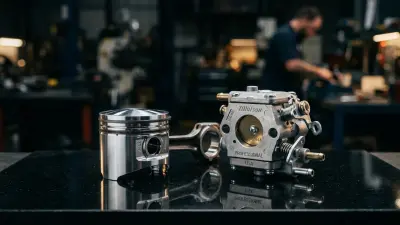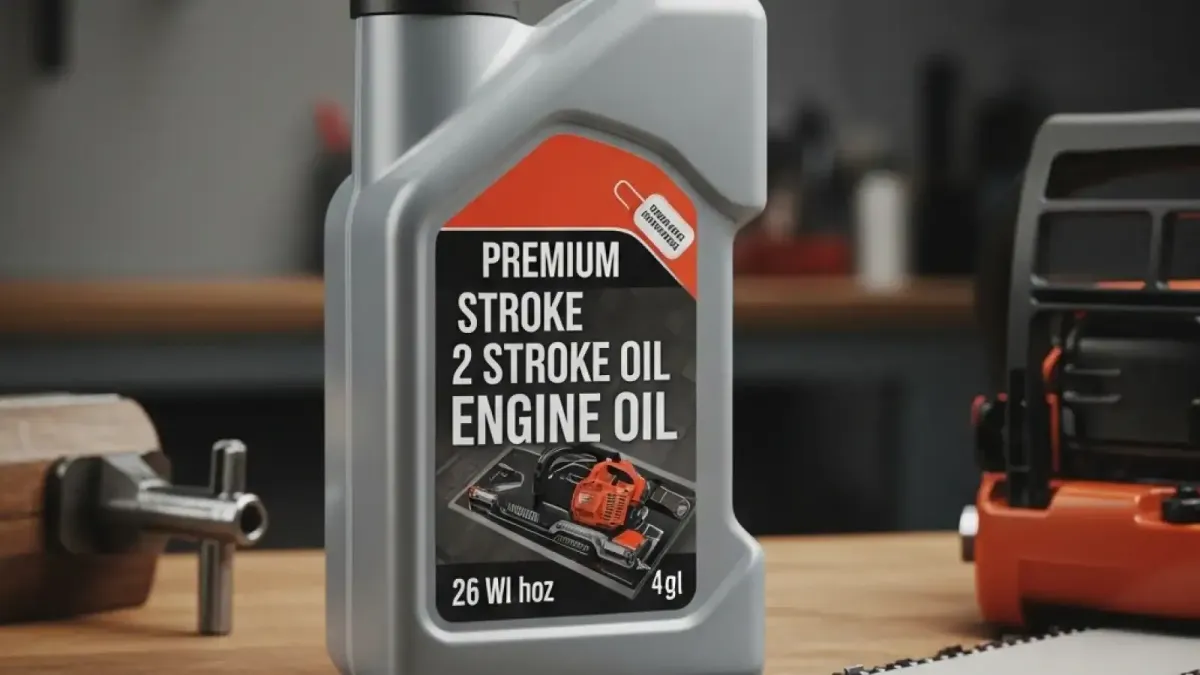
Running a two-stroke engine requires careful attention to the fuel mixture you pour into the tank. Unlike four-stroke engines in cars or lawnmowers that have an oil sump and filter, a 2-cycle engine relies entirely on the oil dissolved in its gasoline to lubricate the crankshaft bearings, piston pin, and cylinder walls. Under severe loads, a chainsaw running at 13,000 RPM can score a cylinder in less than thirty seconds if the oil fails to provide adequate film strength or if the mixture ratio is incorrect. Selecting the right oil is not just about keeping the engine running; it directly dictates how long your power head survives, how clean your spark arrestor stays, and how reliably your saw starts on frosty mornings.
Quick answer: For modern air-cooled engines like chainsaws, trimmers, and blowers, fully synthetic ISO-L-EGD and JASO FD rated 2-cycle oil offers the highest level of thermal protection and engine cleanliness. Premium options like STIHL HP Ultra or Husqvarna XP Synthetic mixed at a precise 50:1 ratio with fresh, ethanol-free gasoline will prevent carbon deposits, eliminate ring sticking, and maximize equipment lifespan.
Understanding Two-Stroke Engine Lubrication Standards
The performance of a 2-cycle oil is governed by global standards set by organizations like JASO (Japanese Automobile Standards Organization) and ISO (International Organization for Standardization). Basic mineral oils typically meet JASO FB or FC standards, which provide adequate lubrication for low-load, low-RPM utility engines. However, high-revving commercial equipment like a 50cc to 90cc professional timber saw demands JASO FD or ISO-L-EGD certifications. These top-tier ratings measure resistance to thermal breakdown, detergent capability to prevent piston ring sticking, and exhaust smoke reduction. When choosing a mix oil, always verify these ratings on the back label rather than relying solely on marketing claims on the bottle.
The difference between conventional mineral oil, semi-synthetic, and full synthetic formulations comes down to molecular uniformity. Mineral oils are refined from crude petroleum and contain light and heavy hydrocarbon fractions, which burn unevenly and leave behind sticky varnish and carbon crusts inside the combustion chamber. Semi-synthetic blends improve on this by mixing synthetic base stocks with mineral bases, offering better heat resistance at a lower price point. Full synthetics utilize chemically engineered base stocks that remain slick under extreme temperatures exceeding 400°F (204°C). This thermal stability prevents cylinder scoring during heavy bucking in thick hardwood where the power head is sustained at maximum throttle.
Using improper oils, such as outboard marine 2-stroke oil (TC-W3), in an air-cooled chainsaw is a recipe for engine catastrophe. Outboard engines operate in cold water jackets and typically run at much lower operating temperatures than air-cooled chainsaws. TC-W3 formulations utilize ashless dispersants that break down under the severe, hot operating environment of an air-cooled power head, leading to rapid scuffing of the piston skirt. Always ensure your oil is specifically labeled for air-cooled power equipment rather than water-cooled marine craft.
Comparing Top 2-Cycle Oils for Chainsaws
Choosing the right mix oil often comes down to the operational demands of your gear. High-performance professional saws, such as the 59cc STIHL MS 362 or the 70cc husqvarna 572 xp, operate under tighter tolerances and higher temperatures than consumer-grade homeowner saws. Using premium manufacturer-approved oils or high-end universal synthetics keeps these machines performing at their peak while protecting your investment. You can learn more about selecting the right power equipment in our detailed chainsaw safety and maintenance guide.
Below is a direct comparison of the industry’s most popular 2-cycle oils, detailing their base stock types, performance standards, and primary applications:
| Oil Product | Type | JASO / ISO Rating | Best Application | Key Benefit |
|---|---|---|---|---|
| STIHL HP Ultra | Full Synthetic | JASO FB / ISO-L-EGB* | STIHL Saws & Powerhead Tools | Ultra-biodegradable, minimal carbon buildup |
| Husqvarna XP Synthetic | Full Synthetic | JASO FD / ISO-L-EGD | Husqvarna XP & Pro Saws | Superior thermal resistance, low exhaust smoke |
| Echo Power Blend Gold | Semi-Synthetic | JASO FD / ISO-L-EGD | Trimmers, Blowers & Light Saws | Excellent detergency, great value |
| Amsoil Saber Professional | Full Synthetic | JASO FD / ISO-L-EGD | Commercial Mix / High-Temp Saws | Can mix up to 80:1 or 100:1 safely |
*Note: STIHL HP Ultra is formulated with an organic ester base that focuses heavily on clean combustion and wear protection, though its ash rating follows STIHL's strict internal factory testing guidelines for high-temp 2-mix engines.
STIHL HP Ultra is widely regarded as the gold standard for STIHL equipment users, particularly because using it can double the residential warranty period on new tool purchases. Husqvarna’s XP Synthetic line features a custom additive package designed to reduce ring-land carbon, ensuring that compression remains high over hundreds of operating hours. For mixed fleets that include multiple brands of trimmers, chainsaws, and leaf blowers, universal premium options like Amsoil Saber or Echo Power Blend offer outstanding protection across various engine displacements without sacrificing performance.
Pro tip: In my years running timber crews, the single most common cause of premature top-end failure isn't cheap oil—it's stale fuel mixed with ethanol. E10 pump gas attracts moisture, causes phase separation, and breaks down the protective film of 2-cycle oil in as little as 30 days. Always use 91+ octane ethanol-free gasoline (often sold as Rec 90) mixed with a full synthetic oil, and never store mixed fuel in a plastic jug for more than a month without a fuel stabilizer.
Mastering Fuel-to-Oil Ratios and Mixing Techniques
The standard fuel-to-oil mix ratio for virtually all modern outdoor power equipment is 50:1, which equates to 2.6 fluid ounces of oil per 1 gallon of gasoline (or 20 ml of oil per 1 liter of gasoline). Older equipment manufactured before the 1990s may specify a 40:1 or 32:1 mix due to wider internal machining tolerances and reliance on older mineral oil technology. However, using a modern JASO FD full synthetic oil at 50:1 in modern powerheads provides vastly superior film strength compared to 32:1 mixed with basic mineral oil thirty years ago.
Accurate mixing requires systematically measuring both liquids rather than guessing. Adding too little oil leads to thermal friction, localized welding of the aluminum piston to the cylinder sleeve, and catastrophic lockup. Conversely, adding too much oil weakens the volatility of the charge, lowers the effective octane rating, creates thick exhaust smoke, fouls spark plugs, and plugs up the spark arrestor screen with wet soot. Check out our guide on chainsaw carburetor tuning to understand how oil density affects air-fuel ratios.
- Select the right container: Use an approved, dedicated 1-gallon or 2.5-gallon fuel can. Never mix fuel directly inside the chainsaw's fuel tank.
- Pour half the gas first: Fill the container with roughly half of the measured ethanol-free high-octane gasoline.
- Add the exact oil volume: Pour in the entire contents of your pre-measured 2-cycle oil shot bottle (e.g., a 2.6 oz bottle for 1 gallon at 50:1).
- Shake thoroughly: Cap the fuel container tightly and agitate it vigorously for 10 to 15 seconds to thoroughly dissolve the oil in the fuel.
- Top off and re-shake: Add the remaining half of the gasoline, seal the container, and shake it again before fueling your saw.
Maintenance Practices for Long Engine Life
Using the best 2-cycle oil is only one half of the engine preservation equation. Proper preventive maintenance ensures that the lubrication system functions efficiently under high stress. Carbon buildup behind the top piston ring can lock the ring in its groove, preventing a tight seal against the cylinder wall and causing severe compression loss. Utilizing synthetic oils rich in detergent additives steadily flushes out combustion byproducts before they can turn into hard carbon crusts.
Inspecting the spark arrestor screen inside the muffler should be part of your routine maintenance schedule every 25 to 50 operating hours. A choked screen causes massive heat buildup inside the cylinder head, drastically raising engine temperatures and counteracting the protective properties of your 2-cycle oil. If you notice a sudden loss of top-end RPM or sluggish throttle response, unbolt the spark arrestor screen and clean off any dark deposits with a wire brush or a torch before readjusting the carburetor. Regular inspection of chainsaw chain tension and drive sprockets also ensures the powerhead isn't pulling unnecessary mechanical loads that cause over-temperature conditions.
Proper seasonal storage is equally critical for engine health. When storing your power tools for the winter, either drain the fuel tank completely and run the engine at idle until it starves, or use engineered pre-mixed canned fuel (such as STIHL MotoMix or TruFuel). These commercial canned fuels contain high-octane, alkylate gasoline mixed with premium synthetic oil, containing zero ethanol and maintaining a stable shelf life for up to five years unopened. This ensures fuel lines do not harden and internal carb diaphragms do not dry out during long periods of inactivity.
When selecting your setup, match your fuel management strategy to how often you cut. If you burn through multiple gallons of fuel a week, purchasing 91+ octane ethanol-free gasoline from a local marina or pump and mixing it with STIHL HP Ultra or Husqvarna XP Synthetic in 2.6 oz bottles is the most economical and effective route. If you only operate your saw a few times a year for yard cleanup, ditch the pump gas entirely and buy quart cans of pre-mixed 50:1 synthetic fuel. The initial upfront cost is easily offset by avoiding costly carburetor rebuilds and engine failures down the line.
Frequently Asked Questions
Can I use normal 10W-30 motor oil in my 2-stroke chainsaw fuel?
No, you should never use standard automotive 4-stroke motor oil in your 2-stroke fuel mix. Automotive oils contain viscosity improvers and metallic detergents that leave heavy, abrasive ash deposits inside a 2-stroke combustion chamber, leading to spark plug fouling, exhaust plugging, and rapid piston ring seizure.
What happens if I accidentally run pure gasoline in my 2-cycle chainsaw?
Running a two-stroke engine on unmixed straight gasoline will destroy the engine within minutes, if not seconds. Without oil mixed into the fuel, there is zero lubrication for the crank bearings and cylinder wall, resulting in immediate friction heat, scored metal surfaces, and complete engine seizure.
Is 40:1 mix ratio safe to use in a chainsaw that calls for 50:1?
Yes, running a 40:1 ratio (slightly more oil) in a 50:1 machine will generally not harm the mechanical components and provides a extra margin of film lubrication. However, it will make the fuel mixture run slightly leaner on gas, which might require fine-tuning the carburetor L and H screws to prevent rich performance issues or excessive smoke.
Does 2-cycle oil mix expire once blended with gas?
Yes. Once mixed with standard pump gas containing ethanol, the fuel mixture begins degrading within 30 days. Moisture absorption can lead to phase separation, where the water and ethanol sink to the bottom, stripping the oil out of suspension and risking severe engine damage.
Sources
- STIHL USA Technical Specifications & Oils
- Husqvarna Outdoor Power Equipment Engine Maintenance Guide
- JASO (Japanese Automotive Standards Organization) Engine Oil Standards
- OSHA 1910.266 Logging Operations Safety Standards
| Application | Recommended Oil Type | Key Benefits |
|---|---|---|
| Chainsaw (general) | Synthetic low-ash | Clean burning, reduced deposits |
| Stihl Chainsaw | Stihl branded synthetic | OEM compatibility, warranty safe |
| Husqvarna chainsaw | Husqvarna XP synthetic | High performance, reduced smoke |
| Small Engines | Universal synthetic | Heat resistance, long engine life |
| Lawn Equipment | Semi-synthetic or synthetic | Affordable, reliable protection |
| Weedeater | Smokeless synthetic | Prevents exhaust clogging, smooth RPM |
| Air-cooled engines | Premium synthetic | Thermal stability, reduced wear |