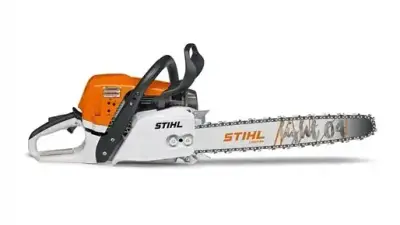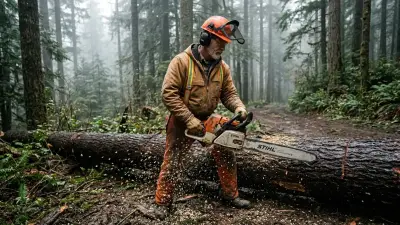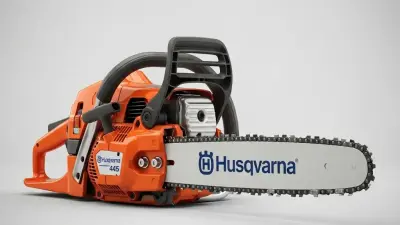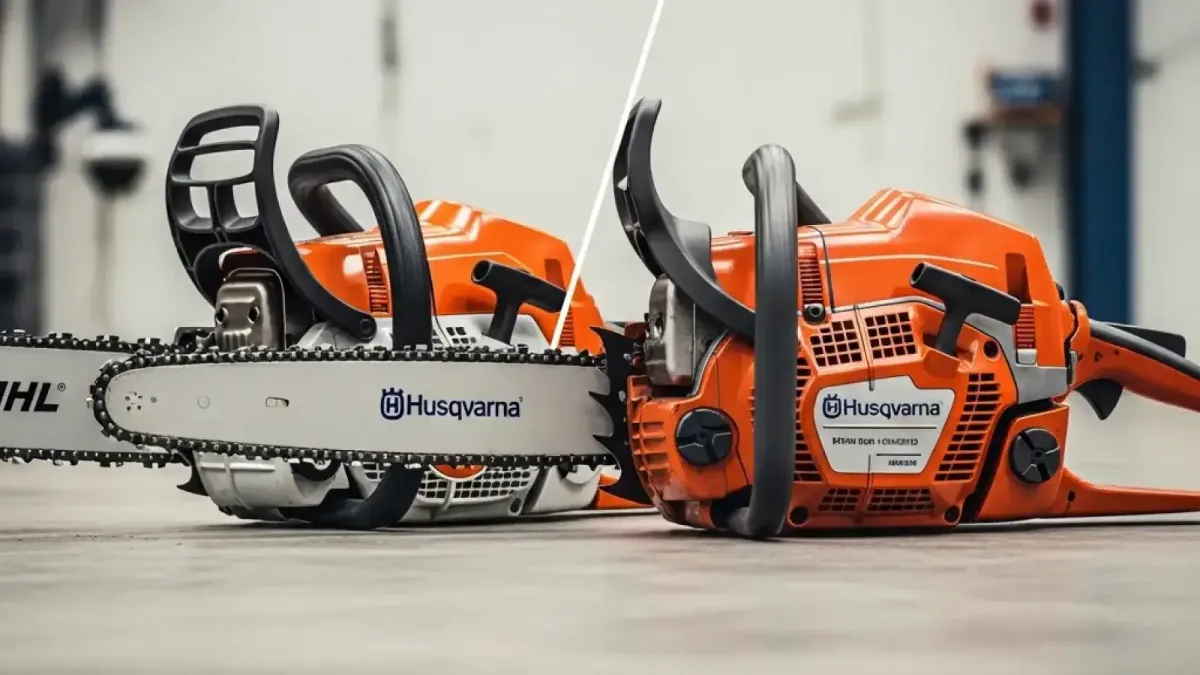
In the forestry and outdoor power equipment world, no debate generates as much heat as choosing between orange and white or solid orange. Stihl and Husqvarna have dominated the industry for decades, pushing each other to build lighter, faster, and more reliable saws. Whether you are clearing storm debris around a rural homestead or dropping mature timber every day for a living, picking the right brand directly affects your fatigue levels, maintenance habits, and pocketbook.
Quick answer: Choose Stihl if you prefer high low-end torque, exceptionally rigid build quality, and local dealer servicing for heavy, daily forestry work. Opt for Husqvarna if you value faster engine acceleration, superior anti-vibration ergonomics, and advanced air filtration systems that reduce filter cleanings during long cutting sessions.
Engineering Philosophy: Power Delivery and Engine Tech
Under the hood, both manufacturers utilize advanced two-stroke engine designs to meet strict emissions standards while maximizing power-to-weight ratios. Stihl utilizes its stratified charge technology, often paired with the M-Tronic electronic engine management system. This setup constantly monitors fuel quality, altitude, and ambient temperature to adjust ignition timing and fuel metering automatically, ensuring maximum torque across the lower and middle RPM ranges.
Husqvarna counters with its proprietary X-Torq engine design combined with AutoTune electronic carburetion. Instead of focusing solely on raw torque, Husqvarna tunes its engines to rev higher and accelerate faster. When limbing trees or making quick cuts through pulpwood, a Husqvarna engine snaps to its top operating band almost instantly, allowing skilled operators to move rapidly through dense branches.
Air filtration handling also showcases their distinct design philosophies. Husqvarna utilizes an Air Injection system that relies on centrifugal force to strip out heavy sawdust particles before air ever reaches the primary filter. Stihl uses high-efficiency HD2 pleated filters that trap ultra-fine debris. While Stihl filters capture minute particles exceptionally well, Husqvarna's pre-separation system generally allows longer operating windows between filter cleanings in dry, dusty conditions.
Ergonomics, Handling, and Daily Usability
When working with a saw for six to eight hours a day, raw cutting power becomes secondary to physical fatigue. Husqvarna design engineers prioritize slim saw bodies, angled front handles, and flat undersides. This profile makes sweeping limbing cuts close to the trunk smooth and natural, reducing strain on the operator's wrists and lower back.
Stihl constructs slightly stockier powerheads that feel solid and compact in hand. Their captive bar nuts and quick-access side-access chain tensioners are industry standard, minimizing lost hardware in deep leaf litter. Stihl's master control lever consolidates choke, run, and stop functions into a single thumb switch, making cold starts straightforward once an operator gets used to the sequence.
Pro tip: Brand-new saw chains stretch rapidly during their first fuel tank due to initial rivet seating. Always check your chain tension after five minutes of cutting; running a loose chain can ruin your drive links or cause a dangerous derailment off the bar tip, regardless of whether you ride with Stihl or Husqvarna.
Vibration isolation plays a massive role in long-term operator health. Husqvarna's LowVib system uses heavy-duty steel coil springs to isolate the engine crankcase from the hand grips. Stihl utilizes rubber dampers on entry-level models and tuned steel springs on professional saws like the MS 261 C-M. Both systems effectively prevent hand-arm vibration syndrome (HAVS), though Husqvarna tends to feel marginally smoother at wide-open throttle.
| Feature | Stihl chainsaw | Husqvarna chainsaw |
|---|---|---|
| Origin | Germany | Sweden |
| Power | High torque | High RPM |
| Durability | Extremely rugged | Strong but lighter |
| Dealer Support | Extensive network | Wide availability |
| Price | Slightly higher | Competitive pricing |
| Best For | Professionals | Professionals & homeowners |
Head-to-Head Specification Comparison
Comparing flagship models across equivalent displacement classes reveals how these engineering choices translate to real-world specifications. The table below compares two top-tier 50cc professional saws widely used by arborists and land management crews.
| Feature / Specification | Stihl MS 261 C-M | Husqvarna 550 XP Mark II |
|---|---|---|
| Engine Displacement | 50.2 cc | 50.1 cc |
| Power Output | 4.0 hp (3.0 kW) | 4.0 hp (3.0 kW) |
| Powerhead Weight (Dry) | 10.8 lbs (4.9 kg) | 11.7 lbs (5.3 kg) |
| Fuel Mix Ratio | 50:1 (2-Stroke Synthetic) | 50:1 (2-Stroke Synthetic) |
| Recommended Bar Lengths | 16" to 20" | 16" to 20" |
| Standard Chain Pitch / Gauge | .325" pitch, .063" gauge | .325" pitch, .050" gauge |
| Fuel Management System | M-Tronic 3.0 | AutoTune 3.0 |
Both models represent the peak of mid-sized professional chainsaw engineering. Stihl holds a minor advantage in overall dry weight, making it highly attractive for ground crews carrying equipment all day. Husqvarna balances that extra weight with superior engine balance and aggressive acceleration, making it an exceptional tool for precision falling and rapid bucking.
Maintenance, Dealer Networks, and Buying Options
Owning a high-performance saw requires ongoing maintenance, fresh bar oil, and access to replacement components like sprockets, air filters, and spark plugs. Stihl maintains a strict servicing dealer distribution model. You will not find genuine Stihl chainsaws in big-box retail centers; they are sold exclusively through independent power equipment dealers and farm supply stores equipped with certified repair technicians.
Husqvarna offers a broader retail strategy. Their residential and rancher series saws are available at big-box home improvement stores and online retailers, while their professional XP line is typically handled through authorized power equipment dealerships. This dual distribution makes finding entry-level Husqvarna parts or buying a home use saw convenient outside standard business hours.
- Stihl Maintenance Features: Tool-less oil and fuel caps (flip-caps), high-capacity HD2 washable air filters, and transparent fuel tanks for quick fluid checks.
- Husqvarna Maintenance Features: Snap-lock cylinder covers for instant spark plug access, quick-release air filters, and side-mounted chain tensioning hardware.
- Cutting Accessories: Stihl manufactures its own proprietary saw chains and guide bars, known for exceptional steel hardness. Husqvarna partners with Oregon for chains or produces their high-performance X-Cut chain in-house.
Regardless of which badge you select, operating a chainsaw demands strict adherence to personal protective equipment (PPE). Never start a saw without wearing cut-retardant chainsaw chaps, heavy leather boots, eye protection, and helmet system with hearing protection. Always run fresh 89+ octane fuel mixed at a 50:1 ratio with premium two-stroke oil to prevent lean engine seizures.
| Category | Stihl | Husqvarna |
|---|---|---|
| Engine Power | High torque | High RPM |
| Weight | Heavier | Lighter |
| Price | Higher | Moderate |
| Dealer Network | Strong | Wide retail presence |
| Electric Models | Compact, powerful | Longer battery life |
| Leaf Blowers | Rugged, pro-grade | Ergonomic, affordable |
Which Brand Should You Buy?
If you have an established, knowledgeable dealer within a short drive of your property, buy whichever brand that dealer supports best—local service and immediate parts availability outweigh minor spec differences every time. For raw power in hard woods like oak and hickory where lugging torque matters, start by looking at a Stihl with an 18-inch or 20-inch bar. If your work involves extensive limbing, pine clearing, or you prioritize smooth operation with minimum vibration, pick up a Husqvarna paired with a speed-oriented X-Cut chain setup.
Frequently Asked Questions
Do professionals prefer Husqvarna or Stihl?
Professional opinions are split nearly down the middle. Precision arborists and loggers working softwoods often lean toward Husqvarna for its fast engine response and lightweight handling. Hardwood loggers, utility workers, and municipal crews frequently favor Stihl for its high low-end torque and rugged powerhead construction.
Can I use Stihl chain oil in a Husqvarna chainsaw?
Yes. bar and chain oil is interchangeable between brands. The critical requirement is using a dedicated bar oil with tackifier additives to prevent sling-off at high RPMs, regardless of whether the bottle says Stihl, Husqvarna, or a generic brand.
Are Stihl chainsaws more expensive than Husqvarna?
At the professional level, comparable models are priced within a few dollars of each other. In the homeowner and mid-range farm segments, Husqvarna models are occasionally priced slightly lower and are frequently available with promotional bundles through wider retail channels.
Why does Stihl only sell through independent dealers?
Stihl relies on an exclusive dealer network to ensure every saw is properly assembled, tested, and handed to the customer with personalized safety instruction and warranty support from trained service professionals.
Sources
- Stihl Technical Data and Product Specifications
- Husqvarna Group Chainsaw Technical Manuals
- OSHA Standard 1910.266 - Logging Operations and Equipment Safety
- Wikipedia - Chainsaw Mechanics and History