
The Global Footprint of Echo Chainsaws: Why Manufacturing Location Matters
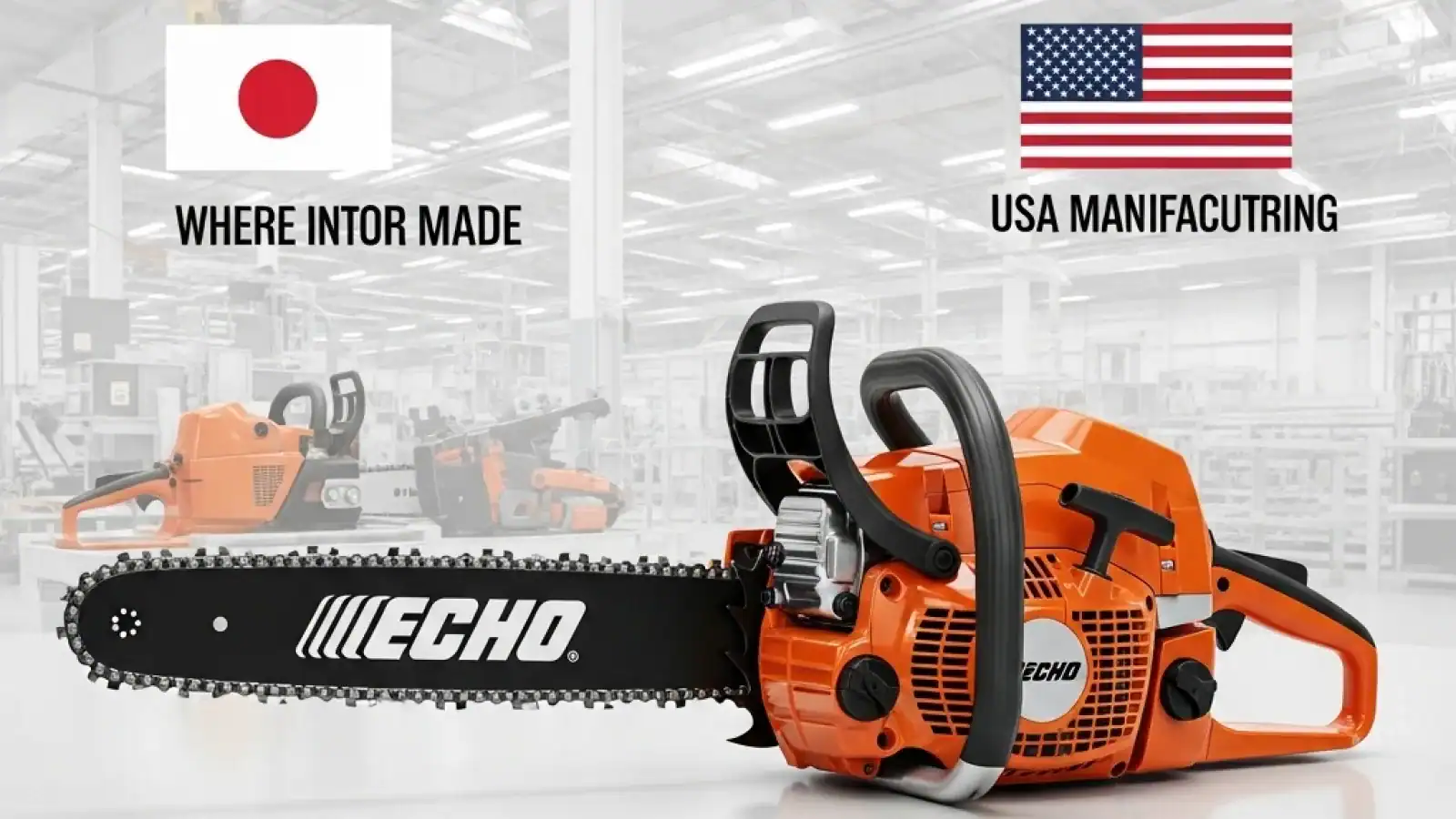
As a seasoned chainsaw professional, one of the most common questions I hear from homeowners, landowners, and even budding arborists is about the origin of their tools. It’s not just idle curiosity; knowing where a chainsaw is made can tell you a lot about its engineering philosophy, quality control, and the support network behind it. For Echo chainsaws, the answer is a fascinating blend of global expertise: they are primarily manufactured in both Japan and the USA.
Table Of Content
- The Global Footprint of Echo Chainsaws: Why Manufacturing Location Matters
- Echo’s Japanese Heritage: Precision Engineering and Innovation
- American Assembly and Distribution: Proximity to the North American Market
- Ownership and Brand Identity: Who Stands Behind Echo?
- Making an Informed Choice: Echo vs. the Competition and What to Look For
This dual manufacturing strategy isn’t just a logistical choice; it’s a testament to Echo’s commitment to delivering high-quality, professional-grade equipment that meets diverse market demands. When you invest in an Echo chainsaw, you’re not just buying a piece of machinery; you’re investing in decades of Japanese precision engineering combined with robust American assembly and distribution capabilities.
Why does this matter to you, the end-user? Because understanding the origins helps you appreciate the rigorous standards that go into each model, from a compact 30cc homeowner saw like the Echo CS-310 to a powerful 59.8cc professional workhorse like the CS-590 Timber Wolf. It speaks to the brand’s dedication to quality, parts availability, and serviceability, all critical factors for anyone relying on their chainsaw for tough jobs.
Echo’s Japanese Heritage: Precision Engineering and Innovation
The story of Echo chainsaws truly begins in Japan, a nation renowned for its meticulous engineering and technological innovation. The company’s roots trace back to 1947 with Kyoritsu Noki, which later became Kioritz Corporation. Initially focused on small engines for agricultural machinery, Kioritz quickly recognized the growing need for reliable forestry equipment, introducing its first chainsaws in the 1960s. The Echo brand itself was officially launched in 1971, specifically targeting professional-grade handheld outdoor power equipment.
This Japanese heritage is the bedrock of Echo’s reputation for durability, efficiency, and advanced design. When we talk about “Japanese engineering,” we’re often referring to an unwavering commitment to precision manufacturing, superior material science, and innovative engine technology. For instance, many of Echo’s two-stroke engines feature advanced designs that optimize fuel efficiency and reduce emissions, while still delivering impressive power-to-weight ratios. Components like carburetors, ignition systems, and cylinder designs often benefit from this meticulous approach, contributing to the chainsaw’s longevity and consistent performance.
Consider the G-Force Engine Air Pre-Cleaner system found in many Echo models, which significantly reduces the amount of dirt and debris entering the air filter, extending maintenance intervals and engine life. This kind of thoughtful design, focused on practical benefits for the user, is a hallmark of their Japanese engineering philosophy. Echo’s professional models, such as the CS-620P, exemplify this blend of power and refined engineering, offering features like heavy-duty air filtration, magnesium crankcases, and chrome-plated cylinders for maximum durability in demanding environments.
American Assembly and Distribution: Proximity to the North American Market
While the core engineering and design often originate in Japan, Echo also maintains significant manufacturing and assembly operations in the United States, primarily at its facilities in Lake Zurich, Illinois, and other U.S. locations. This American footprint is crucial for serving the vast North American market, ensuring that Echo chainsaws are not only well-engineered but also readily available and supported where they are used most.
The benefits of local assembly for consumers are substantial. Firstly, it means significantly faster distribution channels. Chainsaws assembled in the U.S. can reach dealerships and customers across North America much more quickly than if they had to be shipped globally. This reduces lead times and improves product availability, especially for popular models. Secondly, and perhaps even more critically, U.S. assembly enhances parts availability and service support. Having local manufacturing facilitates a more robust supply chain for spare parts, ensuring that repairs and maintenance can be performed efficiently by certified technicians.
Furthermore, U.S. operations allow Echo to tailor products and services more closely to the specific needs and regulations of the North American market. This might include specific safety features, emission standards compliance, or even ergonomic considerations for local users. When you pick up an Echo chainsaw that’s been assembled in the USA, you’re getting a product that benefits from both global engineering expertise and a localized commitment to quality control and customer service right in your backyard. This dual approach ensures that whether you’re felling a tree or just pruning branches, your Echo chainsaw is a reliable partner.
Ownership and Brand Identity: Who Stands Behind Echo?
Understanding the ownership structure of a brand like Echo can provide additional insight into its market position and strategic direction. Echo Incorporated is not a standalone company; it is a proud subsidiary of Yamabiko Corporation, a powerful Japanese multinational specializing in outdoor power equipment. Yamabiko Corporation is a global force, and its portfolio also includes other well-respected brands such as Shindaiwa, known for its high-performance trimmers and brush cutters.
This ownership by Yamabiko means that Echo benefits from shared research and development, consolidated manufacturing capabilities, and a global distribution network. It allows Echo to leverage extensive resources for innovation and maintain a competitive edge in the crowded outdoor power equipment market. For you, the chainsaw user, this translates into a brand that has the backing and stability to continuously develop and improve its product lines, ensuring long-term reliability and support.
A common misconception I often encounter is whether Echo is owned by Stihl. Let me be absolutely clear: No, Echo is not owned by Stihl. These are entirely separate companies and direct competitors. Stihl is a privately owned German company with its own extensive manufacturing and distribution network worldwide, while Echo, as we’ve discussed, is a subsidiary of Japan’s Yamabiko Corporation. Both brands strive for excellence in the chainsaw market, but they operate independently, offering distinct product lines and philosophies. Understanding this distinction is key to making an informed purchasing decision based on brand identity and specific product features rather than perceived affiliations.
Making an Informed Choice: Echo vs. the Competition and What to Look For
When considering an Echo chainsaw, it’s only natural to compare it with other industry giants like Stihl and Husqvarna. While all three are top-tier brands, Echo carves out a significant niche by offering a compelling balance of professional-grade features, exceptional reliability, and often a more accessible price point. In my experience, Echo chainsaws are a fantastic choice for serious homeowners, farmers, and even some professional users who demand robust performance without breaking the bank.
So, what should you look for when choosing an Echo, or any chainsaw for that matter? Firstly, consider the engine displacement (measured in cubic centimeters, or cc) and the bar length. For light yard work and occasional limbing, a smaller saw like the Echo CS-310 (30.5cc with a 14-inch bar) is perfect. For more substantial felling, bucking firewood, or clearing larger properties, you might step up to a mid-range model like the CS-400 (40.2cc, 16-18 inch bar) or the incredibly popular CS-590 Timber Wolf (59.8cc, 18-27 inch bar), which offers impressive power for its price.
Beyond power, pay attention to ergonomic features such as anti-vibration systems, which significantly reduce operator fatigue during extended use. Look for an automatic oiler to keep your bar and chain properly lubricated, and a reliable chain brake for essential safety. Features like tool-less chain tensioning or side-access chain tensioners can also make routine maintenance much simpler. Don’t forget to check the local dealer network – a strong dealer presence means easier access to parts, service, and expert advice, which is invaluable over the lifespan of your chainsaw.
Ultimately, Echo’s dual manufacturing strategy, leveraging Japanese engineering prowess and American assembly efficiency, contributes to a product line that stands tall among its competitors. Whether you’re a weekend warrior tackling storm cleanup or a landowner managing your woodlot, an Echo chainsaw offers a reliable, well-supported, and high-performing tool that will serve you well for years to come. By understanding where these robust machines come from, you gain a deeper appreciation for the quality and value they bring to your work.