

Understanding Stihl Chainsaw Prices: An Investment in Quality and Performance
As a seasoned arborist and outdoor power equipment specialist, I’ve seen countless chainsaws come and go. But one brand consistently stands out for its unwavering commitment to quality, durability, and raw cutting power: Stihl. When you’re considering a new chainsaw, the price often becomes a primary focal point, and for good reason. A Stihl chainsaw isn’t just a tool; it’s an investment in German engineering, reliability, and performance that pays dividends over years of hard work.
Table Of Content
- Understanding Stihl Chainsaw Prices: An Investment in Quality and Performance
- Why Stihl Stands Out: Beyond Just the Price Tag
- Stihl Chainsaw Tiers: Models, Features, and Typical Price Ranges
- Homeowner & Occasional Use Chainsaws (Entry-Level to Mid-Range)
- Farm & Ranch / Mid-Range Chainsaws (Intermediate Use)
- Professional & Heavy-Duty Chainsaws (Advanced Use)
- Battery-Powered Chainsaws (Cordless & Quiet)
- Factors Influencing Stihl Chainsaw Prices and Your Purchase Decision
- Bar Length and Engine Displacement (CCs)
- Advanced Technology and Features
- Build Quality and Materials
- Dealer Support, Warranty, and Accessories
- Maximizing Your Stihl Investment: Essential Maintenance and Safety
- Fuel and Oil Management
- Chain Sharpening and Tension
- Air Filter and Spark Plug Care
- General Cleaning and Storage
- Conclusion: Choosing Your Stihl Chainsaw Wisely
Whether you’re a homeowner tackling occasional yard work, a landowner managing a small woodlot, or a seasoned professional felling large timber, Stihl offers a model tailored to your needs. But with such a vast lineup, how do you navigate the Stihl chainsaw prices and ensure you’re getting the right saw for your budget and specific tasks? This comprehensive guide will break down the factors influencing Stihl chainsaw costs, explore popular models across different user tiers, and provide actionable advice to help you make an informed purchase decision.
Why Stihl Stands Out: Beyond Just the Price Tag
Before diving into specific price points, it’s crucial to understand what makes Stihl chainsaws a premium choice and why they often command a higher price than some competitors. It’s not just about a brand name; it’s about a legacy of innovation, robust construction, and user-focused design. Stihl has been building chainsaws for nearly a century, and that experience is evident in every detail.
Firstly, Stihl’s commitment to engineering excellence ensures that each component, from the engine to the chain, is built to precise specifications for optimal performance and longevity. Their proprietary anti-vibration systems significantly reduce operator fatigue, a crucial factor when you’re working for extended periods. Combine this with features like Easy2Start technology for effortless starting and advanced filtration systems that extend engine life, and you begin to see the true value embedded in each saw.
Secondly, Stihl boasts an unparalleled network of authorized dealers. Unlike many brands sold in big box stores, Stihl chainsaws are typically sold and serviced exclusively by these independent dealers. This means you’re not just buying a tool; you’re gaining access to expert advice, genuine Stihl parts, and professional service for the lifetime of your saw. This localized support is invaluable, ensuring your saw runs safely and efficiently, and it’s a significant part of the overall Stihl ownership experience that justifies the initial cost.
Stihl Chainsaw Tiers: Models, Features, and Typical Price Ranges
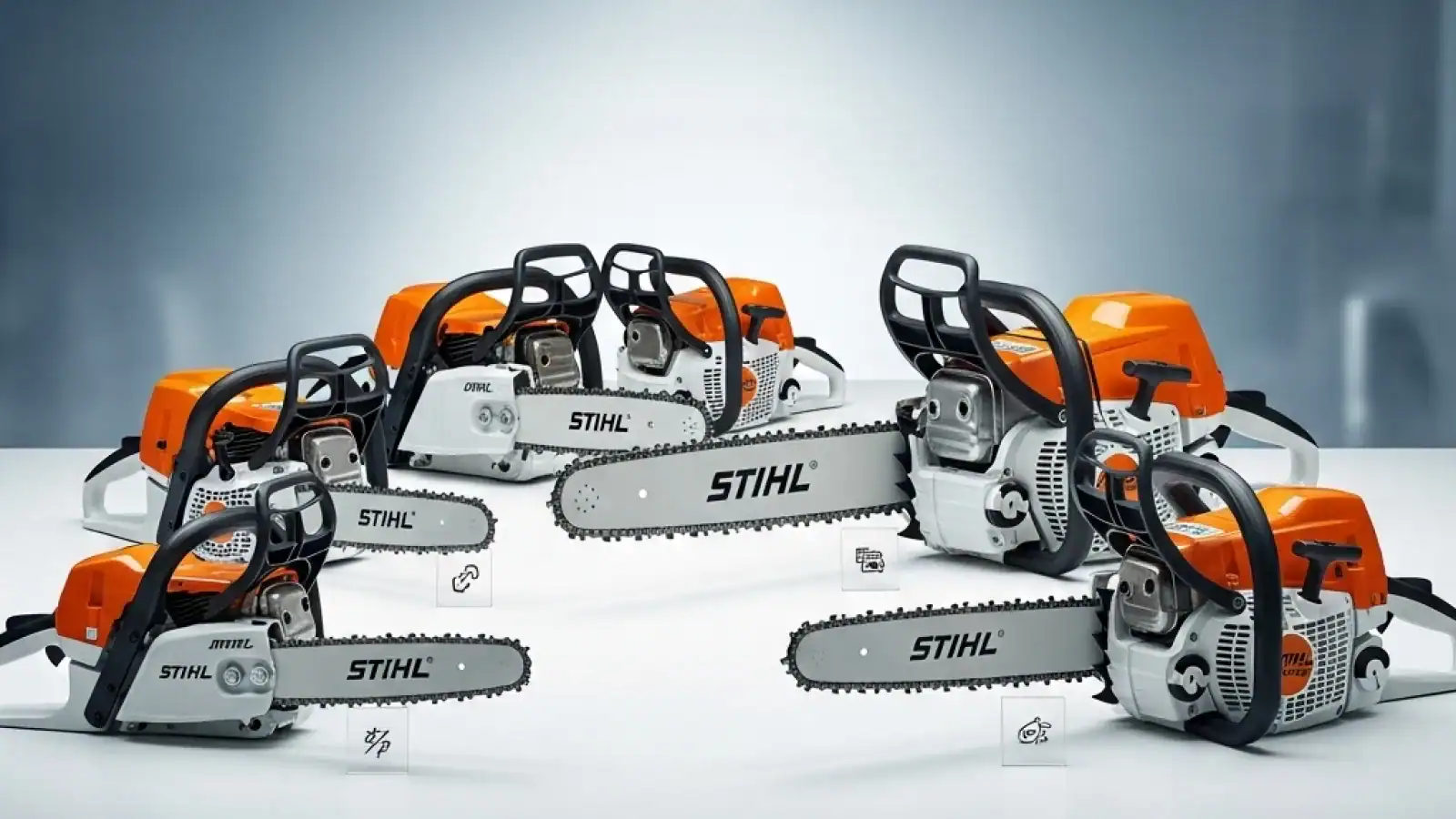
Stihl strategically categorizes its chainsaws into different tiers to match varying user needs and budgets. Understanding these categories is the first step in deciphering Stihl chainsaw prices. Let’s break down the common types:
Homeowner & Occasional Use Chainsaws (Entry-Level to Mid-Range)
For homeowners who need a reliable saw for pruning branches, cutting firewood, or light storm cleanup, Stihl offers a fantastic selection that balances power, ease of use, and affordability. These saws are designed to be lightweight and user-friendly, making them perfect for those who might not operate a chainsaw regularly.
- Typical Bar Lengths: 12 to 18 inches
- Engine Displacement (CCs): 30 to 45 cc
- Key Features: Easy2Start, anti-vibration system, toolless fuel and oil caps, side-access chain tensioner.
- Price Range: Generally $200 – $450
One of the most popular models in this category, and often a go-to recommendation for homeowners, is the Stihl MS 170. It’s a fantastic entry-level saw, typically priced around $200-$220, ideal for limbing and cutting small firewood up to 12 inches in diameter. Stepping up, the Stihl MS 180 C-BE offers a bit more power and the convenience of Easy2Start and Quick Chain Adjuster, usually in the $250-$280 range. For those needing a bit more muscle for larger firewood or small tree felling, the Stihl MS 250 is a perennial favorite, often priced between $350-$400. It typically comes with an 18-inch bar and a 45.4 cc engine, providing an excellent power-to-weight ratio for general property maintenance.
Farm & Ranch / Mid-Range Chainsaws (Intermediate Use)
When your property demands more than occasional use, perhaps dealing with larger firewood stacks, felling medium-sized trees, or clearing brush on a regular basis, Stihl’s Farm & Ranch series steps up. These saws offer more power and durability than homeowner models, without the full professional price tag.
- Typical Bar Lengths: 18 to 20 inches
- Engine Displacement (CCs): 45 to 55 cc
- Key Features: More robust construction, increased power output, improved air filtration, often equipped with Stihl’s advanced anti-vibration system.
- Price Range: Generally $450 – $650
The venerable Stihl MS 271 Farm Boss is a legend in this class, and for good reason. Often equipped with a 20-inch bar and a 50.2 cc engine, it’s a workhorse for demanding landowners and farmers, typically costing around $500-$550. It strikes an excellent balance of power, weight, and features for regular, heavier-duty tasks like processing significant amounts of firewood or felling trees up to 16-20 inches in diameter. The Stihl MS 291 is another strong contender, offering similar power but with a slightly different feature set, usually within a comparable price bracket.
Professional & Heavy-Duty Chainsaws (Advanced Use)
For forestry professionals, arborists, loggers, or anyone who depends on a chainsaw day in and day out, Stihl’s professional series offers unparalleled power, advanced technology, and rugged durability. These machines are built for sustained, heavy-duty operation in challenging conditions.
- Typical Bar Lengths: 16 to 36+ inches
- Engine Displacement (CCs): 50 to 98.5 cc
- Key Features: M-Tronic (electronic engine management), heated handles, decompression valve for easier starting, magnesium crankcases, high power-to-weight ratio, advanced professional-grade anti-vibration.
- Price Range: Generally $650 – $1,800+
Stepping into the professional realm, models like the Stihl MS 261 C-M (around $650-$750) are fantastic all-around professional saws, often used with 16-20 inch bars, featuring M-Tronic for optimal performance. When you need more torque for larger felling, the Stihl MS 362 C-M (typically $800-$900) or the powerful Stihl MS 462 R C-M (often $1,100-$1,250) are excellent choices, commonly seen with 20-28 inch bars. The innovative Stihl MS 500i, the world’s first electronically fuel-injected chainsaw, is a game-changer for professional loggers due to its incredible power-to-weight ratio, and it typically sits in the $1,300-$1,500 range, often paired with 20-32 inch bars. For the absolute largest timber, the legendary Stihl MS 881, with its massive 98.5 cc engine and capacity for 36-inch or even 41-inch bars, can easily exceed $1,800, representing the pinnacle of Stihl’s logging powerhouses.
Battery-Powered Chainsaws (Cordless & Quiet)
For those prioritizing quiet operation, ease of starting, and zero emissions, Stihl’s growing line of battery-powered chainsaws offers compelling alternatives. These are particularly popular for homeowners, urban landscapers, or anyone working in noise-sensitive environments.
- Typical Bar Lengths: 10 to 16 inches
- Battery Voltage: 18V (for lighter tasks) to 36V (for more demanding work)
- Key Features: Instant start, low noise, no fuel mixing, minimal maintenance.
- Price Range: Saw body only ($150 – $400), plus battery and charger kit ($100 – $300+)
Models like the Stihl MSA 120 C-BQ are excellent for light pruning and small tasks, often found for under $300 (saw only). For more substantial cutting, the Stihl MSA 220 C-B offers performance comparable to a 35-40cc gas saw, suitable for cutting firewood and felling small trees, with the saw body typically priced around $350-$400. Remember that the total cost will include the battery and charger, which are significant additional investments but provide long-term savings on fuel and maintenance.
Factors Influencing Stihl Chainsaw Prices and Your Purchase Decision
Beyond the model tier, several specific factors directly impact the price you’ll pay for a Stihl chainsaw. Understanding these helps you prioritize features against your budget.
Bar Length and Engine Displacement (CCs)
This is perhaps the most straightforward correlation: generally, the longer the bar and the larger the engine displacement (measured in cubic centimeters or CCs), the higher the price. A larger engine means more power, which allows for longer bars and faster cutting through thicker wood. A Stihl Chainsaw with an 18-inch bar, like the MS 250, is a sweet spot for many homeowners and usually falls in the mid-range of homeowner prices. When you jump to a Stihl Chainsaw 22 inch price point, you’re often looking at a more powerful engine and a more robust build, pushing it into the farm & ranch category. Similarly, a Stihl Chainsaw 24 inch price indicates a professional-grade saw capable of serious work, while a Stihl Chainsaw 36 inch price will be for the most powerful, specialized logging saws.
Advanced Technology and Features
Stihl integrates cutting-edge technology that significantly enhances performance, safety, and user comfort, but these features naturally add to the cost. For example, the M-Tronic electronic engine management system found in many professional saws continuously monitors and adjusts fuel and air mixtures for optimal performance in varying conditions, a feature that contributes to its premium pricing. Other features like heated carburetors for cold weather, captive bar nuts (that don’t fall off), and ergonomic designs with superior anti-vibration systems all reflect in the final price.
Build Quality and Materials
Professional Stihl chainsaws are built to withstand daily abuse in harsh environments. This means using more durable materials like magnesium alloy crankcases, heavy-duty air filtration systems, and robust clutch assemblies. These components are more expensive to manufacture than the lighter-duty materials found in entry-level saws, contributing to their higher price tags and their incredible longevity. It’s like comparing a family sedan to a heavy-duty pickup; both are vehicles, but their intended use dictates their construction and cost.
Dealer Support, Warranty, and Accessories
As mentioned, Stihl’s authorized dealer network is a key part of their value proposition. The price of a Stihl chainsaw typically includes the peace of mind that comes with a strong warranty and readily available service and genuine parts. When you buy from a Stihl dealer, you often receive personalized setup assistance, safety tips, and access to ongoing maintenance. While some online retailers might list Stihl models, purchasing directly from an authorized dealer ensures you receive the full Stihl experience and warranty support. Sometimes, dealers may offer bundles that include extra chains, bar oil, or safety gear, which can be a great value.
Maximizing Your Stihl Investment: Essential Maintenance and Safety
Regardless of the Stihl chainsaw price you pay, protecting your investment and ensuring safe operation is paramount. A well-maintained chainsaw performs better, lasts longer, and is safer to use. Think of it as caring for a high-performance vehicle; neglect leads to problems.
Fuel and Oil Management
For gas-powered Stihl saws, using the correct fuel mixture is critical. Stihl recommends an ethanol-free 89 octane (or higher) gasoline mixed with their high-quality 2-stroke engine oil (like Stihl HP Ultra) at a 50:1 ratio. Better yet, consider using Stihl MotoMix, a pre-mixed, ethanol-free fuel that’s specifically formulated for Stihl engines, ensuring optimal performance and extending engine life, although it does come at a slightly higher cost. For the chain and bar, always use a good quality bar and chain oil; never use used motor oil, as it lacks the tackiness and lubrication properties needed.
Chain Sharpening and Tension
A dull chain is not only inefficient but also dangerous. It forces you to push harder, increasing kickback risk and straining the engine. Learn to sharpen your chain regularly using a filing guide or invest in a Stihl 2-in-1 filing tool. Check chain tension before each use; a properly tensioned chain should snap back cleanly when pulled from the bar, but not be too tight. This simple step prevents premature wear on the chain and bar, and ensures efficient cutting.
Air Filter and Spark Plug Care
Regularly cleaning your air filter is vital for maintaining engine performance and fuel efficiency. A clogged filter starves the engine of air. Depending on your saw and usage, you might clean it every few hours of operation. The spark plug should be inspected periodically for fouling and replaced according to your owner’s manual. These small components play a huge role in reliable starting and smooth running.
General Cleaning and Storage
After each use, take a few minutes to clean sawdust and debris from the saw, especially around the chain brake, clutch, and cooling fins. This prevents overheating and ensures all safety mechanisms function correctly. Store your Stihl chainsaw in a dry, secure place, preferably with the chain covered by a scabbard. If storing for an extended period, drain the fuel tank or use a fuel stabilizer if using regular mixed fuel, or simply rely on MotoMix for its long shelf life.
Conclusion: Choosing Your Stihl Chainsaw Wisely
Navigating Stihl chainsaw prices doesn’t have to be a daunting task. By understanding the different tiers, the features that drive costs, and the importance of long-term value, you can confidently choose the perfect saw. Whether you’re considering the popular Stihl MS 250 price for your backyard needs or stepping up to the immense power of a professional Stihl Chainsaw 36 inch price model for serious logging, Stihl offers a robust solution.
My advice? Don’t just look at the initial price tag. Consider your actual needs, the type of work you’ll be doing, and how frequently you’ll use the saw. A slightly higher initial investment in a Stihl often translates to superior performance, greater reliability, and lower long-term ownership costs thanks to its durability and excellent dealer support. Visit your local authorized Stihl dealer, talk to the experts, and get a feel for the different models. They can help you match the right saw to your hands, your tasks, and your budget, ensuring you get a Stihl that will serve you faithfully for years to come.