Disclosure: As an Amazon Associate, we earn from qualifying purchases.
Disclosure: As an Amazon Associate, we earn from qualifying purchases.
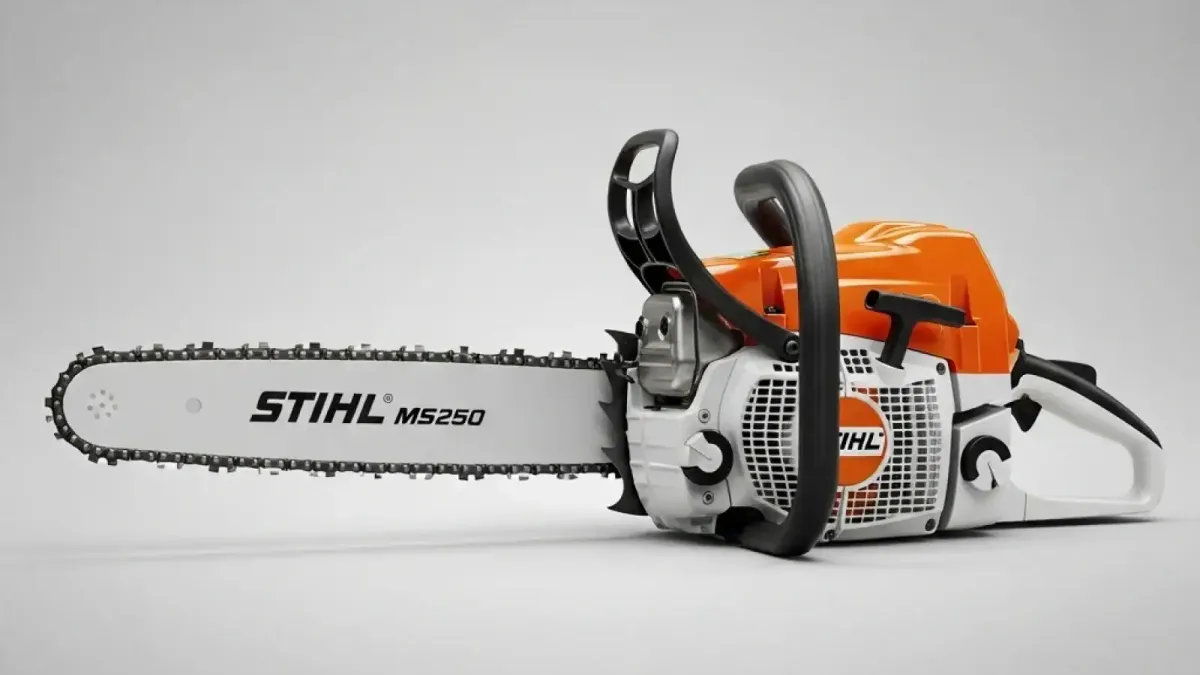
Rural property owners, landowners, and firewood cutters often find themselves trapped between two equipment classes: lightweight backyard trim saws that bog down in hardwood, and heavy professional logging saws that cost a fortune and induce shoulder fatigue after an hour of bucking. The Stihl MS 250 was engineered specifically to bridge that gap. Slotting into the mid-range homeowner and mid-duty class, this 45.4 cc gas saw delivers punchy torque and impressive chain speed without burdening the operator with unnecessary weight.Quick answer: Delivering 3.0 bhp from a lightweight 10.1 lb powerhead, the Stihl MS 250 offers one of the best power-to-weight ratios in its class for cutting firewood, clearing storm debris, and felling small to medium trees. Optimized for 16-inch to 18-inch guide bars running a .325" pitch chain, this 45.4 cc chainsaw combines homeowner maneuverability with near-commercial cutting efficiency.
Engine Performance, Displacement, and Power-to-Weight Dynamics
At the core of the STIHL MS 250 is a single-cylinder, two-stroke air-cooled engine with a displacement of 45.4 cc (2.77 cubic inches). Generating 3.0 brake horsepower (2.2 kW), this power unit spins up to an optimum engine speed of roughly 14,000 RPM under no-load testing. What makes this specific displacement so popular across woodlots is how the torque curve behaves under load. When burying a 16-inch guide bar into dense green oak, hickory, or hard maple, the engine maintains high operating revs rather than stalling out under moderate hand pressure. The physical design of the powerhead keeps the dry weight down to just 10.1 lbs (4.6 kg). In chainsaw mechanics, the power-to-weight ratio dictates how efficiently an operator can work over a four-hour afternoon session without sacrificing technique or safety. At roughly 3.37 lbs per horsepower, the MS 250 allows you to limb fallen trees overhead or make low stump felling cuts without experiencing severe lower back or forearm exhaustion. Fuel management relies on a diaphragm carburetor with an integrated fuel pump and a built-in compensator. This compensator controller keeps the fuel-to-air mixture balanced even as sawdust gradually accumulates on the air filter surface. As a result, the engine maintains steady power output and consistent idling without leaning out or running excessively rich between filter cleanings. Additionally, the unit features a summer/winter shutter switch that redirects warm air from the engine cylinder over the carburetor body during cold weather, preventing icing inside the venturi during winter firewood processing.Guide Bar Selection, Chain Types, and Cutting Efficiency
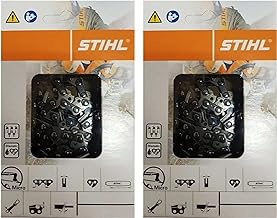
cutting efficiency depends on pairing the engine output with the right bar length, drive sprocket, and saw chain geometry. STIHL typically equips the MS 250 with either a 16-inch or 18-inch Rollomatic E laminated guide bar. While the 18-inch bar provides extra reach when bucking wide logs on the ground, a 16-inch bar setup delivers noticeably faster cutting speeds in hard timber. The shorter bar reduces friction along the guide rails and requires fewer drive links, keeping engine RPMs higher under load.Pro tip: Always check your chain tension after the first 5 to 10 minutes of operation with a fresh chain. Brand-new chains experience initial rivet seating that slacks the loop; running a slack .325" chain on an MS 250 can cause rail wear, sprocket nose binding, or violent derailing against the chain catcher.
Top Replacement 18" Bar & Chain Setup for STIHL MS 250
Technical Specifications and Model Comparisons
Evaluating the technical specifications of the MS 250 alongside smaller entry-level saws and larger mid-range models highlights where it fits within a landowner's equipment fleet. The following table breaks down core engineering figures:| Specification / Feature | STIHL MS 180 | STIHL MS 250 | Stihl MS 271 Farm Boss |
|---|---|---|---|
| Engine Displacement | 31.8 cc (1.94 cu. in.) | 45.4 cc (2.77 cu. in.) | 50.2 cc (3.06 cu. in.) |
| Engine Power Output | 2.0 bhp (1.5 kW) | 3.0 bhp (2.2 kW) | 3.49 bhp (2.6 kW) |
| Powerhead Weight (Dry) | 9.1 lbs (4.1 kg) | 10.1 lbs (4.6 kg) | 12.3 lbs (5.6 kg) |
| Recommended Bar Range | 12" to 16" | 16" to 18" | 16" to 20" |
| Standard Chain Pitch / Gauge | 3/8" Low Profile / .043" | .325" Pitch / .063" Gauge | .325" Pitch / .063" Gauge |
| Fuel Tank Capacity | 8.5 oz (250 cc) | 16.0 oz (470 cc) | 16.9 oz (500 cc) |
| Chain Oil Reservoir | 4.9 oz (145 cc) | 6.8 oz (200 cc) | 8.1 oz (240 cc) |
Safety First: Never Fire Up Your Saw Without This
No matter how experienced you are with a powerful chainsaw, safety is completely non-negotiable. Before you make your next cut, ensure you have a professional-grade Forestry Safety Helmet System. Getting a helmet with a built-in steel mesh face shield and heavy-duty earmuffs is the single most important investment you can make to protect your hearing and your face from kickback.

Ergonomics, Safety Systems, and Essential Maintenance
Safety and operational comfort are central to the engineering of the MS 250. Operating a chainsaw generates high-frequency vibrations that cause fatigue and long-term joint strain over time. STIHL mitigates this through an anti-vibration rubber buffer system positioned between the engine crankcase and the front/rear handle frame. These rubber mounts dampen engine pulses and chain impact forces before they reach the operator's hands. The primary control function relies on STIHL's Master Control Lever, a single multi-function switch incorporating choke, half-throttle start, normal run position, and engine stop. This keeps your right hand on the rear control handle during starting routines. For emergency safety, the Quickstop inertia chain brake stops chain rotation in a fraction of a second when activated by hand or through rotational kickback inertia. To maintain maximum cutting efficiency and keep your MS 250 running reliably across multiple seasons, establish a standardized routine:- Clean the air filter regularly: Remove the tool-free top cover after heavy cutting days and tap out accumulated fines from the filter element. Clean dirty filters using warm soapy water and allow them to dry completely before reinstallation.
- Inspect and dressing the guide bar: Remove burrs along the outer bar rails using a flat file every few chain sharpenings. Flip the guide bar 180 degrees during every chain replacement to equalize rail wear.
- Check spark plug and cooling fins: Clear wood dust and oil sludge from the cylinder cooling fins to prevent engine overheating. Clean or replace the spark plug every 100 operating hours.
- Sharpen cutters correctly: Use a 13/64-inch (5.2 mm) round file to maintain correct tooth profiles on .325" pitch chains, ensuring depth gauges (rakers) are set to .025 inches using a gauge tool.
- Wear personal protective equipment (PPE): Never operate the saw without cut-retardant chainsaw chaps, heavy leather gloves, ANSI Z87.1 approved eye protection, and helmet-mounted ear protection.
Eliminate Angle Guesswork: STIHL 2-in-1 Easy File Guide (.325")

Frequently Asked Questions
What is the recommended guide bar length for the STIHL MS 250?
The STIHL MS 250 performs best when fitted with a 16-inch guide bar, which delivers optimal engine RPMs, balanced torque, and rapid chain speed in hard woods. An 18-inch bar can be used for occasional lighter work or cutting softer woods, but a 16-inch setup offers superior overall efficiency.
What fuel ratio does the STIHL MS 250 use?
The MS 250 runs on a 50:1 fuel-to-oil ratio. This means 2.6 fluid ounces of high-quality 2-stroke engine oil mixed into 1 gallon of unleaded gasoline with a minimum octane rating of 89. Avoid fuels containing more than 10% ethanol (E10).
Keep Your MS 250 Starting on the First Pull: Annual Tune-Up Kits

Can I install a 20-inch bar on a STIHL MS 250?
While a 20-inch bar technically fits the mount pattern, it is not recommended for the 45.4 cc engine. Running a 20-inch bar bogs down engine speed, strains the clutch and oil pump, accelerates engine wear, and significantly slows down cutting efficiency in hardwood logs.
What file size should I use to sharpen the MS 250 chain?
For the standard .325" pitch chain used on the MS 250, use a 13/64-inch (5.2 mm) round file. Ensure you file each cutter at a 30-degree angle and maintain uniform tooth lengths across both sides of the chain loop.