Disclosure: As an Amazon Associate, we earn from qualifying purchases.
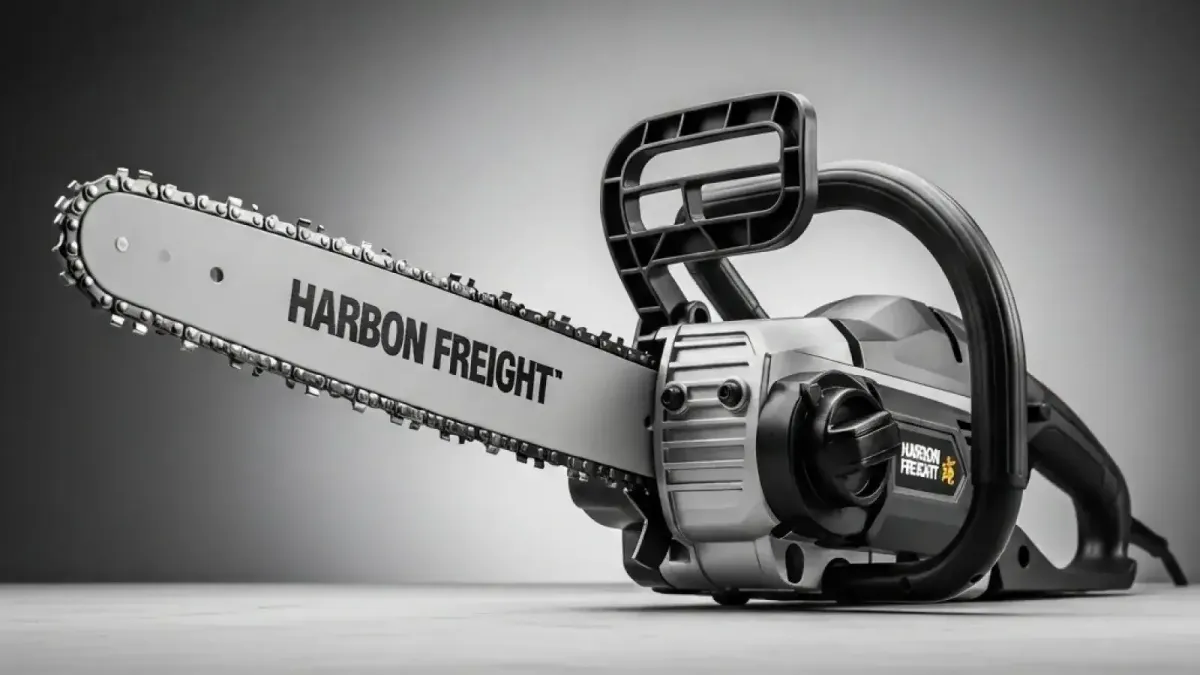
Working on residential timber, yard cleanup, and seasonal storm debris doesn't always demand a noisy gas engine or a heavy initial investment. Harbor Freight has carved out a massive presence in the power tool market by providing affordable corded and battery-powered chainsaws through their house brands, Portland and Bauer. These electric units offer quick starts, low noise, zero exhaust emissions, and surprisingly competent cutting power for homeowners. Whether you need a lightweight tool to prune overgrown limbs or a budget-friendly 16-inch saw for cutting firewood, understanding how these budget electric chainsaws perform in real-world scenarios ensures you buy the right machine and operate it safely.
Quick answer: Harbor Freight electric chainsaws—primarily the Portland 9-Amp 14-inch corded saw and the Bauer 14-Amp 16-inch model—are exceptional budget tools for light-to-medium yard maintenance. They deliver reliable cutting power for branches up to 12 inches in diameter at a fraction of the cost of premium brands, provided you maintain proper chain tension and keep the bar oil reservoir full.
Overview of Harbor Freight Electric Chainsaw Models
Harbor Freight categorizes its electric cutting lineup into two distinct brands: Portland for entry-level, light-duty corded tools, and Bauer for higher-output corded and 20V battery-powered tools. The Portland 14-inch corded chainsaw relies on a 9-amp motor that delivers roughly 1.2 horsepower equivalent, making it an ideal choice for quick yard cleanups and cutting small limbs up to 8 inches thick. It features an automatic oiler, a plastic wrap-around handle, and a tool-free chain tensioner, providing basic functionality for casual users who only pull out a saw a few times a year.
For more demanding cutting tasks around your property, the Bauer 16-inch 14-amp corded chainsaw steps up the power considerably. The 14-amp motor delivers close to 1.8 horsepower, providing enough torque to chew through fallen hardwoods and larger pine logs up to 14 inches in diameter without stalling. Harbor Freight also offers the Bauer 20V cordless mini chainsaw line, featuring compact 5-inch and 10-inch bars designed for single-handed limb pruning and tight-space cutting. These cordless units run on Bauer’s interchangeable 20V lithium-ion battery platform, sacrificing raw motor power for unmatched portability.
When selecting between these models, power source and working radius are the main deciding factors. Corded electric units offer continuous runtime without waiting for batteries to charge, but they restrict you to within 100 feet of an electrical outlet due to voltage drop across heavy-gauge extension cords. Cordless models liberate you to walk far property lines or clearing trails, though you will need multiple 4.0Ah or 5.0Ah battery packs to sustain longer work sessions.
Specifications and Performance Comparison
Understanding the exact technical specifications of these saws helps match the tool to your specific work scope. Modern electric motors deliver instant torque the second you pull the trigger, which means even smaller amp ratings can punch above their weight class compared to equivalent small-displacement 2-stroke gas engines. However, chain speed, bar gauge, and pitch dictate how cleanly and quickly the chain cuts through timber.
The table below breaks down the key specs across the primary Harbor Freight electric chainsaw offerings:
| Model Name | Power Source | Bar Length | Motor Output | Chain Pitch & Gauge | Best Suited For |
|---|---|---|---|---|---|
| Portland 9-Amp | 120V Corded | 14 Inches | 9 Amps (1.2 HP) | 3/8" Low Profile, .050" | Light pruning, small limbs under 6" |
| Bauer 14-Amp | 120V Corded | 16 Inches | 14 Amps (1.8 HP) | 3/8" Low Profile, .050" | Firewood bucking, storm cleanup to 12" |
| Bauer 20V Mini | 20V Lithium-Ion | 5 Inches | Brushless DC | 1/4" Pitch, .043" | Detailed pruning, garden maintenance |
| Bauer 20V Cordless | 20V Lithium-Ion | 10 Inches | Brushed DC | 3/8" Low Profile, .043" | Off-grid limb removal, trail clearance |
When evaluating these numbers, note that both the 14-inch and 16-inch units utilize standard 3/8-inch Low Profile (LP) chain pitch with a .050-inch drive link gauge. This pitch and gauge combination is an industry standard across consumer saws, making it effortless to source high-quality aftermarket replacement chains from brands like Oregon or Husqvarna when the stock drive links wear out.
Chain Maintenance, Replacement, and Tensioning
Maintaining proper chain tension and sharpness on an electric chainsaw is critical for motor longevity and cutting safety. Electric saws generate high initial torque, and running a dull or loose chain causes the electric motor to pull excessive amperage, leading to thermal overload and premature motor burnout. Check your chain tension before every job and after every 15 minutes of continuous cutting.
Pro tip: New chains stretch significantly during their first 10 minutes of cutting. On tool-free tensioning systems like those found on Portland and Bauer saws, heat buildup can cause the tension wheel to backing off slightly under load. Always stop the motor, disconnect the power cord or battery, and pull the chain upward at the mid-point of the bar—you should see exactly 1/8-inch of clearance between the bottom of the drive links and the bar rail, and the chain should snap back smartly when released.
Replacing a worn chain on a Harbor Freight saw requires simple steps to ensure safe alignment and proper oil delivery:
- Disconnect the extension cord or remove the 20V battery pack completely to prevent accidental startup.
- Loosen the side cover locking knob counterclockwise and remove the drive side cover.
- Lift the guide bar off its alignment studs and slip the dull chain off the drive sprocket and bar groove.
- Clean out accumulated sawdust and sticky pitch from inside the drive sprocket housing and the guide bar oil hole using a brush or small pick.
- Fit the replacement chain around the guide bar, ensuring the cutting edges on the top of the bar point forward toward the tip of the nose sprocket.
- Loop the drive links onto the drive sprocket, align the guide bar over the tension pin, reinstall the side cover, and adjust tension before fully tightening the side knob.
Always fill the automatic oil reservoir with premium bar and chain oil before making a cut. Electric saws consume oil fast; running a bar dry for even two minutes can overheat the metal guide rails, ruin the bar temper, and melt the surrounding plastic chassis housing on lower-cost units. Browse our guide on essential chainsaw safety and maintenance practices to keep your gear in peak working condition.
Skip the Store Run: Better Budget Electric Saws on Amazon

Safety Recalls, Common Issues, and Fixes
When buying budget power tools, staying informed about historical safety bulletins and recall notices is essential. Harbor Freight previously issued a high-profile voluntary safety recall on select 14-inch Portland corded electric chainsaws due to a defective power switch assembly. Under heavy load, the mechanical power switch could fail in the "ON" position or suffer from internal contact welding, preventing the saw from turning off when the trigger was released. Owners of older Portland saws should verify their item numbers against official safety databases before operation.
Another common issue encountered on consumer electric units involves drive sprocket wear and auto-oiler clogging. Harbor Freight uses reinforced nylon or sintered metal drive sprockets on their budget tiers. If the chain binds in a log and the operator continues pulling the trigger, the drive sprocket teeth can strip out. To prevent this, never force the cutting bar into a cut; allow the weight of the saw and a sharp chain to pull the cut down naturally.
If your automatic chain oiler stops slinging oil onto the tip of the bar, inspect the tiny oil inlet port near the mounting stud. Fine wood dust mixed with tacky bar oil frequently clogs this hole. Drain the reservoir, flush it with a small amount of clean diesel fuel or kerosene, run the unit briefly without cutting timber to clear the oil line, and refill with fresh bar lubricant. For complex repairs or electrical diagnostic tips, explore our dedicated section on troubleshooting electric power equipment.
Choosing the Right Saw for Your Needs
Selecting the ideal Harbor Freight saw depends entirely on your project requirements, physical strength, and working distance. If you are a homeowner with a modest suburban lot who simply needs to trim low-hanging maple branches, cut back overgrown bushes, and process small yard debris twice a year, the Portland 9-Amp 14-inch saw provides all the capacity you need at an unbeatable price point.
If you split firewood for a wood stove, need to clear larger fallen oak or pine trees after windstorms, or prefer a sturdier build quality with higher chain speed, step up to the Bauer 14-Amp 16-inch corded chainsaw. Pair it with a heavy-duty 12-gauge extension cord rated for outdoor use to ensure the motor receives full line voltage under heavy cutting resistance. If you are already invested in the Bauer 20V battery ecosystem and value maximum mobility without dragging power cords through brush, the Bauer 20V cordless line provides ultimate convenience for light-to-medium cleanups.
Frequently Asked Questions
Can I use an Oregon replacement chain on my Harbor Freight electric chainsaw?
Yes. As long as you match the bar length, chain pitch (typically 3/8" Low Profile), gauge (.050"), and drive link count, standard Oregon replacement chains work exceptionally well on both Portland and Bauer models, often improving cutting speed and edge retention over stock chains.
What size extension cord do I need for a Harbor Freight corded chainsaw?
For a 9-amp to 14-amp electric chainsaw, use a heavy-duty outdoor extension cord. For distances up to 50 feet, a 14-gauge (AWG) cord is acceptable. For distances between 50 and 100 feet, you must use a 12-gauge (AWG) cord to prevent harmful voltage drops that can overheat the saw motor.
Why is my electric chainsaw using up bar oil so quickly?
electric chainsaws run an automatic oil pump driven directly by the motor shaft or drive assembly. Continuous oil delivery is normal and necessary to prevent friction, heat build-up, and chain binding. Always inspect the reservoir level every time you finish a long cutting cycle or store the tool.
Did Harbor Freight recall the Portland electric chainsaw?
Yes, specific production runs of the Portland 14-inch 9-amp corded chainsaw were recalled in past years due to a failing trigger switch that could lock in the "ON" position. Check your tool's SKU/Item number against official CPSC recall listings to ensure your specific saw is clear.