Disclosure: As an Amazon Associate, we earn from qualifying purchases.
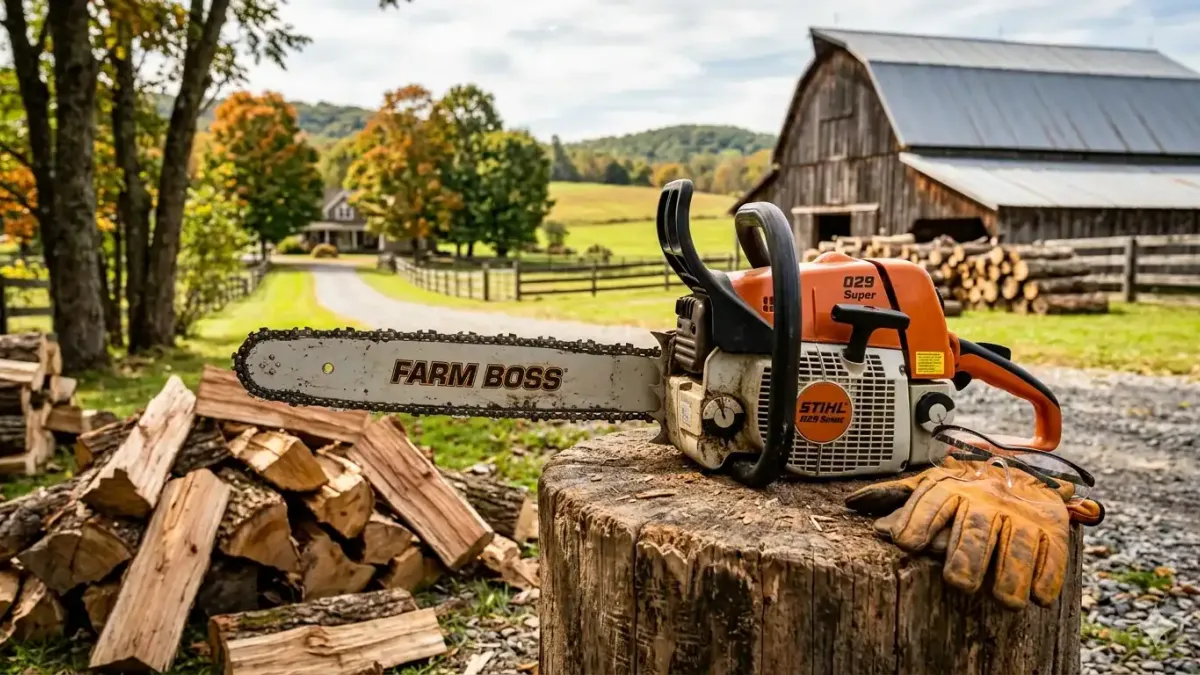
When timber owners, farmers, and heavy firewood cutters in the mid-1990s needed a reliable tool that filled the gap between lightweight homeowner saws and costly professional forestry models, Stihl delivered the 1127 chassis family. At the heart of this legendary lineup sat a machine that quickly earned a reputation for brutal reliability on working farms across the country. Known for its rugged build quality, forgiving engine design, and raw torque, this mid-range icon remains one of the most sought-after mid-sized power tools on the secondhand market today.Quick answer: The Stihl 029 chainsaw is a durable mid-range utility saw produced throughout the 1990s, featuring a 54.1 cc (3.7 hp) or upgraded 56.5 cc (3.8 hp in the Super variant) engine. Built on Stihl's polymer clamshell 1127 chassis, it provides maximum longevity and heavy lugging torque for firewood cutting, storm clearing, and farm maintenance when paired with an 18-inch or 20-inch guide bar.
The Stihl 029 Chainsaw: History, Engineering, and Lineage
To fully appreciate why the Stihl 029 chainsaw maintains such an enduring reputation among land managers and firewood harvesters, it helps to understand Stihl's 1990s engineering shift. Before the mid-90s, users wanting severe-duty cutting performance had to invest heavily in professional magnesium-crankcase saws like the Stihl 036 or settle for smaller, lighter duty saws that struggled under continuous bucking of thick hardwoods. Stihl answered this gap by introducing the 1127 series chassis, a modular platform engineered specifically around longevity, lower manufacturing costs, and ease of owner maintenance.
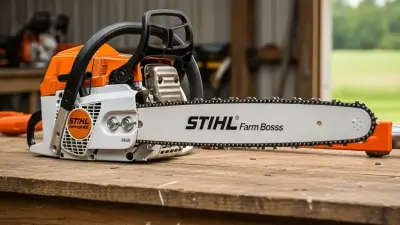
The standard 029 debuted around 1992 with a 45 mm cylinder bore delivering 54.1 cc of displacement. While it gained immediate praise for its reliability, operators regularly pushing through dense oak, hickory, and hard maple demanded slightly more low-end pull without a massive price jump. Stihl responded by enlarging the cylinder bore to 46 mm, creating the 029 Super with a 56.5 cc motor. This upgraded configuration proved so successful that when Stihl transitioned to its modern "MS" model nomenclature in the early 2000s, the 029 Super was directly rebranded as the famous Stihl MS 290 Farm Boss, which went on to become the single best-selling chainsaw in Stihl's history.
The secret behind the long life of these saws lies in their clamshell engine construction. Unlike professional saws where the crankshaft bearings sit directly inside split magnesium alloy crankcase halves, the 029 series utilizes a self-contained cylinder and pan unit mounted inside a high-strength, glass-fiber reinforced polymer engine housing. While this structural layout adds roughly 1.5 lbs compared to a pro-grade saw of equivalent engine size, the composite chassis acts as a massive shock absorber. It shields the internal engine components against twisting forces, drops, and severe vibration during heavy everyday farm work.
Stihl 029 Chainsaw Specifications and Model Comparison
Navigating the secondhand market for a Stihl 029 chainsaw can sometimes be confusing because the standard 029, the 029 Super, and the early MS 290 share identical external dimensions and look nearly identical on the outside. Understanding the internal differences—primarily cylinder bore size and total power output—is key to choosing the right machine or ordering correct replacement engine parts.
| Specification | Detail (029 Super) |
| Engine Displacement | $approx 56.5 text{ cc} (3.45 text{ cu. in.})$ |
| Engine Power | $approx 2.8 text{ kW} (3.8 text{ bhp})$ |
| Powerhead Weight | $approx 5.9 text{ kg} (13.0 text{ lbs})$ |
| Fuel Capacity | $560 text{ cc}$ |
| Recommended Bar Lengths | $16 text{ inches to } 20 text{ inches}$ |
| Standard Chain Pitch | $3/8 text{ inch}$ |
| Standard Chain Gauge | $0.050 text{ inch}$ |
Can't Buy a Stihl Online? Buy Its Greatest Rival: The 455 Rancher

Because the 1127 chassis standardizes key mounting locations, virtually all external body parts swap effortlessly across the model range. Components like rewind starters, ignition modules, side clutch covers, air filter covers, and sprockets fit indiscriminately across the standard 029, 029 Super, 039, MS 290, MS 310, and MS 390. This massive interchangeability makes sourcing fresh or used replacement parts easy for anyone rebuilding a machine today.
| Technical Feature | Standard Stihl 029 | Stihl 029 Super | Stihl MS 290 Farm Boss |
|---|---|---|---|
| Engine Displacement | 54.1 cc (3.30 cu. in.) | 56.5 cc (3.45 cu. in.) | 56.5 cc (3.45 cu. in.) |
| Cylinder Bore | 45 mm | 46 mm | 46 mm |
| Piston Stroke | 34 mm | 34 mm | 34 mm |
| Power Output | 3.7 bhp (2.7 kW) | 3.8 bhp (2.8 kW) | 3.8 bhp (2.8 kW) |
| Powerhead Weight (Dry) | 13.0 lbs (5.9 kg) | 13.2 lbs (6.0 kg) | 13.0 lbs (5.9 kg) |
| Fuel Tank Capacity | 19.0 fl oz (0.56 L) | 19.0 fl oz (0.56 L) | 19.0 fl oz (0.56 L) |
| Fuel-to-Oil Mix Ratio | 50:1 (89+ Octane / 2-Cycle) | 50:1 (89+ Octane / 2-Cycle) | 50:1 (89+ Octane / 2-Cycle) |
| Ideal Bar Lengths | 16" to 18" | 18" to 20" | 18" to 20" |
| Standard Chain Pitch / Gauge | .325" or 3/8" / .050" or .063" | 3/8" or .325" / .050" or .063" | .325" or 3/8" / .050" or .063" |
As highlighted in the data table above, the 029 Super shares its exact 46 mm bore and 56.5 cc displacement with the MS 290. The extra cubic centimeters provide tangible lugging power when pulling full-depth cuts through 16-inch to 20-inch timber. While lightweight modern saws might rev higher on paper, the sheer inertia and wide powerband of the 029 Super allow it to hold chain speed under heavy dogging and leverage.
Field Performance, Bar Selection, and Cutting Techniques
Out on the woodpile, running a well-tuned Stihl 029 chainsaw delivers a distinctly traditional cutting experience. It doesn't feature the ultra-high revving profile of a modern high-performance forestry saw like the stihl ms 261, but it compensates with exceptional low-end torque. You can lean into bucking cuts on fallen oak, ash, or maple without the engine immediately dropping out of its powerband. This forgiving engine character makes it a favorite for woodcutters who want reliable cutting power without fussing over perfect engine rpm management.
Matching the bar length and chain specifications to your primary cutting tasks is critical for optimal performance. The 029 Super easily balances with a 16-inch, 18-inch, or 20-inch guide bar. For general woodlot cleanup and limbing, a 16-inch or 18-inch bar paired with a .325" pitch, .050" gauge chain keeps tip speed high and reduces operator fatigue. If your primary goal is processing large logs for winter heating, stepping up to an 18-inch or 20-inch bar with 3/8" pitch semi-chisel chain gives excellent bite and stays sharp longer when working dirty farm wood.
Pro tip: When tuning or running older 1127 series saws like the 029, always check the impulse hose and intake boot for micro-cracks before adjusting carb screws. A tiny air leak through aging rubber causes lean running conditions under load, leading owners to incorrectly blame fuel quality or carburetor adjustment when the real culprit is unmetered air entering behind the carb.
Operator safety requires equal attention, especially given the weight and torque profile of mid-sized farm saws. Always run ethanol-free 89+ octane gasoline mixed at a strict 50:1 ratio with premium two-stroke engine oil. Ensure your automatic chain oiler is feeding clean bar and chain oil constantly—you should see a fine spray sling off the tip of the bar when revved near a clean stump or wood block. Wear essential protective equipment adhering to ANSI B175.1 standards, including heavy-duty cut-resistant chainsaw chaps, eye protection with side shields, wrapped hearing protection, and steel-toe work boots whenever operating high-torque cutting equipment.
Essential Maintenance, Common Troubleshooting, and Upgrades
Revive Your Farm Boss: All-In-One Carburetor & Ignition Rebuild Kit

Keeping a classic Stihl 029 chainsaw running at peak potential requires standard routine maintenance along with periodic inspection of age-sensitive components. Because these saws may have decades of service behind them, rubber items like fuel lines, tank vents, vibration buffers, and intake boots should be inspected regularly. Replacing a brittle fuel line early prevents lean air-fuel ratios that can score engine cylinders during heavy cutting sessions.
Carburetor service on the 029 series is straightforward. Most factory models came equipped with adjustable Walbro or Zama carburetors featuring high (H), low (L), and idle speed (LA) adjustment screws. If the saw bogs upon throttle acceleration, clearing the internal jet screen and resetting the low needle to baseline (typically 1 turn out from seat) usually restores smooth throttle response. Clean the dual-element air filter after every major cutting session by tapping out wood dust or washing it gently in warm soapy water.
- Engine Compression Check: A healthy 029 engine should show 140 to 160 PSI on a cold compression test. Anything under 120 PSI indicates worn rings or cylinder scoring.
- Chain Sprocket Maintenance: Inspect the spur or rim sprocket for wear grooves deeper than 0.5 mm (.020 in). Worn sprockets accelerate chain wear and risk throwing chains.
- Oiler Hose Inspection: If bar oil leaks out under the powerhead during storage, replace the lower oil pickup hose and seal grommet under the clutch assembly.
- Top-End Upgrades: Owners seeking maximum performance can easily install a 49 mm cylinder and piston kit from an OEM Stihl 039 or MS 390, converting the 56.5 cc engine into a high-torque 64.1 cc wood-cutting monster without structural modifications.
For readers evaluating secondhand options or taking care of structural maintenance, understanding proper chain tensioning and bar care is just as vital as engine work. Periodically dressing your guide bar rails with a flat file removes burrs and prevents the chain from leaning during bucking cuts. For more technical tips on bar upkeep, review our comprehensive guide on chainsaw maintenance and bar alignment.
If you own or are looking to purchase a Stihl 029 chainsaw, your primary action step is to check cylinder compression, replace aging fuel supply lines, and mount an 18-inch bar paired with a sharp .325" or 3/8" semi-chisel chain. This classic setup provides the perfect equilibrium between engine life, cutting speed, and ease of handling for processing firewood every season.
Frequently Asked Questions
What is the difference between a Stihl 029 and a Stihl 029 Super?
The standard Stihl 029 features a 45 mm cylinder bore providing 54.1 cc of displacement and 3.7 bhp. The upgraded 029 Super features a larger 46 mm cylinder bore delivering 56.5 cc of displacement and 3.8 bhp, giving it superior low-end torque in thick hardwoods.
Unleash 56cc Torque: Oregon 20-Inch Pro Bar & Chain

Is the Stihl 029 the same saw as the Stihl MS 290 Farm Boss?
Yes, mechanically they are nearly identical. The Stihl 029 Super was directly renamed to the MS 290 Farm Boss when Stihl updated its model naming structure in the early 2000s. Both share the 56.5 cc clamshell engine design and 1127 series chassis.
What length bar works best on a Stihl 029 chainsaw?
An 18-inch guide bar is generally considered the sweet spot for the Stihl 029. It allows good reach and cutting capacity while maintaining fast chain speed. A 16-inch bar works great for fast limbing, while a 20-inch bar can be used for occasional larger tree bucking.
What gas to oil ratio does a Stihl 029 chainsaw require?
The Stihl 029 runs on a 50:1 fuel mixture. Mix 2.6 fluid ounces of high-quality 2-stroke air-cooled engine oil per 1 gallon of unleaded gasoline (minimum 89 octane, preferably ethanol-free).
Sources
- Stihl Incorporated Technical Documentation - STIHL Official Website
- Occupational Safety and Health Administration - Logging Standard 1910.266 - OSHA Official Site
- American National Standards Institute - ANSI B175.1 Safety Requirements for Chainsaws - ANSI Official Site
- Stihl Model 1127 Series Service Manual (029, 039, MS 290, MS 310, MS 390)