Disclosure: As an Amazon Associate, we earn from qualifying purchases.
A gas-powered chainsaw running a standard 3/8-inch pitch chain at full throttle drives its teeth across the guide bar at speeds exceeding 60 miles per hour, or roughly 88 feet per second. At that velocity, a fleeting moment of distraction or a sudden kickback off an unexpected knot can bring a spinning 20-inch bar directly into contact with your thigh before your nervous system even registers the danger. Regular denim work jeans or heavy canvas duck trousers offer zero resistance to hardened steel cutting teeth; they are sheared through in less than a fraction of a millisecond. Equipping yourself with certified chainsaw pants transforms a potentially life-threatening femoral artery laceration into a manageable incident where you simply walk away with ruined trousers and an intact leg.Quick answer: Certified chainsaw pants utilize loose, high-tenacity fibers like Kevlar or Dyneema lined beneath a durable outer shell. When a moving chain hits the fabric, these internal fibers instantly pull out into the drive sprocket, jamming the mechanism and stopping the chain in milliseconds. Investing in Class 1 or Class 3 pants ensures vital leg protection that far exceeds the coverage and comfort of standard wrap-around chaps.
How Chainsaw Protective Fabric Actually Works
Many beginners assume cut-resistant gear works like armor plating, attempting to deflect or dull the blade. In reality, chainsaw protection relies on a sacrificial mechanical jamming mechanism engineered specifically for high-speed rotary cutting tools. The outer layer of the pants is usually constructed from a tough, water-repellent nylon, polyester, or ripstop fabric designed to withstand everyday briars, wood chips, and bar oil without tearing. Directly underneath this outer shell sit multiple floating layers of unentangled, long-strand ballistic fibers made from materials like Aramid (Kevlar), Dyneema, or proprietary polyethylene blends.
When the teeth of a spinning chain slice through the thin outer shell, they immediately catch on these loose internal fibers. Instead of cutting smoothly through the bunched material, the chain's cutters snag the high-tensile strands, drawing hundreds of individual fibers out of the garment lining and pulling them straight into the chainsaw's drive sprocket. As these ultra-tough filaments wrap tightly around the clutch drum and drive rim within a fraction of a second, they generate massive mechanical friction and completely bind the drive system, bringing the engine to a dead stop before the chain can penetrate deep into human tissue.
Pro tip: Never throw your chainsaw pants in a standard wash with heavy detergent or fabric softener. Softeners coat the internal ballistic fibers, causing them to slick over and slide past each other rather than fraying and snagging the sprocket during an impact. I once inspected a pair of chaps that failed a safety check simply because years of improper washing melted the internal fiber weave into a solid block, rendering the jamming mechanism useless.
Chainsaw Pants vs. Chainsaw Chaps: Making the Right Choice
While both chainsaw pants and wrap-around chaps utilize identical internal jamming fibers, their structural design creates vast differences in real-world protection, mobility, and heat management. Chainsaw chaps feature an open-back design held together by waist belts and leg straps, worn directly over your regular work trousers. They are easy to throw on for quick tasks like cutting a single downed log or clearing backyard brush with a small 40cc saw. However, because chaps lack structural rear coverage, they can shift around during heavy movement, exposing the sides and backs of your legs during complex ground operations.
Chainsaw pants, on the other hand, offer full 360-degree integration where protective material is built straight into the garment structure. This ensures that even if you trip or tumble on steep terrain while felling timber with a 70cc professional saw, the protective pads stay firmly locked against your lower limbs without twisting out of alignment. Furthermore, climbing arborists working up in canopy crotches almost exclusively wear pants, as external straps from chaps easily snag on branches and climbing harnesses, creating severe safety hazards while aloft.
| Feature | Chainsaw Pants | Chainsaw Chaps |
|---|---|---|
| Coverage Area | Full leg coverage (Front, Sides, optional Rear) | Front and lower side of leg only |
| Fit & Stability | Ergonomic fit, stays locked in place | Strapped over clothing, prone to twisting |
| Thermal Comfort | Integrated ventilation, replaces work pants | Hotter due to dual layering over pants |
| Target Application | Arborists, loggers, daily groundsmen | Casual firewood cutters, short jobs |
| Average Price | $250 - $450 | $90 - $180 |
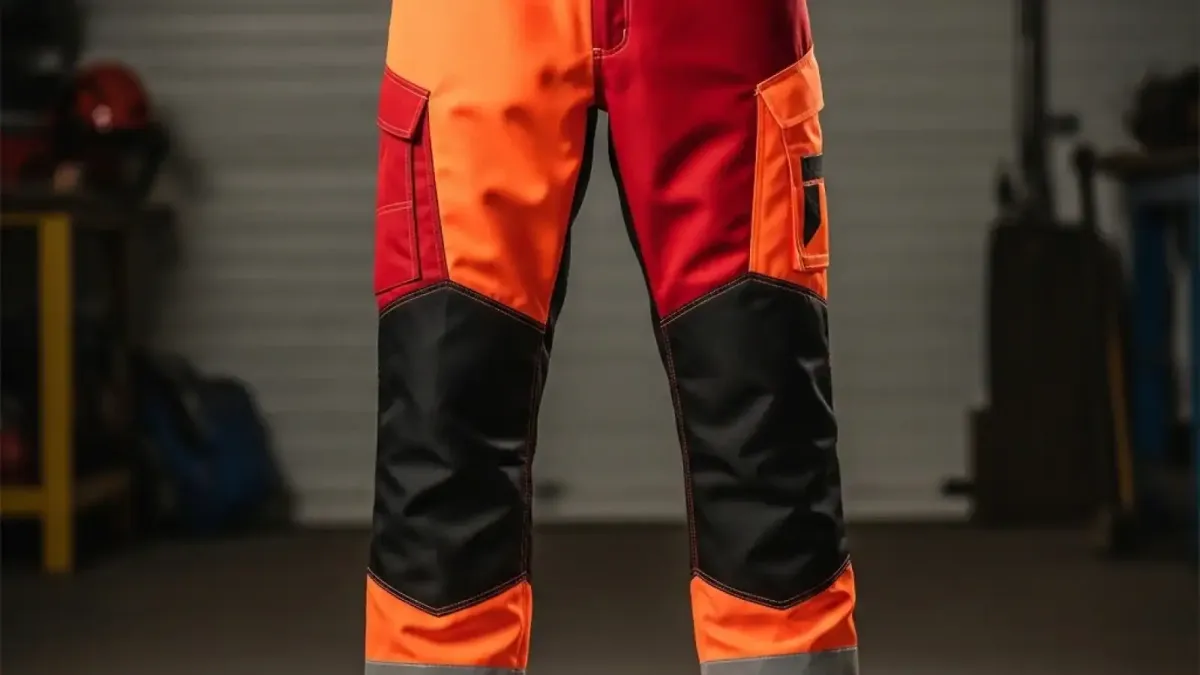
Husqvarna 598967046 Technical Xtreme Arbor Chainsaw Pant, Small 28''- 30'' Waist Orange

Key Safety Certifications and Protection Classes
When shopping for legitimate leg protection, understanding safety ratings is non-negotiable. In North America, chainsaw protective garments must meet standard ASTM F1897 (or ASTM F3325 for specialized leg protection), certified by independent testing authorities like UL (Underwriters Laboratories). European standards follow EN 381-5 (and the newer EN ISO 11393-2 standard), which categorizes trousers into specific design types and speed rating classes based on linear chain velocity during controlled lab testing.
Standard design classifications determine where the protective material sits inside the trouser structure. Design Type A covers the front of both legs, extending 50mm past the inner seam and 50mm past the outer seam, making it the preferred standard for ground forestry workers. Design Type C provides complete 360-degree protection around the entire leg from waist to ankle, making it mandatory gear for trainees, utility line trimmers, and high-risk climbing applications where rear-leg chain strikes are realistic possibilities.
- Class 0 (16 m/s or ~3,150 ft/min): Light duty, primarily designed for smaller electric or top-handle saws running narrow-kerf .325" Low Profile chains.
- Class 1 (20 m/s or ~3,937 ft/min): The international benchmark for general forestry work, capable of stopping standard gas-powered chainsaws.
- Class 2 (24 m/s or ~4,724 ft/min): Heavy-duty protection rated for mid-range professional logging equipment running standard 3/8" pitch pitch setups.
- Class 3 (28 m/s or ~5,512 ft/min): Maximum protection tier designed for high-horsepower production felling saws running larger .404" pitch chain setups.
| Material | Pros | Cons |
|---|---|---|
| Kevlar | Proven protection | Heavy, hot |
| Dyneema | Lightweight | Expensive |
| Polytex | Breathable | Less durable |
Top Chainsaw Pants Reviewed for Every Worker
Stihl Durawear / Advance X-FIT Series
Stihl remains an industry heavyweight in forest management gear, and their technical trousers match that legacy. Utilizing custom multi-layer Aramid protection wrapped inside an abrasion-resistant outer shell, Stihl pants excel in extreme wilderness environments. Reinforced knee sections prevent water soaking when kneeling on wet ground, while heavy-duty zipper vents along the rear thigh help expel body heat during long felling sessions with a 24-inch guide bar.
Clogger Zero Chainsaw Pants
Oregon Apron-Style Chainsaw Chaps - 32in. Model Number 564132-32

Hailing from New Zealand, Clogger completely redefined leg protection with their Zero series by replacing traditional heavy ballistic layers with lightweight Dyneema fiber arrays. Weighing up to 40% less than standard Kevlar-lined alternatives, Clogger Zeros offer Class 1 protection while maintaining structural breathability that allows high-heat operational work in mid-summer conditions without heat exhaustion risks.
Husqvarna Technical Chainsaw Pants
Engineered specifically around maximum range of motion, Husqvarna's Technical line integrates 4-way stretch fabrics along the seat and inner crotch. This allows climbing arborists to execute wide leg spreads while ascending trunks using spikes and flip lines without binding or pulling down at the waist. Reflective piping along the lower calves also enhances visibility when working near roadside utility zones.
| Brand | Price Range | Best For |
|---|---|---|
| Stihl | $299-$399 | Professional logging |
| Husqvarna | $279-$349 | Tree climbing |
| Clogger | $349-$429 | Lightweight protection |
| Oregon | $199-$249 | Budget option |
| Pfanner | $379-$459 | Premium comfort |
Care, Inspection, and Proper Maintenance Rules
Chainsaw pants require deliberate maintenance to maintain their cut-stopping capabilities over years of active outdoor use. Always inspect your gear before starting your saw for the day. Look closely for outer shell tears, frayed seam stitching, or thin spots caused by constant rubbing against bar scabbards or tree bark. If wood chips or chain oil get deeply embedded into the outer fabric, wash the pants using warm water (maximum 86°F / 30°C) with mild liquid laundry detergent on a delicate cycle.
Never dry chainsaw pants in a heated mechanical dryer or hang them directly over hot radiators. Intense ambient thermal radiation breaks down synthetic fibers like Dyneema and rubberized spandex panels, causing the protective weave inside to shrink unevenly or drop structural strength. Always air-dry your trousers indoors or in a shaded outdoor spot away from direct sunlight, as long-term ultraviolet exposure degrades untreated outer face fabrics.
Selecting the Ideal Set for Your Worksite
Stihl Chain Saw Protective Chaps

If you are a casual homeowner clearing storm debris a few weekends a year with a 16-inch cordless chainsaw, high-quality Class 1 wrap-around chaps or entry-level cut-resistant trousers provide an excellent balance of budget and safety. Ground operators and landowners running 50cc to 60cc saws for regular firewood processing should invest in Class 1 Design A pants like the Husqvarna Technical or Stihl Advance lines for all-day comfort and fixed protection. Arborists working suspended in tree canopies, as well as utility line clearers working near complex rigging ropes, should opt for lightweight, high-stretch Class 1 or Class 3 360-degree trousers like the Clogger Zero to maintain unrestricted mobility and complete leg coverage.
Frequently Asked Questions
Can you wash chainsaw pants after a minor cut or chain graze?
No. If your chainsaw chain has made contact with the trousers and pulled even a single thread of internal protective fiber out into the open, the garment is permanently compromised and must be immediately retired. The structural jamming matrix inside cannot be re-woven or repaired, meaning it will not offer certified protection against a second strike.
Are chainsaw pants effective against electric and battery-powered chainsaws?
Battery-powered chainsaws generate instant electric torque from a dead stop, which differs slightly from gas engines that rely on a mechanical centrifugal clutch. However, certified ASTM or EN Class 1 and higher chainsaw pants remain highly effective at stopping electric saws by tangling the drive sprocket and forcing an immediate electrical current surge overload that shuts off the motor controller within fractions of a second.
How tightly should chainsaw pants fit around my legs?
Chainsaw pants should fit comfortably with enough slack to allow deep squatting and bending, but they should never be overly baggy. If the pants hang too loosely, an impacting chain can grab and bunch up excess outer fabric without immediately engaging the internal jamming fibers, which decreases the system's quick-stopping speed.