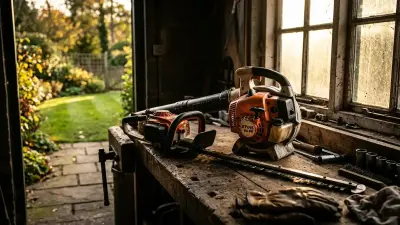

Why Winterizing Outdoor Power Equipment Matters
Leaving untreated gasoline in your lawn mower or leaf blower over the winter is the single primary cause of spring starting failures. Modern pump gasoline contains up to 10% ethanol (E10), which absorbs moisture from the air over time. This process, known as phase separation, creates a corrosive water-alcohol mix at the bottom of the fuel tank that degrades carburetor jet orifices, rots fuel lines, and gums up intake valves in as few as 30 days.
Taking 45 minutes to properly store your 2-stroke leaf blower and 4-stroke lawn mower ensures reliable starting, prevents costly shop repairs, and extends the engine's operational life.
Step-by-Step Guide to Winterizing Lawn Mowers and Leaf Blowers
Step 1: Treat or Drain the Fuel System
You have two reliable options for managing fuel before winter storage:
- Option A (Stabilize and Run): Fill the tank to 95% capacity with fresh fuel mixed with a quality stabilizer (such as STA-BIL or Sea Foam at 1 oz per 2.5 gallons). Run the engine for 5 to 10 minutes to circulate the treated fuel through the entire carburetor. (Filling the tank minimizes air space, reducing condensation).
- Option B (Complete Drain): Siphon out the remaining fuel into an approved container. Start the engine and run it at idle until it starves for fuel and stalls. Engage the choke and pull the starter cord a few more times to burn out any residual fuel in the carburetor bowl.
Pro Tip for 2-Stroke Engines (Leaf Blowers, Chainsaws, String Trimmers): Many equipment manufacturers (such as STIHL, Husqvarna, and Echo) strongly recommend using pre-mixed, ethanol-free canned fuel (alkylate fuel) for the final run of the season. It remains stable for up to 2 years after opening.
Step 2: Change the Engine Oil (4-Stroke Engines)
Dirty oil contains acidic combustion byproducts and suspended carbon particulates that can settle and pit internal engine components over a long winter. Warm up your lawn mower for 2 minutes, shut it off, disconnect the spark plug wire, and drain the oil via the drain plug or oil fill tube into an oil pan. Refill with fresh oil according to manufacturer specifications (typically 18 to 20 oz of SAE 30 or 10W-30 for standard walk-behind mowers like Honda or Toro models).
Step 3: Service the Spark Plug and Fog the Cylinder
Remove the spark plug using a standard 13/16-inch or 5/8-inch deep socket. Inspect the electrode; if it is heavily carbon-fouled or corroded, replace it (common plugs include Champion RJ19LM or NGK CMR6H depending on your machine). Pour roughly 1 teaspoon (5 ml) of clean engine oil or spray a 2-second burst of fogging oil directly into the spark plug hole. Pull the starter rope slowly 2 to 3 times to coat the cylinder wall and piston rings, then re-install the spark plug finger-tight.
Step 4: Clean or Replace Air and Fuel Filters
Remove the air filter cover. Foam filters should be washed in warm, soapy water, completely dried, and lightly re-oiled with clean engine oil. Paper filters should be tapped out gently or replaced if dark and clogged with fine dust. Check the internal fuel filter (commonly located inside the fuel tank on 2-stroke handheld units) and pull it out using a wire hook to swap it if discolored.
Step 5: Inspect and Clean the Underbody & Deck
Accumulated wet grass clippings hold moisture against metal decks, accelerating rust and corrosion.
- Lawn Mowers: Tilt the mower so the spark plug side points UP (to prevent oil from flooding the air filter). Use a plastic scraper and wire brush to remove caked-on grass beneath the deck. Inspect the blade; sharpen or replace if dull or nicked.
- Leaf Blowers: Clean the air intake screens, cooling fins, and blower tubes using a soft brush or compressed air to prevent engine overheating during future use.
Winterization Method Comparison: Dry Storage vs. Fuel Stabilizer
| Storage Method | Best Suited For | Pros | Cons |
|---|---|---|---|
| Dry Storage (Drained Tank) | Handheld 2-stroke tools (Leaf Blowers, Chainsaws) | Eliminates fuel degradation entirely; safest for long-term storage (>6 months). | Can cause older rubber fuel lines or carburetor diaphragms to dry out and crack over time. |
| Wet Storage (Stabilized Fuel) | 4-stroke engines (Lawn Mowers, Generators) | Keeps gaskets moist; quick spring start-up without refilling. | Stabilizer must be fresh; fuel can still degrade if stored over 8–12 months. |
Frequently Asked Questions
Can I store my leaf blower or mower in an unheated shed or garage?
Yes, storing outdoor power equipment in an unheated shed or garage is safe provided the fuel system is stabilized or drained. Keep the machine elevated off bare concrete floors when possible to reduce condensation exposure, and store away from pilot lights, furnaces, or spark sources.
What should I do with battery-powered lawn mowers and leaf blowers in winter?
For cordless electric equipment (such as 40V or 80V lithium-ion systems), remove the battery pack before storage. Store the battery indoors in a climate-controlled area between 50°F and 70°F (10°C to 21°C) charged to roughly 40%–60% capacity. Never store lithium-ion batteries at zero charge or leave them on active chargers all winter.